
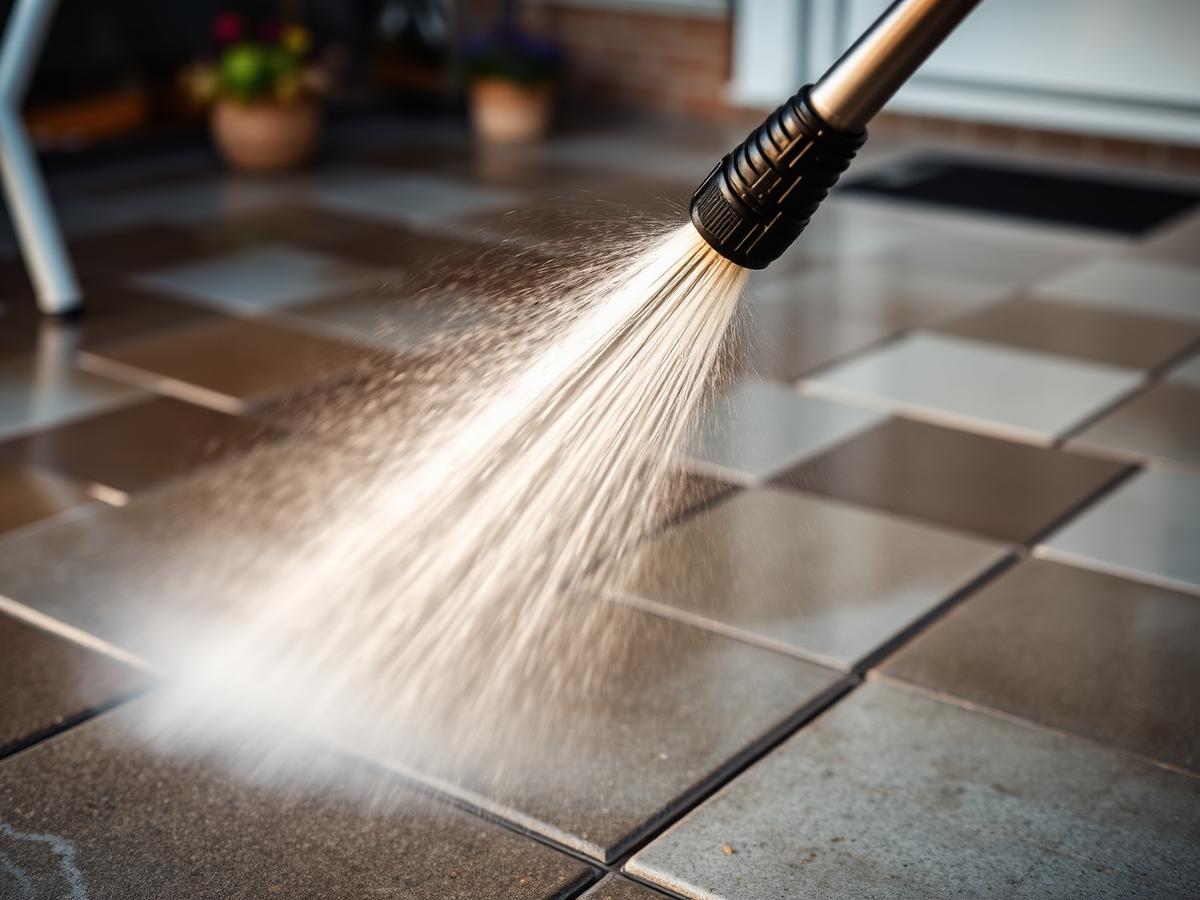
Most surfaces stay clean for a reasonable stretch after a proper treatment. When one particular area keeps re-growing algae or moss far faster than the rest of the patio or drive, repeat cleaning starts to feel like treating a symptom rather than the actual cause. Often that cause is water — pooling, running off slowly, or draining somewhere it shouldn't.
It's worth separating 'this needs cleaning again because time has passed' from 'this specific spot keeps failing no matter how often it's cleaned' — the second is usually a drainage question, not a cleaning one.
Signs the real problem is drainage
- One specific area regrows moss or algae much faster than the rest of the same surface.
- Standing water is visible after rain, particularly in a low spot or against a wall or step.
- A gully, channel or downpipe outlet nearby looks blocked, cracked or poorly positioned.
- The surface itself is fine elsewhere, so the pattern of regrowth follows water, not material or aspect.
What repeat cleaning does and doesn't fix
Cleaning and a biocide treatment will genuinely knock back growth each time, and there's nothing wrong with treating a naturally shaded or damp area more often than a sunny one. The distinction is whether the interval between treatments is shrinking over time in one particular spot — that pattern points toward water not draining away properly rather than simple shade or aspect.
Common drainage issues behind persistent damp patches
- A gully or channel drain partially blocked with silt, moss debris or leaf litter.
- Paving laid with falls running the wrong way, so water pools rather than running off.
- A downpipe discharging directly onto paving instead of into a proper drainage point.
- Sunken blocks or flags creating a local dip that collects water after every rainfall.
Why it's worth raising drainage before booking another clean
If the same corner is due for treatment every few months while the rest of the property goes a couple of years between cleans, that gap is worth mentioning before the next booking. We'll flag anything that looks like a drainage cause during a visit, because pointing it out costs nothing and repeat cleaning around an unresolved fault becomes an ongoing cost rather than a one-off.