Driveway Cleaning
across Yorkshire
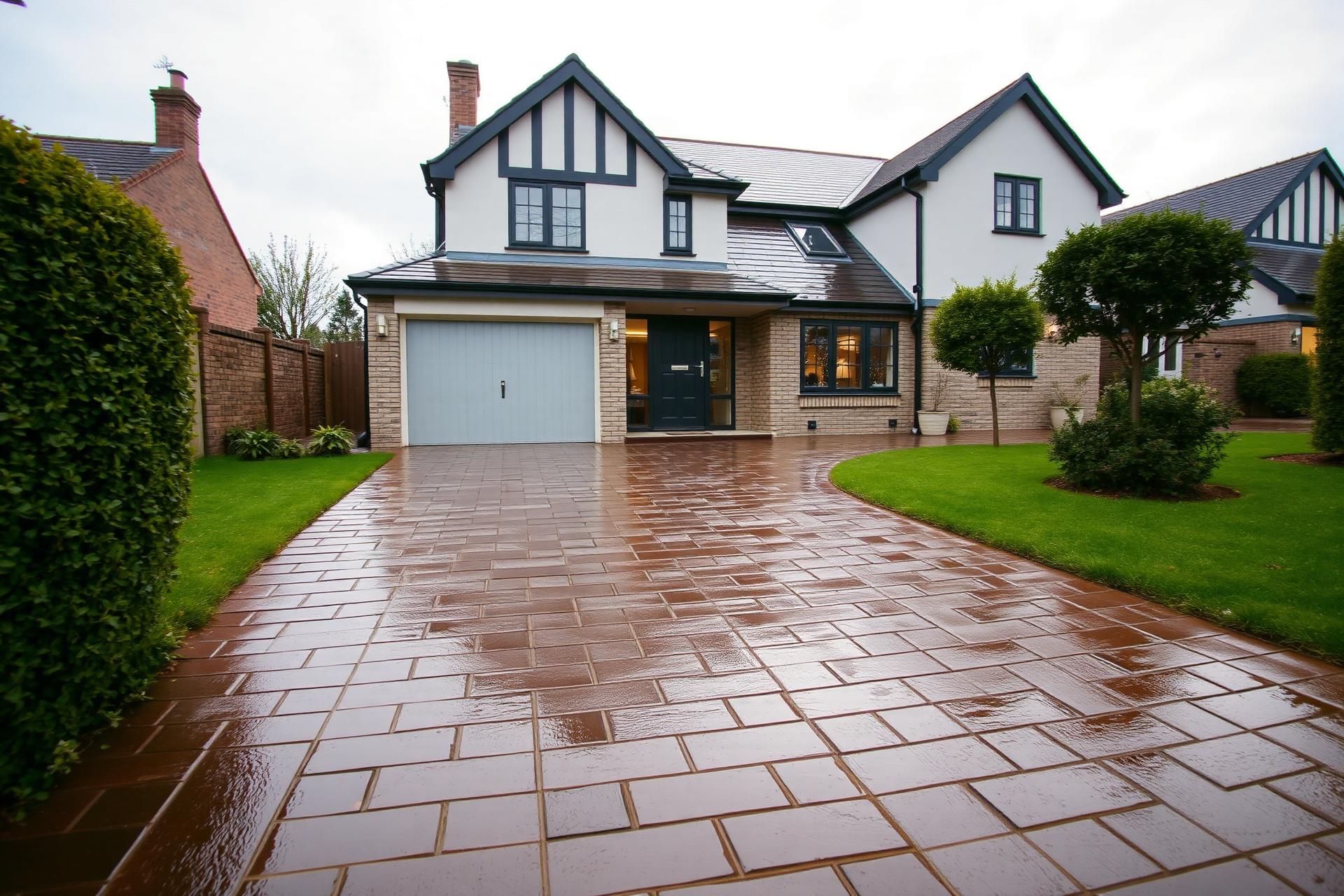
Removes years of ingrained dirt, biological growth and stains so the drive looks close to newly-laid.
Professional driveway cleaning uses a rotary flat-surface cleaner to lift dirt, moss and algae evenly, a lance to detail edges and joints, a biocide to slow regrowth and, on block paving, fresh kiln-dried sand in the joints. Done properly it brings a tired drive back close to how it looked when laid, without etching the surface or blowing out the jointing.
Removes years of ingrained dirt, biological growth and stains so the drive looks close to newly-laid.
A properly re-sanded and sealed drive will hold its colour for 18–36 months before needing another treatment.
A 3–4 bay block-paved drive takes 4–6 hours including re-sanding.
Methods
Common problems we fix
What happens on the day
The drive is cleared of cars and bins, loose debris is swept and any heavy weed growth is pulled first. The rotary cleaner then works across the surface in overlapping passes, which keeps the finish even and avoids the striping a handheld lance can leave. Edges, steps and the areas around drains and kerbs are finished by hand.
Once the surface has been rinsed, a biocide is applied to deal with the spores that washing alone leaves behind. Block paving is left to dry before new sand is brushed into the joints, because damp sand bridges instead of settling to the bottom of the gap.
Which surfaces need a different approach
Block paving, imprinted concrete, resin-bound, tarmac and slab drives all clean differently. Resin and tarmac can be marked by too much pressure or heat, so they are cleaned more gently. Imprinted concrete is usually sealed, and the condition of that sealer decides whether a re-seal is worth discussing afterwards. Oil and diesel stains are pre-treated with a degreaser because water on its own spreads rather than lifts them.
Driveway Cleaning FAQs
- Will pressure washing damage my driveway?
- It can if the pressure is too high or the lance is held too close — that is how joints get emptied and surfaces get etched. A rotary cleaner spreads the pressure evenly, and the joints are re-sanded afterwards on block paving.
- Do you need water and power from the house?
- An outside tap is normally used for water. Tell us when you ask for a quote if there is no outside tap so the visit can be planned around it.
- Can oil stains be removed completely?
- Fresh and light stains usually lift well with a degreaser and hot or rotary cleaning. Old stains that have soaked deep into porous surfaces may fade rather than disappear, and we will say so before starting.
- Should I seal my drive after cleaning?
- Sealing is optional. It helps lock in jointing sand and makes future cleaning easier, but it is not right for every surface — our sealing guides explain the trade-offs.
- How soon can I park on it again?
- You can usually walk on it straight away. Block paving is best left until the new sand has been brushed in and settled, which we will confirm before we leave.
Local detail: Driveway Cleaning in Ilkley
Guides related to driveway cleaning
Written from real jobs — costs, methods and what to check before you book.
Ready for a free, fixed quote?
Send us a few details and we'll come back within 24 hours with a firm price — no obligation.