
Driveway Cleaning for Moorland Homes on Hangingstone Road, Ilkley
Detached homes sitting up toward the moor gate on Hangingstone Road often have driveways that run fifty or sixty feet from the lane down to the house, mixing an original tarmac base with York stone flags laid as a parking apron nearer the front door. Peaty run-off comes down off the moor after heavy rain and settles into any low point along that run, leaving a rust-brown tide mark that ordinary rinsing barely touches.
Detached homes sitting up toward the moor gate on Hangingstone Road often have driveways that run fifty or sixty feet from the lane down to the house, mixing an original tarmac base with York stone flags laid as a parking apron nearer the front door. Peaty run-off comes down off the moor after heavy rain and settles into any low point along that run, leaving a rust-brown tide mark that ordinary rinsing barely touches.
Because these plots back directly onto open moorland rather than a street, there's no consistent kerb or gully to catch surface water, so grit, sheep dung residue and bracken debris wash straight across the tarmac and pool wherever the fall of the land dips. The flag apron near the house tends to fare worse in winter, holding damp longer under the shade of the building itself.
Menston sits three miles below on the A65 and Keighley eight miles the other way, but up here the exposure is a different world — wind-driven rain reaches surfaces that a valley-floor drive in Otley would never see, which changes how often these aprons need attention.
Reading the surface before deciding on a plan
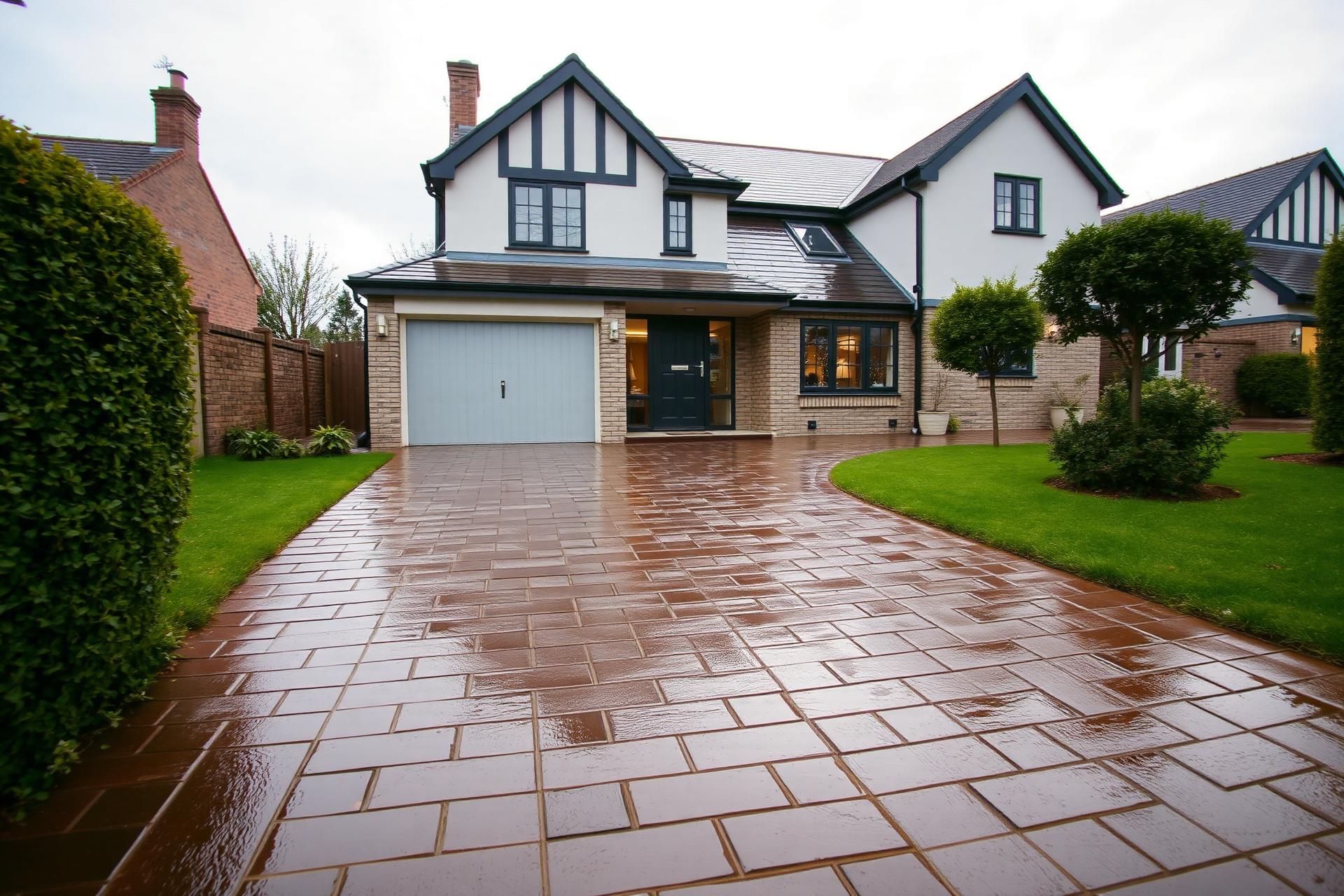
Moorland detached home on Hangingstone Road with a long tarmac-and-flag apron used by two cars and a horsebox
Tracing the peat staining line
We follow the rust-brown tide mark back to where it enters the property from the moor side, since that tells us whether it's a one-off after heavy rain or a repeating channel that needs redirecting long-term.
Testing tarmac versus flag response
The tarmac section and the flag apron near the house need different pressure settings, so we run a test patch on each before committing to a single approach across the whole drive.
Checking for bracken and dung residue build-up
Organic matter blown or dragged in from the moor sits differently to street grit and often needs a longer soak with detergent before it lifts cleanly.
Ilkley at a glance
On the A65 up the Wharfe from Menston, with the moors rising south of the town and Ben Rhydding sat just to the east.
- Postcode district
- LS29
- Local authority
- City of Bradford MDC
- County
- West Yorkshire
- Nearest city
- Bradford — 12 miles
- Access
- A65
- Commercial hub
- Ilkley Grove promenade and Leeds Road retail
- Typical stone
- reclaimed York stone and honey-toned setts
- Area type
- market town
Managing a long, mixed-surface drive in one visit
Splitting the drive into two working zones
Tarmac gets the stronger setting first while the flag apron is left to soak with detergent, so neither surface waits longer than it needs to once work starts.
Working with the natural fall of the land
Rather than fighting the plot's own drainage pattern, we wash toward the low corner already carrying water off the moor, keeping the process consistent with how the site behaves anyway.
Finishing at the house end last
The shaded flag apron nearest the door is cleaned last, once the sun (where there is any) has had longest to work on the rest of the drive, reducing the chance of re-staining from splash-back.
Access and set-up
Most of these moor-edge plots have a single lane-side entrance with no dropped kerb, often shared with a neighbouring farm track, so we confirm turning space for the van before booking and avoid blocking the lane during a walker's busy weekend on the moor path above.
Water and run-off
There's no road gully to rely on here — water and lifted grit have to be steered toward a natural low corner of the plot or an existing field drain rather than a formal outlet, so we identify that point on arrival and work the wash toward it rather than letting run-off spread across open ground.
Things that shape how this job goes
- Peat staining reappears faster after heavy moorland rain, so timing after a dry spell gives longer-lasting results.
- Mixed tarmac-and-flag drives need two pressure settings, not one blanket approach.
- There's no road gully up here, so run-off direction needs agreeing before the hose goes on.
- Bracken and dung debris should be swept off by hand before any water is applied.
- Shaded flag sections near the house dry much slower than the open tarmac run.
Ilkley driveways — FAQs
Why does my drive get that rust-coloured staining after rain even though I don't live near a river?+
That colour comes from peat run-off draining down off the moor above the property rather than anything to do with a river; it settles in low points on the drive and needs a proper wash rather than just rinsing.
Can you clean tarmac and stone flags in the same visit without damaging either?+
Yes, but we treat them as separate zones with different pressure settings, since tarmac tolerates more force than an older York stone apron.
Will cleaning stop the peat staining coming back?+
It removes what's there, but if the moor-side drainage pattern into your plot hasn't changed, staining can return after the next heavy rain — redirecting that flow is a separate, longer-term fix worth discussing.
Is there anywhere for the dirty water to go if there's no drain nearby?+
We work the wash toward whatever natural low point or field drain the plot already has, rather than assuming a road gully exists, which most of these moor-edge properties don't have.
In summary
Long moor-edge driveways on Hangingstone Road need zoned pressure settings and a wash directed toward the plot's own natural drainage, not a road gully that doesn't exist.