
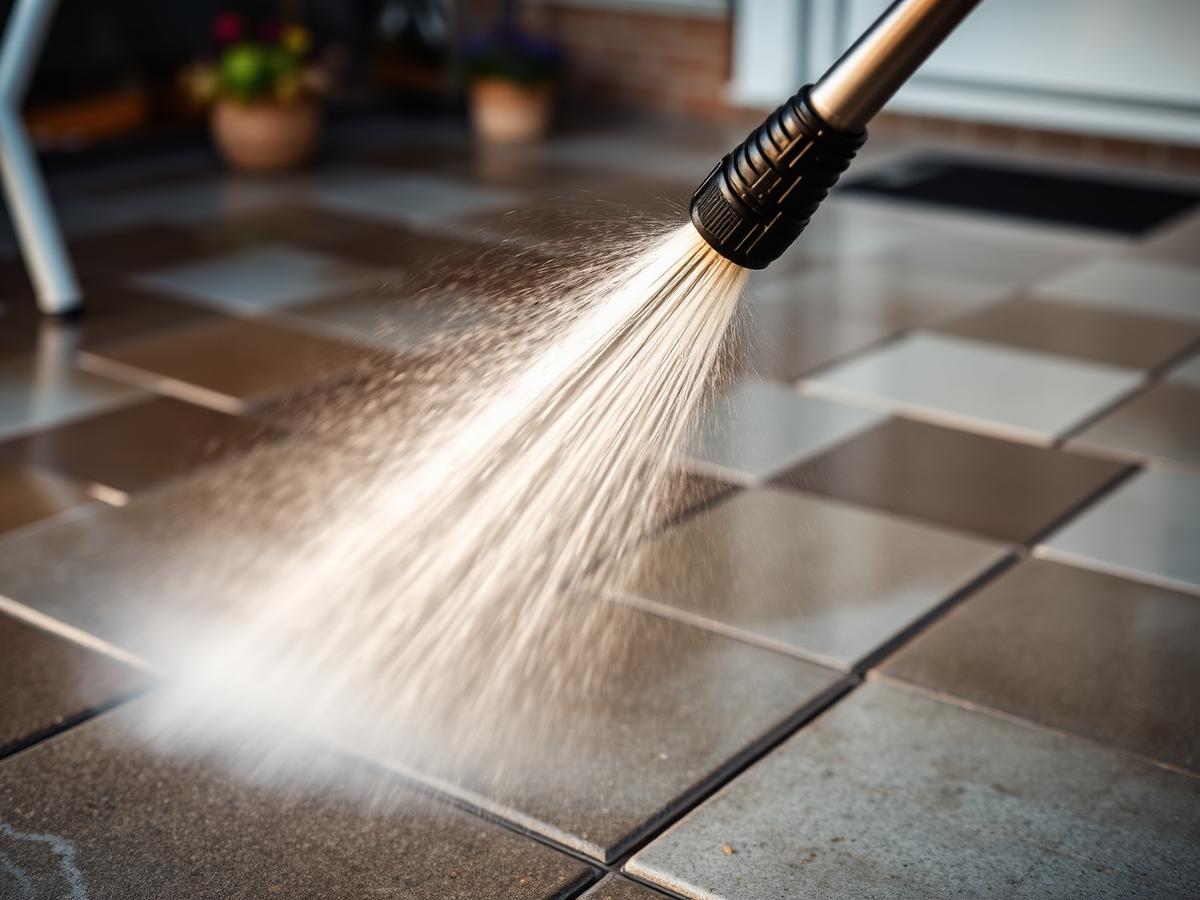
A tired, grey, patchy concrete drive tempts a lot of people toward a tin of masonry or concrete paint, because it promises a fast, dramatic before-and-after. Cleaning is the slower-looking option on paper, but it deals with the actual condition of the surface rather than sitting a new colour on top of it.
Both have a place, but they're solving different problems, and picking the wrong one for your situation tends to show up again within a season or two.
What painting concrete actually achieves
Concrete paint gives an immediate, uniform colour change and can hide staining, patchiness and minor surface wear in a single coat. It's a genuinely fast way to improve first impressions on a budget, particularly on plain concrete rather than textured or imprinted surfaces.
The trade-off is that paint sits on top of whatever biological growth or contamination is already there — it doesn't remove it, and it changes how the surface interacts with moisture and future maintenance.
What cleaning actually achieves
- Removes the algae, lichen and ingrained dirt causing the discolouration in the first place, rather than covering it.
- Reveals the real condition of the concrete, including any cracking or surface wear that paint would otherwise hide.
- Keeps the option open to seal, paint or leave the surface natural afterwards, since you're starting from a genuinely clean base.
Where paint tends to struggle over time
Paint applied over a surface with active moss or algae underneath, or over a damp base, is more prone to peeling and flaking as growth continues beneath the film or moisture works its way out. Imprinted or textured concrete also wears paint unevenly at high-traffic points, showing bare patches faster than flat concrete would.
A sensible order if you want both
If you like the idea of a fresh, uniform colour, cleaning first and painting afterwards gives the paint a sound, dry, growth-free surface to bond to, which gives it a fairer chance of lasting rather than failing early over hidden contamination.