Resin-bound surfacing and block paving are often compared on installation cost and initial look, but the ongoing maintenance is arguably the bigger practical difference between them. One relies on sand-filled joints that need periodic attention; the other is a bonded, jointless surface that fails in different ways entirely.
Neither is maintenance-free, and assuming resin-bound needs 'nothing' or that block paving 'just needs a jet wash occasionally' both miss what actually keeps each surface looking right over time.
Where block paving's maintenance load sits
- Joints need sand topping up periodically as it washes out or gets removed during cleaning.
- Weeds germinate readily in open or thin joints and need periodic treatment.
- Individual blocks can be lifted and replaced or re-set without touching the surrounding drive.
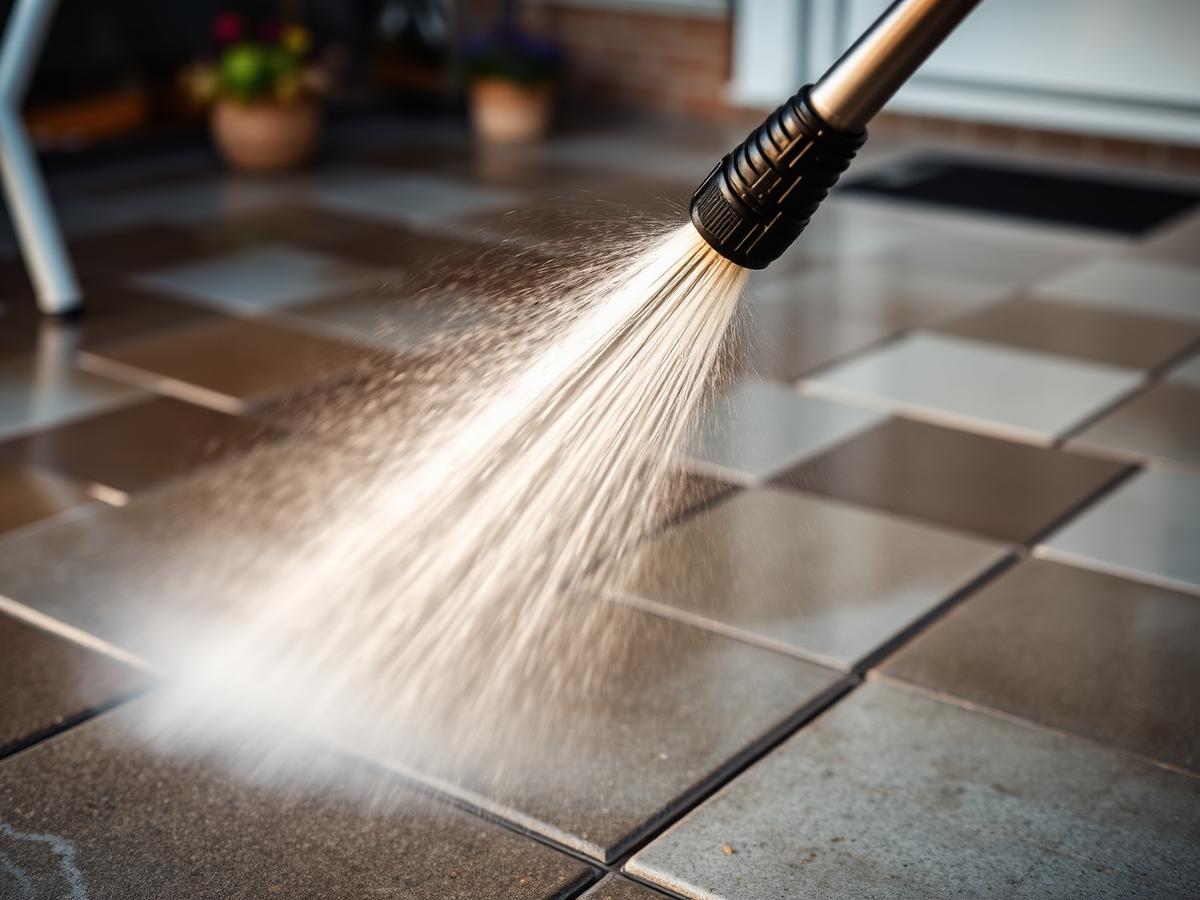
- Cleaning uses mechanical methods — rotary or lance — since the surface itself is a hard, durable material.
Where resin-bound surfacing's maintenance load sits
- No sand-filled joints to top up, since the aggregate is bonded into a single permeable surface.
- Cleaning tends to favour lower pressure and careful technique, since aggressive pressure washing can dislodge stone from the resin over time.
- Localised damage — a crack, a stain, or a worn patch — is harder to repair invisibly than swapping out a single paving block.
- Moss and algae can still colonise the surface, particularly in shaded or poorly draining areas, and need the same kind of biocide treatment as any other surface.
Repairability is the sharpest practical difference
Block paving's biggest maintenance advantage is that it's modular — a stained, cracked or oil-damaged block can be individually lifted and replaced, and the repair blends in reasonably well once the surface is cleaned and re-sanded as a whole.
Resin-bound surfacing doesn't have that same unit-by-unit repairability. A damaged patch usually needs a localised patch repair that can be visible against the surrounding surface, at least until it weathers in.
Which surface suits lower ongoing attention
If the priority is avoiding periodic joint maintenance and weeding, resin-bound generally asks less of that specific chore. If the priority is being able to fix isolated damage cheaply and invisibly, block paving's modularity is the stronger case.
Both still need occasional cleaning to deal with general grime, algae and moss — surfacing type changes the maintenance tasks involved, not whether maintenance is needed at all.