
Biocide Treatment for Stone Flags in Rawdon
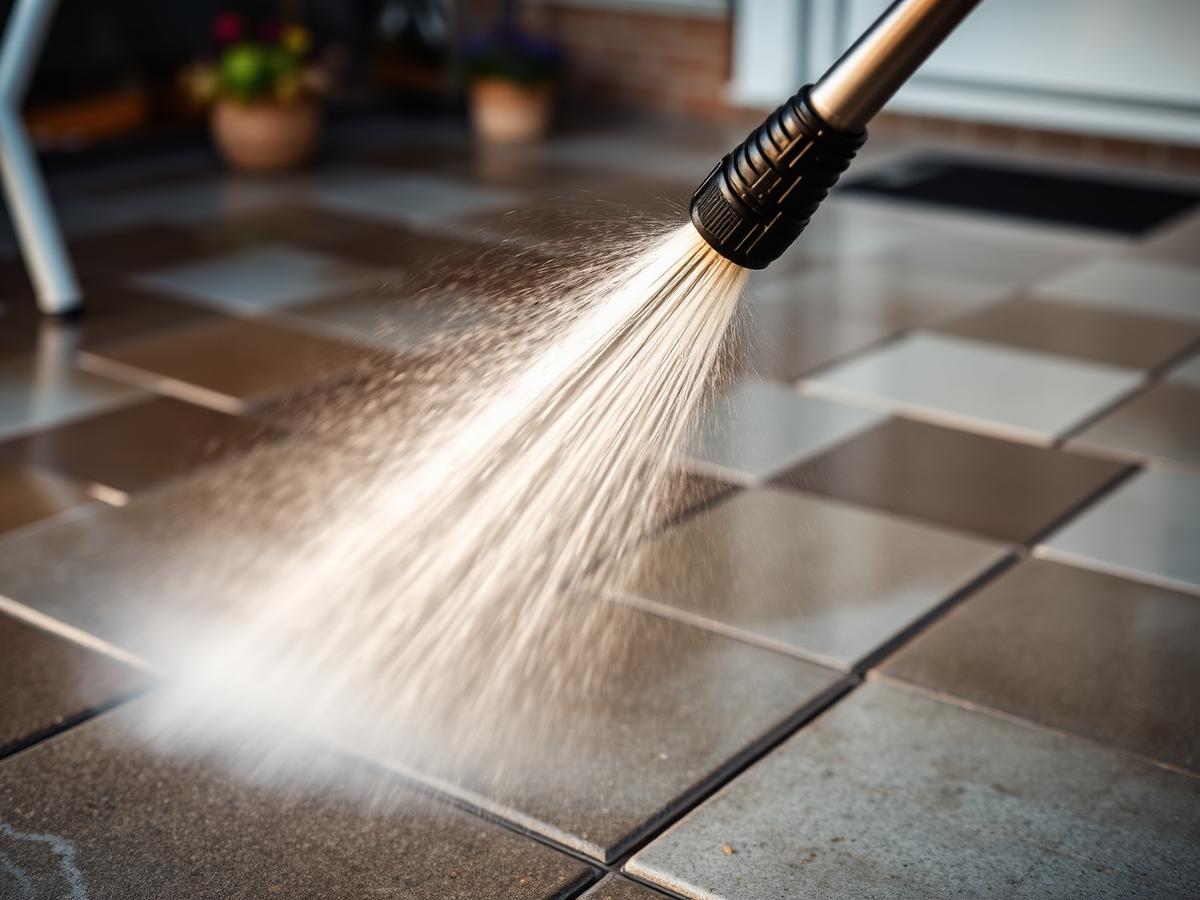
North-facing Yorkshire stone flags behind a stone-built villa
Several of Rawdon's stone-built villas have Yorkshire stone flag paths and patios on their north or east-facing side, areas that get little direct sun for much of the year. On this porous natural stone, surface cleaning alone removes visible algae but leaves spores within the stone's texture, which is why homeowners often report the green film returning within a season of a wash-only visit.
Why north-facing flags in Rawdon keep regreening
Several of Rawdon's stone-built villas have Yorkshire stone flag paths and patios on their north or east-facing side, areas that get little direct sun for much of the year. On this porous natural stone, surface cleaning alone removes visible algae but leaves spores within the stone's texture, which is why homeowners often report the green film returning within a season of a wash-only visit.
The airport-adjacent pollen and fine grime that settles across Rawdon gives algae an extra food source once it's established, meaning these north-facing flags can go from lightly hazed to visibly slick faster than equivalent stone in more open, sun-exposed gardens elsewhere in the area.
Because gritstone flags are often original to these older villas, protecting the stone's surface while actually killing off the growth at a cellular level, rather than just scrubbing the visible layer away, is the priority here.
Getting kit in, getting water away
North-facing paths on villa plots are often narrower than the main driveway, running alongside the house to a rear garden or side gate, so we work with backpack sprayers rather than trailing long hose lines in these tighter spaces. Damp, shaded stone can also be slippery underfoot, so we take care with footing during application.
Treated areas here typically drain onto adjacent soil borders or a narrow channel rather than a formal gully, given the tight side-passage layout. We apply biocide in controlled, measured amounts rather than a heavy application, limiting how much reaches nearby planting during the treatment period.
- Nearest city
- Leeds — 7 miles
- Typical surfaces
- Yorkshire stone flags with block-paving driveways
- Common property stock
- stone-built villa, 1930s detached, modern estate home
- Nearest commercial hub
- Rawdon Micklefield and Yeadon retail
- Area type
- suburb
- Postcode district
- LS19
Points to plan around
Before we start
- North-facing flags near mature villas usually need treatment more often than sunnier surfaces.
- Biocide works into the stone rather than just clearing the visible surface layer.
- Application near soil borders is measured carefully to limit run-off.
Once it's done
- Treated stone can look temporarily discoloured before growth fully dies back.
- Repeat treatment intervals are shorter in consistently shaded garden corners.
What we check before applying biocide
Algae vs lichen check
We distinguish algae film from lichen patches, since lichen needs a different dwell time and sometimes a repeat treatment.
Stone porosity assessment
More porous, older gritstone absorbs treatment differently to denser modern flags, which changes dilution strength.
Shade duration mapping
We note how many hours of direct sun each section gets, since the most shaded flags usually need the strongest initial treatment.
How treatment is carried out
- Step 1
Measured application
Biocide is applied at a controlled rate across the flags, working from the most shaded end toward the sunnier sections.
- Step 2
Extended dwell time
We leave the treatment to work into the stone's surface for the recommended period without disturbing it.
- Step 3
Light rinse where needed
Depending on product and growth level, a light rinse follows, or the treatment is left to work through naturally over following rainfall.
This connects with our soft washing page for barn courtyards, and our sandstone sealing page for longer-term protection.
Biocide treatment questions
Why does the green film keep coming back after I've cleaned it myself?+
Surface cleaning alone often leaves algae spores within the stone; biocide treatment is designed to address that at the source.
Is biocide treatment safe for the plants along my path?+
We measure and direct application carefully to limit how much reaches nearby borders during treatment.
How long before I notice the flags looking better?+
Growth typically dies back visibly over one to two weeks rather than immediately after application.
Will my north-facing patio need this every year?+
Consistently shaded stone usually needs more frequent treatment than sunnier areas of the same garden.
Scope agreed before anything is switched on
- We survey the surface first and say plainly if biocide treatment is the wrong call for it.
- Scope is written down, so you can see exactly what is and isn't included.
- Where a stain or defect won't fully clear, we say so before you book.
In brief
North-facing Yorkshire stone in Rawdon needs biocide treatment at the source, not just a surface wash, to stop regrowth.