Hot Water Cleaning for Ring Road Driveways in Horsforth
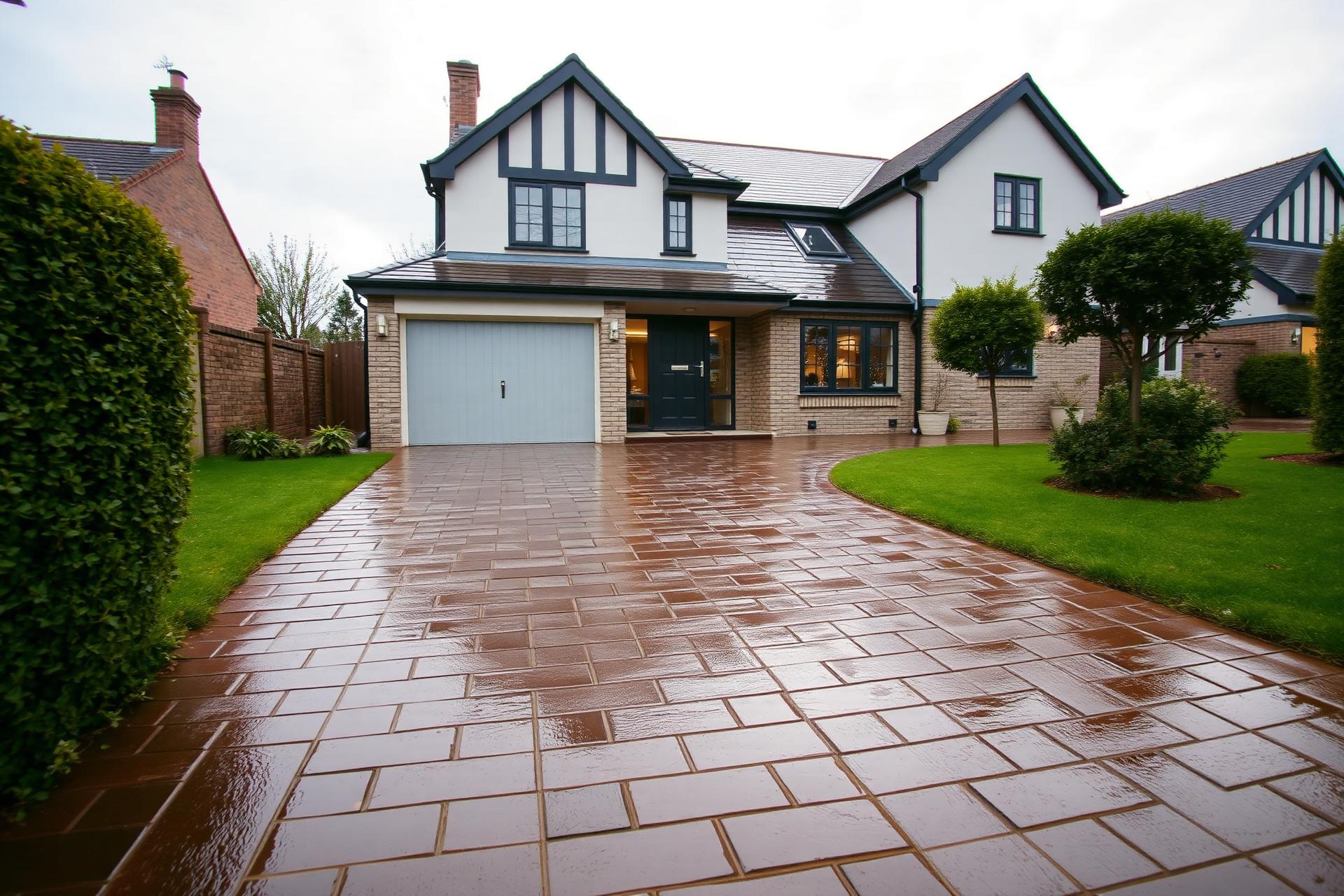
Modern estate driveway near the A6120 ring road with oil and rubber marks
Houses on the newer estates either side of the A6120 ring road tend to have two-car block-paved driveways that see daily commuter traffic in and out. That constant use leaves a build-up cold water struggles with: fine rubber dust from braking near the roundabout, light oil drips, and the black grime that settles from passing traffic on the ring road itself.
Things to think about before booking
Before we start
- Vehicles need to be off the drive for the full visit, not just moved to one side
- Oil staining that's been present for months may lighten rather than disappear completely
- Freshly topped-up jointing sand should be left undisturbed by traffic for a short settling period
Once it's done
- Hot water works faster in cooler months when grime is more concentrated rather than baked on
- A second vehicle's tyre marks are treated as a separate pass, not lumped into the general wash
Why driveways near the ring road carry heavier grime
Houses on the newer estates either side of the A6120 ring road tend to have two-car block-paved driveways that see daily commuter traffic in and out. That constant use leaves a build-up cold water struggles with: fine rubber dust from braking near the roundabout, light oil drips, and the black grime that settles from passing traffic on the ring road itself.
Because these drives are relatively young, the block paving is usually in good structural condition, so the challenge is less about protecting fragile stone and more about actually breaking down the grease bond that's formed over months of use.
Many of these homes also have a second vehicle or a trailer parked on the drive for long stretches, which leaves rectangular clean patches that make the surrounding grime look worse by comparison once one car moves.
Getting kit in, getting water away
Estate drives here are generally wide enough for our van to park directly on or beside them, though we ask which car will be moved and when, since most households run two vehicles and staggered commute times. Shared driveways between semi-detached pairs need a quick word with both households before we start.
Run-off typically drains to a soakaway crate beneath the block paving rather than a surface gully, which is standard on estates built in the last fifteen years; we keep an eye on how quickly water disappears during the rinse to flag any sign the soakaway is struggling.
- County
- West Yorkshire
- Main route in
- A65 / Leeds Ring Road A6120
- Nearest city
- Leeds — 5 miles
- Typical surfaces
- block paving with occasional York stone borders
- Common property stock
- stone-built villa, modern estate home, converted cottage
- Nearest commercial hub
- Horsforth Town Street and Kirkstall Bridge retail
Running a hot-water clean on an estate drive
- Step 1
Degreasing pre-treatment
Oil and rubber marks are treated with a dedicated degreaser before the hot-water wash starts, since heat alone won't always fully break an oil bond.
- Step 2
Hot-water wash in sections
The drive is worked in manageable sections rather than one pass end to end, so grime lifted in one area isn't dragged back across an already-cleaned patch.
- Step 3
Joint sand check and top-up
Once dry, joints are inspected and any sand loss from the wash is topped up so the paving stays locked and doesn't shift under vehicle weight.
Checking what's actually on the block paving
Oil and fuel spot check
We walk the drive looking for dark patches near where a car typically sits, since these often need a targeted degreaser pass ahead of the main hot-water rinse.
Paving joint sand level
Hot water at higher pressure can strip jointing sand from newer block paving faster than expected, so we check how full the joints are before setting pressure.
Rubber transfer marks
Tyre-turn marks near the garage door or gate are tested with a small hot-water pass first to gauge how much heat versus pressure is needed to lift them.
Ring road residents ask about hot water cleaning
Will hot water actually shift oil stains cold washing hasn't touched?+
In most cases yes, since heat helps break down the oil's bond with the paving surface, though very old or deep-set stains may only lighten rather than vanish.
Do I need to move both cars off the drive?+
Yes, we need the full surface clear, though we're happy to work around a specific time if one car needs to leave for a commute first.
Will this wash out the sand between my block paving?+
Some loss is normal with any wash, which is why we check and top up joints afterwards as part of the visit rather than leaving it.
How often should a driveway near the ring road be cleaned?+
Given the traffic grime here, an annual clean tends to keep on top of build-up better than leaving it for several years between visits.
Scope agreed before anything is switched on
- We survey the surface first and say plainly if hot water cleaning is the wrong call for it.
- Scope is written down, so you can see exactly what is and isn't included.
- Where a stain or defect won't fully clear, we say so before you book.
For sealing the same paving once it's clean, see our block-paving sealing page for this area.
Quick summary
Estate driveways near the A6120 need hot water and targeted degreasing to shift oil and traffic grime that cold rinsing leaves behind.