Hot Water Cleaning for Wakefield Commercial Forecourts
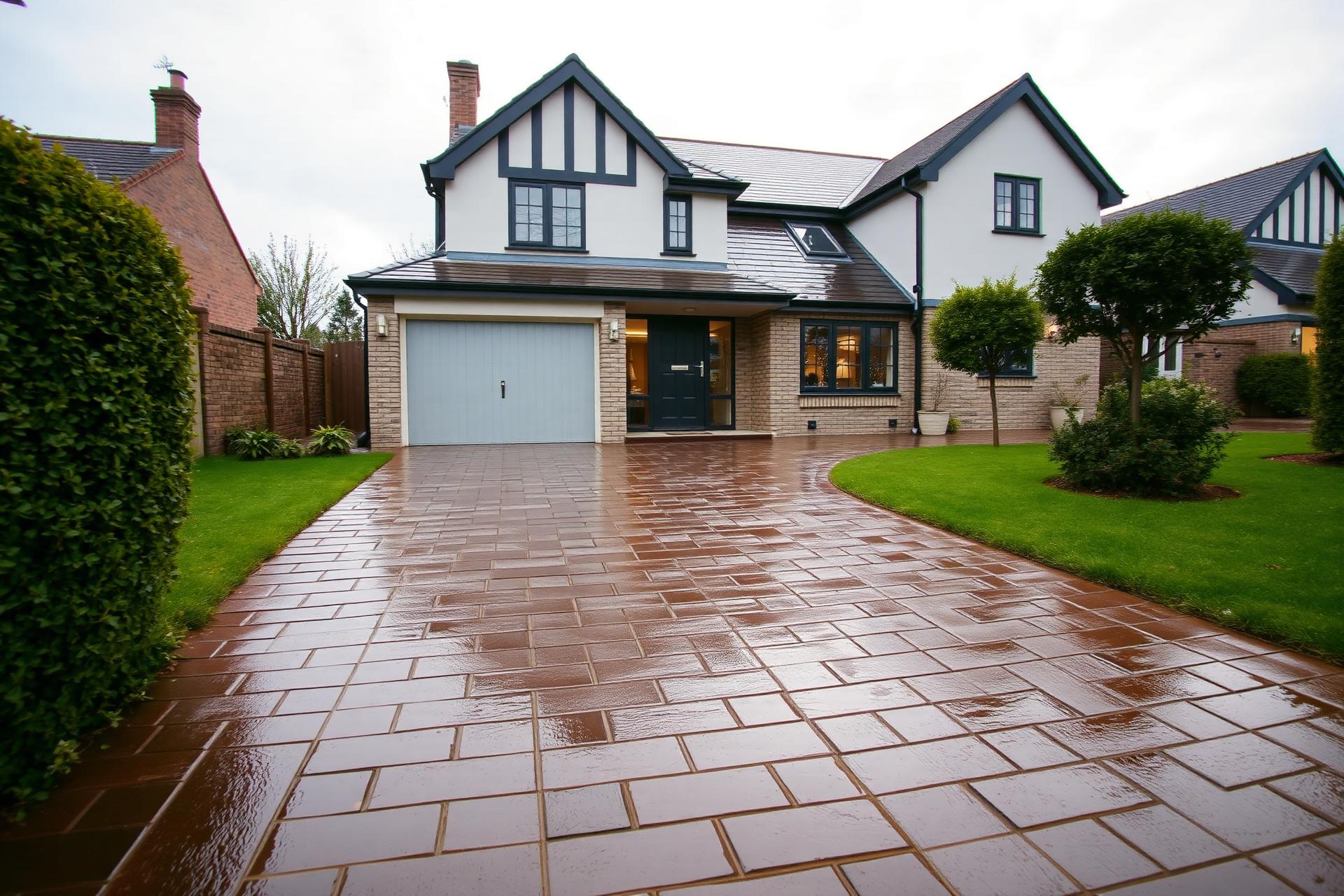
Commercial forecourt near Wakefield Europort with heavy vehicle traffic and oil residue
Units around Wakefield Europort see a steady flow of HGVs and delivery vans, and their forecourts pick up a mix of diesel drip, tyre rubber transfer and fine road grit that builds into a dark film rather than simple surface dust.
Practical points for site managers
Before we start
- Best scheduled during a delivery lull rather than peak drop-off times
- Line markings, where present, are worked around rather than blasted directly
- Oil staining that's penetrated deep into porous concrete may need repeat visits
Once it's done
- Cold mornings mean hot water cools fast, so sections are kept small in winter
- Site management should flag any recent spills so we know where to focus
Why forecourts near Europort pick up grime cold water won't move
Units around Wakefield Europort see a steady flow of HGVs and delivery vans, and their forecourts pick up a mix of diesel drip, tyre rubber transfer and fine road grit that builds into a dark film rather than simple surface dust.
Concrete and heavy-duty block paving in these yards is laid to cope with axle loads, not to shed grease easily, so the surface texture actually holds onto oily residue more than a smooth domestic slab would.
Loading bays and delivery lanes get the worst of it, while staff parking areas at the edge of the same site are usually noticeably cleaner simply from lighter, slower traffic.
Getting kit in, getting water away
Work has to fit around operating hours or a scheduled quiet period, since forecourts here are live working areas with deliveries arriving on their own timetable, and cordoning off a lane rather than the whole yard is usually the practical approach.
Commercial sites like this typically drain through trapped gullies designed to catch some sediment, but oil-heavy run-off still needs care — we work in sections so any lifted residue is contained and cleared rather than pushed straight into a drain run in one go.
- County
- West Yorkshire
- Main route in
- M1 J40 / A638
- Nearest city
- Leeds — 10 miles
- Typical surfaces
- sandstone flags and clay-red block paving
- Common property stock
- stone-built terrace, 1970s estate home, commercial forecourt
- Nearest commercial hub
- Wakefield Europort and Trinity Walk
How a commercial forecourt visit is structured
- Step 1
Sectioning the yard
The forecourt is split into working sections so vehicle access is never fully blocked, keeping deliveries moving where possible.
- Step 2
Heat-led degreasing
Hot water is used specifically where oil and tyre residue sit, since the temperature does the breakdown work that pressure alone can't manage on this kind of grime.
- Step 3
Contained rinse-through
Each section is rinsed and checked before moving to the next, so residue doesn't get redistributed onto ground already cleaned.
What's assessed before hot water goes down
Surface material check
Concrete, block paving and any resin-bound sections each behave differently under heat and pressure, so we identify what's actually underfoot before setting parameters.
Oil staining age
Fresh drips lift far more easily than oil that's baked into the surface over months, which changes whether a single hot water pass is enough or a pre-treatment is needed.
Drainage point locations
We map where the yard's gullies sit relative to the areas being cleaned so water flow can be directed sensibly during the work.
Hot water cleaning questions from commercial sites
Will hot water damage the concrete surface?+
No, properly laid commercial concrete and block paving are built for far more punishment than a hot water clean — the heat targets the grease, not the substrate.
Can you work while the yard is still operating?+
In sections, yes, though a fully closed window gets a more thorough result since we're not working around moving vehicles.
Why does hot water work better than cold on oil?+
Heat breaks down the oil's viscosity so it lifts and rinses away rather than just spreading thinner across the surface.
How often should a forecourt like this be done?+
It depends entirely on traffic volume — a busy loading bay needs attention far sooner than a quieter staff car park on the same site.
Scope agreed before anything is switched on
- We survey the surface first and say plainly if hot water cleaning is the wrong call for it.
- Scope is written down, so you can see exactly what is and isn't included.
- Where a stain or defect won't fully clear, we say so before you book.
See rotary surface cleaning for a faster mechanical option on large flat forecourt areas.
The short version
Commercial forecourts near Wakefield Europort benefit from heat-led, sectioned cleaning that targets oil and tyre residue without disrupting live deliveries.