
Soft Washing North-Facing Yards in Baildon
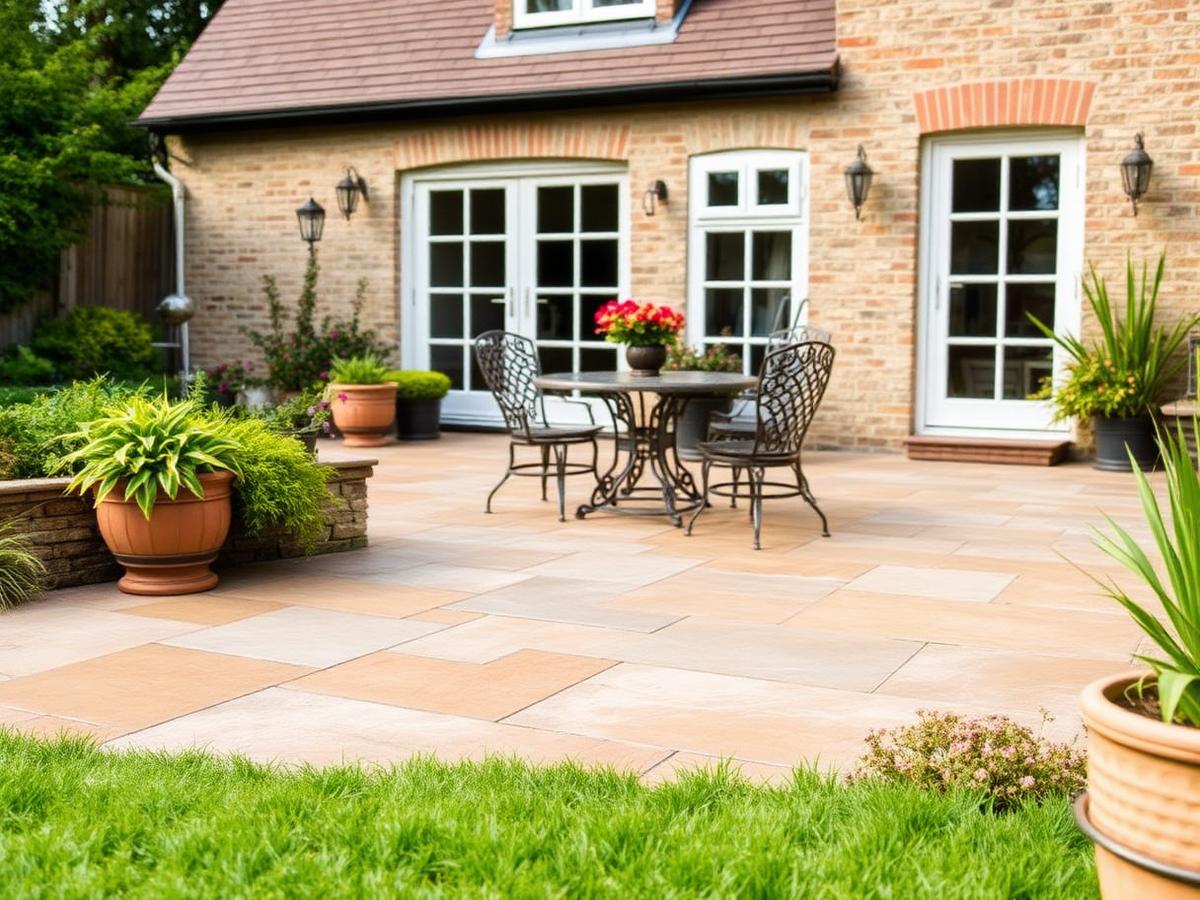
North-facing rear yard behind a stone terrace on Browgate, shaded most of the day
Behind the stone-built terraces near Browgate, many rear yards are narrow, walled and permanently shaded by the buildings on either side. Direct sun rarely reaches the flagstones for more than an hour or two even in summer, which means moisture lingers on the surface long after the front of the house has dried out.
Why the yards behind Browgate stay damp so much of the year
Behind the stone-built terraces near Browgate, many rear yards are narrow, walled and permanently shaded by the buildings on either side. Direct sun rarely reaches the flagstones for more than an hour or two even in summer, which means moisture lingers on the surface long after the front of the house has dried out.
These yards were often laid with older buff sandstone flags rather than modern paving, and the pointing between them has usually never been replaced. High pressure on that kind of jointing risks scouring out decades-old mortar, which is exactly the situation soft washing is meant for — treating the biological growth chemically at low pressure rather than trying to blast it off.
Baildon's moor-side wind doesn't reach these enclosed yards directly, but the dampness it encourages elsewhere in the town is amplified here by the lack of light, so algae regrows faster than on an open, sunnier drive.
How a soft wash visit actually unfolds
- Step 1
Pre-clearing debris and leaf litter
Shaded yards collect windblown leaf matter against walls; this is cleared first so treatment reaches the stone rather than sitting on organic debris.
- Step 2
Low-pressure application
The biocide solution is applied at low pressure across the whole yard rather than spot-treated, so regrowth is tackled evenly rather than in patches.
- Step 3
Dwell time suited to shade
Because these yards don't get direct sun to help the treatment work, dwell time is extended compared with a sunnier job before any rinse.
What we look for before choosing soft washing over a jet
Mortar softness test
A small area of jointing is checked by hand pressure to judge how much the old lime or sand mortar has weakened, which decides how gentle the whole visit needs to be.
Growth type on shaded flags
We distinguish between black algae, green moss and lichen, since each responds to a slightly different dilution and dwell time in the treatment.
Shared drain capacity
Where a yard drain is shared with a neighbouring property, we confirm it copes with light run-off before starting the treatment.
Things worth planning around
Before we start
- Growth may look barely changed on the day — soft washing keeps working for days afterward as it dies back.
- Pets and children should stay off the treated area until it's fully dry.
- Shaded yards benefit from a repeat visit roughly annually rather than a one-off.
Once it's done
- Access through a narrow ginnel may limit which equipment we bring on the day.
- Any washing lines or planters get moved and returned rather than treated directly.
Getting kit in, getting water away
Rear yards behind these terraces are typically reached through a shared ginnel or a narrow side gate rather than directly from the road, so equipment goes in by hand rather than trolley in many cases. We check gate widths and any bin storage in advance so the visit doesn't get held up on the day.
Water in these enclosed yards generally drains to a single gully near the back door or into a shared yard drain serving two or three properties. Because soft washing uses far less water volume than pressure washing, the risk of overwhelming that single gully is much lower, but we still confirm it's running freely first.
- Local authority
- City of Bradford MDC
- County
- West Yorkshire
- Main route in
- A6038
- Nearest city
- Bradford — 4 miles
- Typical surfaces
- Yorkshire stone flags and older buff sandstone
- Common property stock
- stone-built terrace, moor-edge detached, 1930s semi
Related pages cover other Baildon surfaces and treatments nearby.
Scope agreed before anything is switched on
- We survey the surface first and say plainly if soft washing is the wrong call for it.
- Scope is written down, so you can see exactly what is and isn't included.
- Where a stain or defect won't fully clear, we say so before you book.
Questions from residents behind the terraces
Why not just pressure wash it like the front drive?+
The old lime pointing in these rear yards can't take the same pressure as a modern driveway, so a chemical treatment at low pressure protects the joints while still clearing the growth.
How long before I see a difference?+
Often a few days to a week, as the treatment needs time to kill off the algae rather than just rinsing it away instantly.
Will it smell?+
There's a mild chemical smell during application that clears quickly once the area airs out, particularly with the yard gate open.
Does the shade mean it'll just come back straight away?+
It will return faster than on a sunny drive, which is why an annual repeat treatment suits these yards better than a single visit.
If your back yard off Browgate never seems to dry out, ask us about a soft wash visit built around your access and drainage.
The short version
Shaded terrace yards in Baildon do better with a gentle chemical treatment than a high-pressure jet.