
Soft Washing North-Facing Patios in Guiseley
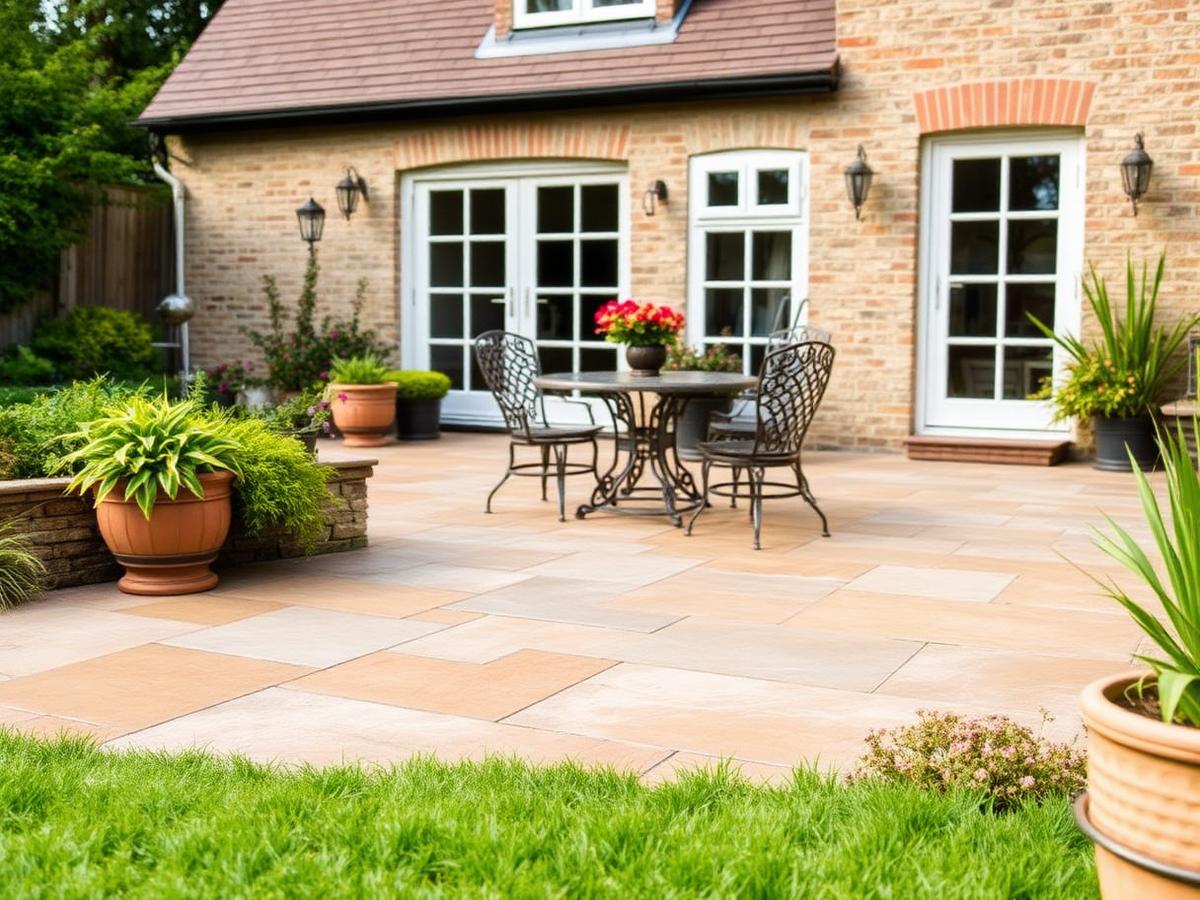
North-facing patio behind a commuter cul-de-sac property, overhung by garden trees
A good number of Guiseley's back gardens, particularly on the commuter cul-de-sacs built through the 1970s, back onto mature planting or share boundary trees with neighbouring plots. That overhanging canopy is pleasant enough in summer, but it drops leaf litter, sap and pollen onto patio flags for months at a time, and shaded, damp stone is exactly where lichen and algae take hold fastest.
The tree-litter problem in Guiseley back gardens
A good number of Guiseley's back gardens, particularly on the commuter cul-de-sacs built through the 1970s, back onto mature planting or share boundary trees with neighbouring plots. That overhanging canopy is pleasant enough in summer, but it drops leaf litter, sap and pollen onto patio flags for months at a time, and shaded, damp stone is exactly where lichen and algae take hold fastest.
Because these patios rarely get direct sun for more than a few hours a day, moisture sits in the stone's surface pores far longer than on an open, south-facing terrace. Jet washing that kind of surface hard enough to strip lichen quickly can etch softer stone and blast away pointing that's already been softened by constant damp.
Soft washing suits this exact scenario — treating the biological growth chemically at a low pressure that doesn't disturb bedding sand or open up joints that are already vulnerable from years of shade.
How a soft wash visit differs from jet washing
- Step 1
Low-pressure application
Biocide solution is applied at low pressure across the whole patio, working into joints and porous stone surfaces rather than just the visible growth on top.
- Step 2
Dwell time before any rinse
The treatment is left to work into the biological growth for a set period rather than being washed off immediately, which is what actually kills the root structure rather than just the surface colour.
- Step 3
Light rinse only where needed
Where a final rinse is used at all, it's kept gentle and targeted, since the point of soft washing is avoiding the disturbance a full jet rinse would cause on softened pointing.
What we look for before choosing soft washing
Type and density of growth
We distinguish moss, algae and lichen on site, since each responds differently to treatment and lichen in particular needs longer dwell time.
Pointing condition between flags
Constant shade often softens old pointing; we check it before applying anything so we know how much moisture the joints can tolerate.
Overhang and future re-growth risk
We note which parts of the patio sit directly under branches, since these areas will need more frequent attention regardless of how well the first clean goes.
What to plan around
Before we start
- Results build over one to two weeks as the treatment continues working, not instantly on the day.
- Best carried out in drier settled weather so rain doesn't dilute the treatment before it's taken effect.
- Overhanging branches worth trimming back afterwards to slow how quickly growth returns.
Once it's done
- Pets and children should stay off treated areas until the surface has fully dried.
- Heavily shaded patios typically need an annual repeat rather than a one-off treatment.
Getting kit in, getting water away
Rear gardens on these plots are usually reached via a side gate rather than through the house, and gate widths vary — some take a wheeled sprayer easily, others need equipment carried through in sections. Fences and shared boundaries mean we're mindful of overspray drifting onto a neighbour's planting, particularly where gardens are separated only by low trellis.
Most of these gardens drain via a shallow gradient toward a rear boundary or a soakaway rather than a formal gully, so we use low-volume application rather than heavy rinsing, letting the biocide do the work over days rather than flushing everything straight into the ground in one visit.
- Local authority
- Leeds City Council
- County
- West Yorkshire
- Main route in
- A65
- Nearest city
- Leeds — 9 miles
- Typical surfaces
- block paving and imprinted concrete drives
- Common property stock
- 1930s semi, modern detached, 1970s estate home
Explore biocide treatment and other patio-care approaches we offer around Guiseley.
Scope agreed before anything is switched on
- We survey the surface first and say plainly if soft washing is the wrong call for it.
- Scope is written down, so you can see exactly what is and isn't included.
- Where a stain or defect won't fully clear, we say so before you book.
Common questions about soft washing in LS20
Why not just pressure wash the moss off?+
Jet washing removes surface growth quickly but doesn't kill the root, so moss often returns faster, and on a shaded patio with softened pointing it risks washing joints out entirely.
Will the patio look clean straight away?+
Not immediately — the colour change happens gradually over one to two weeks as the treatment kills the growth, rather than being visibly stripped on the day.
Is soft washing safe for plants nearby?+
We take care with application near borders and shield planting where needed, though we'd always flag any particularly sensitive plants before starting.
How often will we need this doing?+
Gardens under heavy tree cover, which describes a lot of Guiseley's back plots, usually need treatment yearly to stay ahead of regrowth.
If your patio sits in shade for most of the day and green growth keeps coming back, ask us about a soft wash suited to that exact spot.
In short
Low-pressure soft washing clears lichen and algae from shaded Guiseley patios without disturbing softened pointing.