
Block Paving Sealing for New-Build Drives in Pontefract
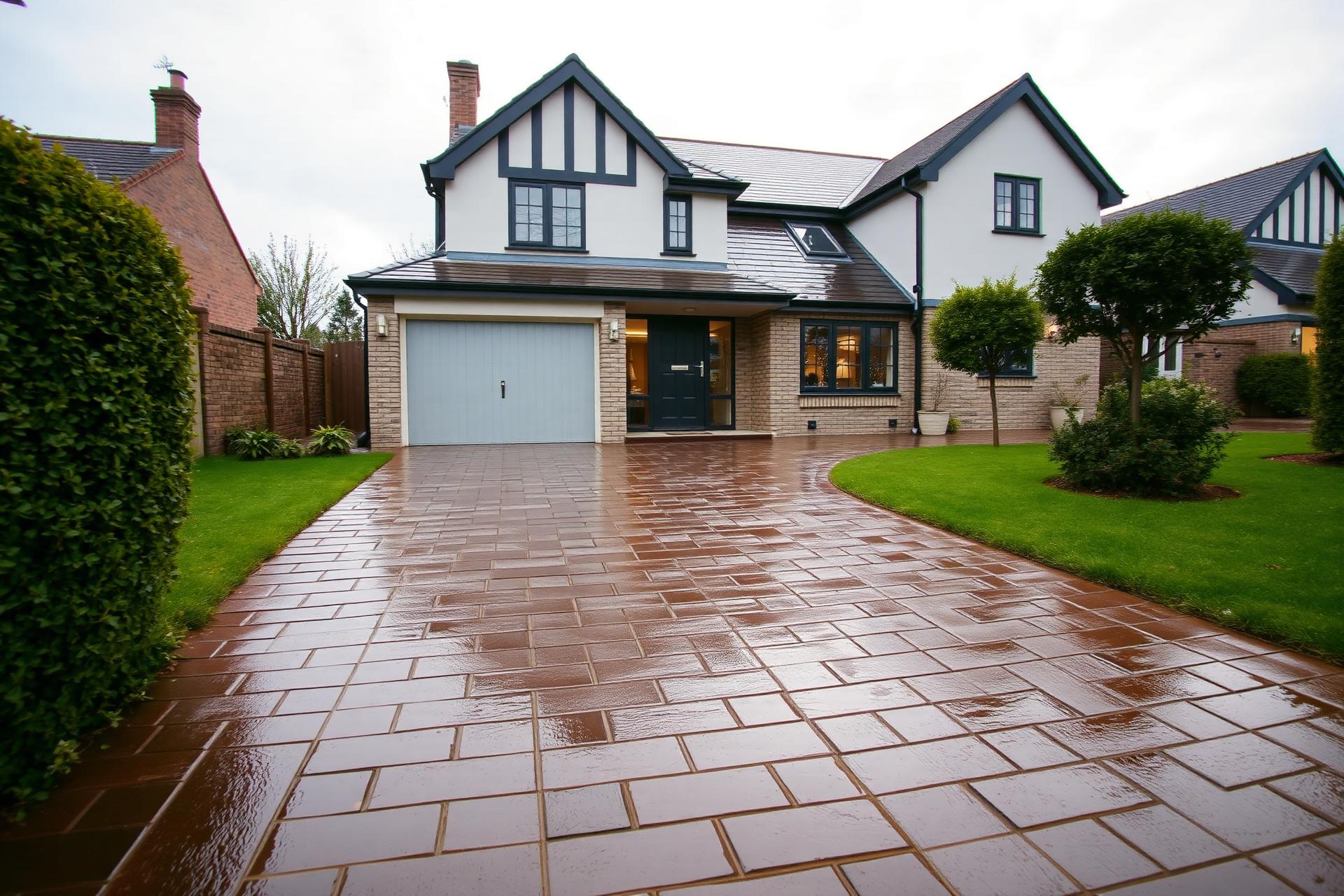
New-build cul-de-sac drive after a rotary clean
New-build estates around Pontefract's outer edges arrive with block paving that looks sharp for the first year or two, but without sealing it starts showing every oil drip, tyre mark and rain stain almost immediately because the surface is fully porous. Once a household has had the drive cleaned back to its original colour, sealing is the obvious next step to keep it that way.
Fresh estate paving that still shows every drip
New-build estates around Pontefract's outer edges arrive with block paving that looks sharp for the first year or two, but without sealing it starts showing every oil drip, tyre mark and rain stain almost immediately because the surface is fully porous. Once a household has had the drive cleaned back to its original colour, sealing is the obvious next step to keep it that way.
These drives tend to be smaller than older properties in town, often a single or double bay with a neat block border, which makes an uneven or patchy seal application very noticeable against the crisp lines of a new estate street.
Because the paving is young and the jointing sand hasn't fully settled over years of weathering the way older surfaces have, sealing also plays a role in stabilising that sand against the weekly cycle of parking and manoeuvring.
Timing and conditions that matter
Before we start
- Dry, mild weather gives the most reliable cure.
- Alternative parking needs arranging for the closure period.
- Permeable joint systems need a sealant that keeps drainage working.
Once it's done
- Freshly laid paving benefits from a settling period before first sealing.
- Aftercare: avoid pressure washing the sealed surface for a period afterwards to protect the new coating.
Sealing an estate drive properly
- Step 1
Final clean and dry-out period
The drive gets a final light clean and is left to dry fully, sometimes over more than one day depending on weather.
- Step 2
Even sealant application
Sealant is applied in controlled sections working from the back of the drive toward the street to avoid stepping on wet areas.
- Step 3
Cure time before access
The drive is left closed off for the recommended cure period before vehicles or heavy foot traffic return.
Getting kit in, getting water away
Both vehicles typically need to be off the drive for the full sealing period, including drying time, so we agree alternative parking with the household in advance, especially where visitor bays are limited on these newer cul-de-sacs. Fresh sealant needs to cure without foot or vehicle traffic.
Sealed block paving on these estates is usually designed with a permeable jointing system feeding a soakaway, so we use a sealant compatible with that system rather than one that would seal the joints solid and block designed drainage.
- Common property stock
- stone terrace, post-war semi, modern estate home
- Nearest commercial hub
- Pontefract Market Place and Pontefract Park retail
- Area type
- market town
- Postcode district
- WF8
- Local authority
- Wakefield MDC
- County
- West Yorkshire
Confirming the paving is ready to seal
Moisture level in the paving
We check the surface is fully dry through, not just dry on top, since sealing over trapped moisture causes cloudy patches.
Jointing sand consistency
We confirm sand is topped up evenly across the drive before sealing, since gaps left unsealed will show differently once treated.
Existing sealant residue
On drives with a prior coating, we check what's already there so the new sealant is compatible rather than reacting badly with old product.
Scope agreed before anything is switched on
- We survey the surface first and say plainly if block paving sealing is the wrong call for it.
- Scope is written down, so you can see exactly what is and isn't included.
- Where a stain or defect won't fully clear, we say so before you book.
Compare this with patio and sandstone sealing options elsewhere on the site.
New-build sealing questions
How soon after my drive is laid can it be sealed?+
Newly laid block paving generally benefits from a settling period first, which we can advise on based on when it was installed.
Will sealing stop water draining through my joints?+
We use a sealant suited to your drive's permeable jointing system so designed drainage keeps working.
How long do I need to keep cars off the drive?+
It varies with weather, but we give you a clear timeframe before you commit to the visit.
Will sealing make the colour look artificial?+
A well-matched sealant enhances the existing colour rather than changing it, and we can discuss finish options beforehand.
The short version
New-build drives benefit from sealant matched to their permeable jointing, applied with proper dry-out and cure time.