
Colour-Enhancing Sealer for Honey Sett Patios in Harrogate
Honey-coloured sett patio on a boutique-adjacent townhouse garden
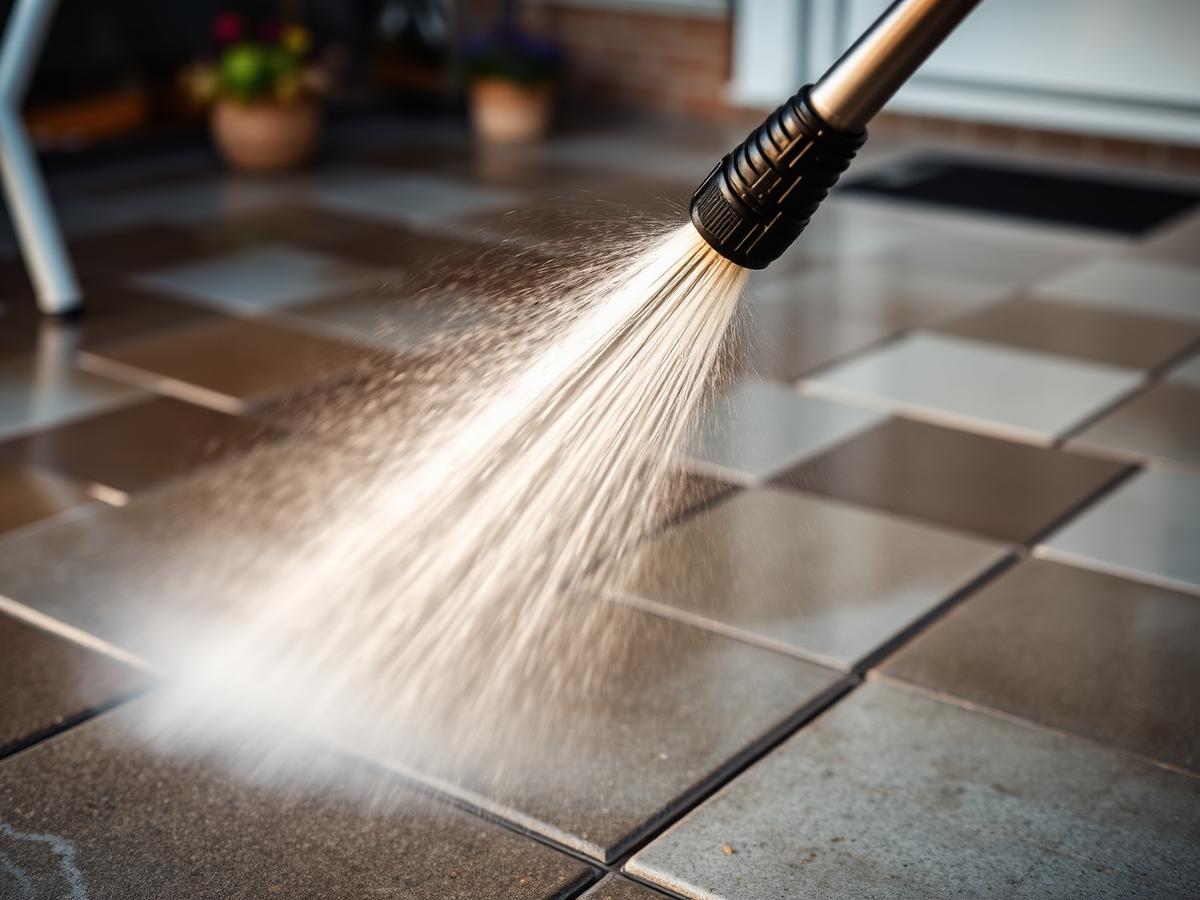
Some of the townhouses near the boutique retail area have small rear patios laid in the same honey-coloured setts used on the shopfronts nearby, giving a consistent look between the street and the garden. Years outdoors dull that honey tone toward a flatter grey-beige, particularly where the patio gets regular sun exposure that bleaches the surface over time.
A small honey sett patio behind a town-centre townhouse
Some of the townhouses near the boutique retail area have small rear patios laid in the same honey-coloured setts used on the shopfronts nearby, giving a consistent look between the street and the garden. Years outdoors dull that honey tone toward a flatter grey-beige, particularly where the patio gets regular sun exposure that bleaches the surface over time.
A colour-enhancing sealer is often requested here specifically to bring back the warmth of the original stone rather than simply protect it, since the aesthetic link to the shopfront setts matters to some owners.
These gardens tend to be compact, meaning the patio is viewed up close daily rather than glimpsed from a distance, so an overly glossy or uneven finish stands out far more than it would on an open driveway.
Getting kit in, getting water away
Access to these small rear gardens is usually through a narrow side passage or occasionally through the house itself, with limited space to store equipment, so materials are typically brought through in stages. Furniture in these compact spaces generally needs moving entirely clear rather than just to one side.
Run-off from a small enclosed patio typically drains to a nearby gully or soaks into a narrow border, so the volume of cleaning water and sealant used is kept modest given the confined space. An outside tap, where fitted, usually supplies water for the visit.
- Local authority
- North Yorkshire Council
- County
- North Yorkshire
- Main route in
- A61 / A59
- Nearest city
- Leeds — 17 miles
- Typical surfaces
- reclaimed York stone and honey-coloured setts
- Common property stock
- Victorian villa, Yorkshire-stone townhouse, large detached home
What to expect from the finished tone
Before we start
- Compact, close-viewed patios show finish imperfections more than open driveways.
- Sun-faded areas may need slightly different treatment to shaded ones for even tone.
- Thin, built-up coats generally look more natural than one heavy application.
Once it's done
- Furniture needs full clearance rather than partial shifting in a small garden.
- Confined access may mean materials are brought through in stages rather than all at once.
What decides whether a colour-enhancer will suit this stone
Testing current stone tone against original colour
A small trial area shows how far the honey tone has faded and how much a colour-enhancer can realistically restore versus a wet-look sealer alone.
Checking for uneven wear from sun exposure
Patios that get more direct sun tend to fade unevenly, so this is mapped before applying sealer to judge whether tone will end up more even afterward.
Assessing joint sand and moss build-up before sealing
Given the compact, sometimes shaded nature of these gardens, joints are checked for moss or loose sand that needs addressing before sealer is applied.
How colour-enhancing sealer is applied without over-glossing
- Step 1
Cleaning and fully drying the setts before sealing
The full patio is cleaned and left to dry properly, since colour-enhancing sealer needs a genuinely dry surface to take evenly.
- Step 2
Applying sealer in thin, even coats
Rather than one heavy coat, sealer is built up in thinner layers to avoid the artificial, overly glossy look that can result from over-application in a small viewed-up-close space.
- Step 3
Checking tone consistency across the whole patio
Once applied, the finish is checked across the full patio in different light to confirm the tone reads consistently rather than patchy.
See other Harrogate sealing options for stone matched to shopfront and garden surfaces.
Questions asked before choosing a colour-enhancing sealer
Will a colour-enhancing sealer make the patio look glossy or artificial?+
Applied in thin, even coats it should deepen the honey tone without giving an obvious sheen, which matters more in a small garden viewed up close.
Can this sealer really restore the original honey colour?+
It brings back much of the warmth lost to sun bleaching, though a trial patch is the best way to judge the realistic result on your specific stone.
Why does one part of my patio look more faded than another?+
Uneven sun exposure across a small garden often fades some sections faster than shaded corners, which is mapped before sealing to judge the finish.
How is equipment brought into such a compact garden?+
Materials are typically carried through a side passage or the house in stages, given the limited space in gardens like this.
Scope agreed before anything is switched on
- We survey the surface first and say plainly if colour-enhancing sealer is the wrong call for it.
- Scope is written down, so you can see exactly what is and isn't included.
- Where a stain or defect won't fully clear, we say so before you book.
The short version
Compact honey sett patios near the boutique area benefit from thin, even colour-enhancing coats rather than a heavy gloss finish.