
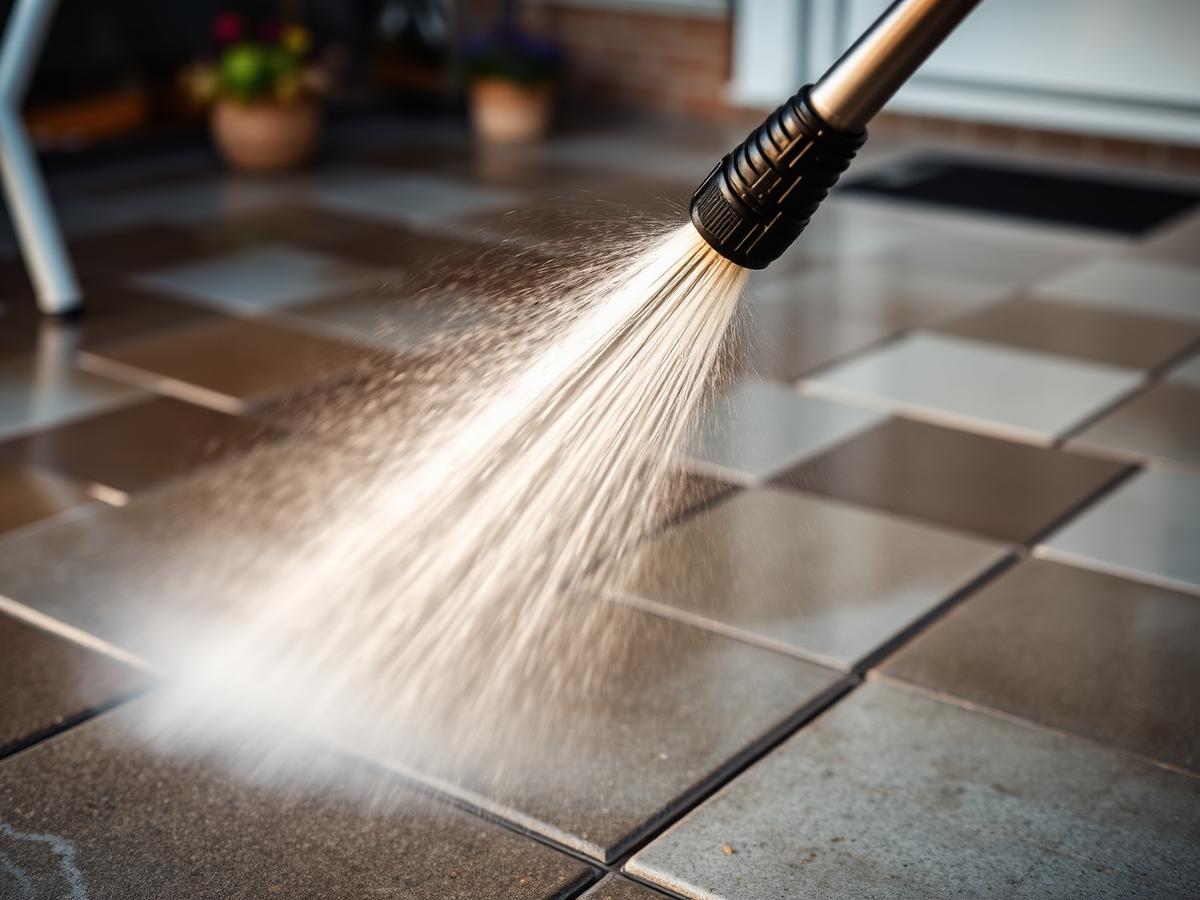
Colour Enhancing Sealer for Riven Slate Patios in Weetwood, Leeds
Riven slate patio at a Weetwood detached house
Weetwood's larger detached properties, several set back from the road behind established gardens, often have riven slate patios installed during a garden renovation phase rather than original to the house. Slate's natural cleft surface gives it strong colour variation when new — deep greys, blues and occasional rust tones — that fades to a flatter, chalky grey as the stone weathers.
Riven slate patios at Weetwood's larger detached homes
Weetwood's larger detached properties, several set back from the road behind established gardens, often have riven slate patios installed during a garden renovation phase rather than original to the house. Slate's natural cleft surface gives it strong colour variation when new — deep greys, blues and occasional rust tones — that fades to a flatter, chalky grey as the stone weathers.
This dulling happens gradually enough that owners often don't notice until they compare a sheltered corner of the patio, protected under an overhang or table, against the more exposed open areas that have taken years of UV and rain.
Because slate is naturally low-porosity compared with sandstone, it doesn't stain as readily, but that same tight surface means a colour enhancer needs a different application approach to get an even result rather than sitting patchily on top.
Getting kit in, getting water away
Patios here are typically reached through the house or via a side gate on larger plots, with space to lay out materials on adjoining lawn areas during application. Furniture and planters on the patio need moving clear before work starts and kept off until the enhancer has cured.
Riven slate patios usually sit on a compacted base with a gentle fall away from the house toward a garden drain or soakaway installed during the original landscaping. Enhancer products are chosen to remain breathable so any trapped moisture beneath the slate can still escape rather than being sealed in.
- Local authority
- Leeds City Council
- County
- West Yorkshire
- Main route in
- M621 / A61
- Nearest city
- Bradford — 9 miles
- Typical surfaces
- block paving and imprinted concrete drives
- Common property stock
- red-brick back-to-back, Edwardian semi, high-spec new build
What to weigh up before enhancing colour
Before we start
- Sheltered patches often reveal how much colour the main area has actually lost
- Slate's low porosity means application technique matters more than product alone
- A test panel is worth approving before committing to the full patio
Once it's done
- Furniture and planters need clearing during application and cure
- Breathable products avoid trapping moisture beneath the slate
Why slate loses its depth of colour over time
Colour comparison test
We compare a sheltered, less-faded patch against the main exposed area to judge how much colour depth has genuinely been lost.
Slate porosity check
Because slate is naturally tight-surfaced, we test how readily it accepts product before deciding on application method and coat number.
Existing coating residue
Any prior sealant or enhancer residue is identified, since layering a new enhancer over old, worn product can cause uneven absorption.
Applying an enhancer without an artificial finish
- Step 1
Full clean and dry-down period
The slate is cleaned and given time to dry fully, since any residual moisture affects how evenly an enhancer is absorbed into a low-porosity surface.
- Step 2
Test panel application
A discreet test area is enhanced first so the owner can approve the colour result before the whole patio is treated.
- Step 3
Even multi-pass coating
Enhancer is built up in controlled passes rather than one heavy coat, avoiding blotching on slate's tight surface.
Sandstone sealing covers similar colour-fade issues where the material is porous rather than tight-surfaced.
Questions about slate colour and sealing
Why has my slate patio gone flat grey compared with when it was laid?+
UV exposure and rain gradually strip the natural colour depth from riven slate's surface, which a colour enhancer is designed to restore.
Will the enhancer look artificial or too glossy?+
We apply in controlled passes and use a test panel first, aiming to restore natural depth rather than an artificial sheen.
Does slate need different treatment to sandstone for this?+
Yes, slate's tighter surface absorbs product differently, so application technique is adjusted compared with a more porous stone.
How long before we can put furniture back on the patio?+
This depends on the product's cure time, which we'll confirm before starting so furniture stays off for the right period.
Scope agreed before anything is switched on
- We survey the surface first and say plainly if colour-enhancing sealer is the wrong call for it.
- Scope is written down, so you can see exactly what is and isn't included.
- Where a stain or defect won't fully clear, we say so before you book.
The short version
A colour enhancing sealer restores natural depth to a faded Weetwood slate patio through careful, low-porosity application technique.