
Imprinted Concrete Sealing in Baildon
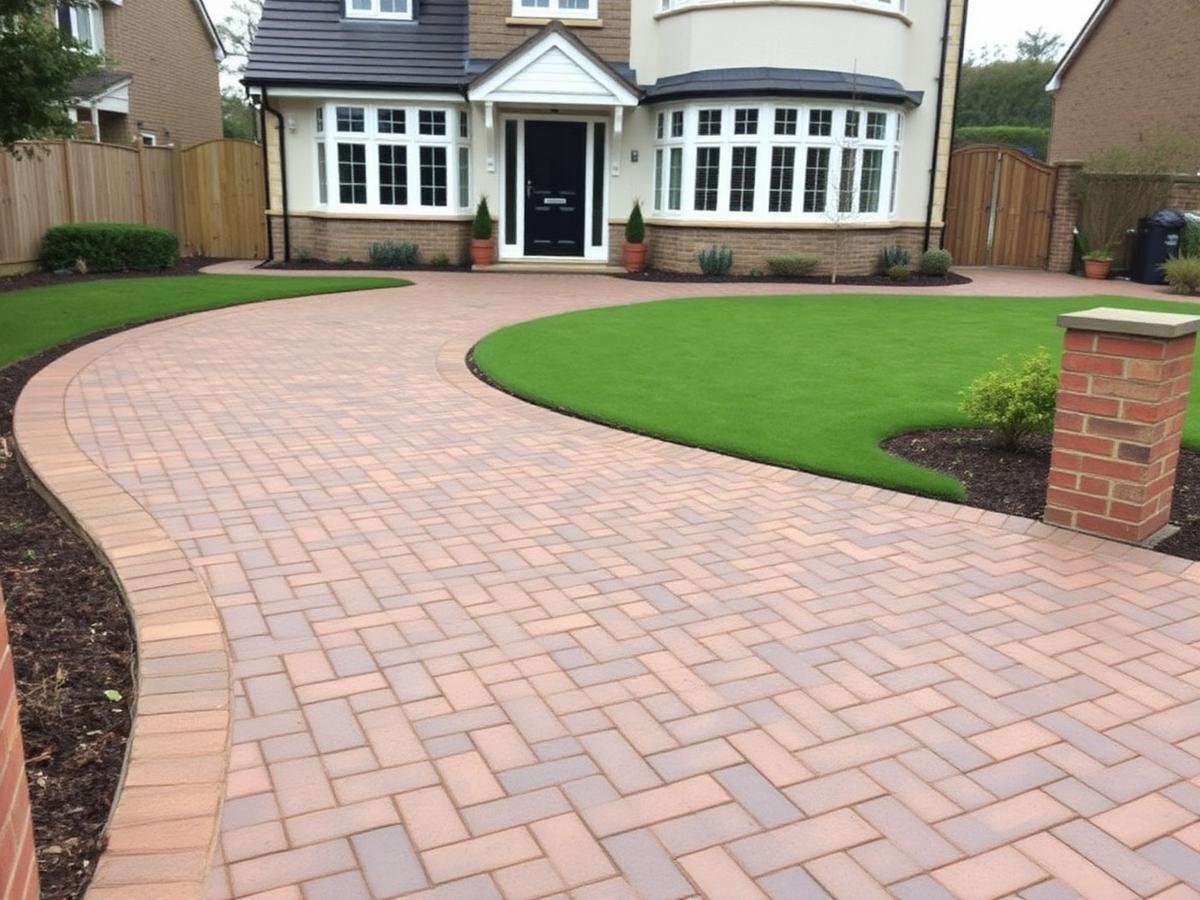
Imprinted concrete driveway on a modern detached home near Hoyle Court
A number of the more recently built detached homes near Hoyle Court and the moor-edge fringe of Baildon have imprinted concrete driveways, laid with a stamped pattern and integral colour finish rather than natural stone or block paving. These surfaces rely entirely on their sealant coat for both colour retention and surface protection, unlike stone which has some inherent durability of its own.
Why imprinted concrete needs resealing sooner than people expect
A number of the more recently built detached homes near Hoyle Court and the moor-edge fringe of Baildon have imprinted concrete driveways, laid with a stamped pattern and integral colour finish rather than natural stone or block paving. These surfaces rely entirely on their sealant coat for both colour retention and surface protection, unlike stone which has some inherent durability of its own.
Once that original sealant wears thin — usually from a combination of UV exposure on these more open, elevated plots and regular tyre traffic — the colour visibly fades and the surface texture starts losing its slight sheen, often patchily rather than evenly across the drive.
Because these driveways sit higher and more exposed near the moor edge than properties in the sheltered town centre, they take more direct weathering, which tends to shorten the practical gap between reseals compared with a similar drive lower down in a more built-up street.
Checking pattern wear before choosing a sealant approach
Sealant wear mapping
We identify exactly which zones — usually tyre tracking lines — have lost their sealant coat first, since these need particular attention before a full reseal.
Pattern and colour fade assessment
Fading is checked across sun-exposed versus shaded sections of the drive to judge whether an even reseal will restore consistent colour or whether patch treatment is needed first.
Surface cracking check
Imprinted concrete can develop fine cracks at pattern joints over time; these are noted before sealing since sealant won't bridge structural cracking.
Getting kit in, getting water away
These modern detached driveways are generally generous in width with off-road parking for two or more cars, giving reasonable room to section the work, though we still confirm access for larger equipment given some plots have a gated or shared entrance near the moor boundary.
Run-off from these elevated driveways typically reaches a road gully lower down the plot; because sealant needs proper cure time before any rain, we plan the visit around a forecast dry window specifically due to the more exposed weather this side of Baildon experiences.
- Postcode district
- BD17
- Local authority
- City of Bradford MDC
- County
- West Yorkshire
- Main route in
- A6038
- Nearest city
- Bradford — 4 miles
- Typical surfaces
- Yorkshire stone flags and older buff sandstone
What affects how long a reseal lasts
Before we start
- Elevated, exposed driveways near the moor typically need resealing more often than sheltered town-centre surfaces.
- Tyre-track wear zones often need extra attention compared with the rest of the drive.
- A dry, mild forecast window is essential for both application and cure.
Once it's done
- Existing cracks at pattern joints should be addressed separately, since sealant alone won't fix them.
- Reseal frequency depends on traffic and sun exposure, not a fixed generic interval.
How resealing restores colour without hiding the pattern
- Step 1
Full clean and degrease before resealing
The whole drive is cleaned and any oil or tyre residue degreased, since sealant applied over residual grime won't bond properly or restore colour evenly.
- Step 2
Colour-matched sealant application
A sealant matched to the original integral colour is applied evenly across the pattern, restoring depth of colour rather than leaving a patchy, part-refreshed look.
- Step 3
Slip-resistance consideration in the finish
The chosen sealant finish balances restored sheen with adequate grip, particularly relevant on a sloped or elevated drive exposed to more rain.
Scope agreed before anything is switched on
- We survey the surface first and say plainly if imprinted concrete sealing is the wrong call for it.
- Scope is written down, so you can see exactly what is and isn't included.
- Where a stain or defect won't fully clear, we say so before you book.
Questions about fading and slip resistance
Why has my drive faded faster than a friend's in a more sheltered spot?+
Elevated, moor-edge plots get more direct sun and weather exposure, which wears sealant faster than a sheltered, lower-lying driveway in town.
Will resealing fix the faded tyre track marks?+
Yes, in most cases — those areas simply need the sealant coat restoring, which we prioritise before working across the rest of the drive.
Does resealing make the surface slippery?+
We choose a finish that balances restored appearance with practical grip, which matters particularly on an exposed, sloped drive like these.
What about the small cracks near the pattern lines?+
Sealant won't repair structural cracking, so we flag these separately rather than seal over a problem that needs its own attention.
Related sealing services and nearby Baildon locations are linked below.
If your imprinted concrete drive near Hoyle Court has lost its colour and sheen, ask about a reseal that accounts for this side of town's exposure.
The short version
Exposed imprinted concrete drives near Baildon Moor need more frequent resealing than sheltered town-centre surfaces.