
Patio Sealing for 1970s Estate Homes Near Whitwood, Castleford
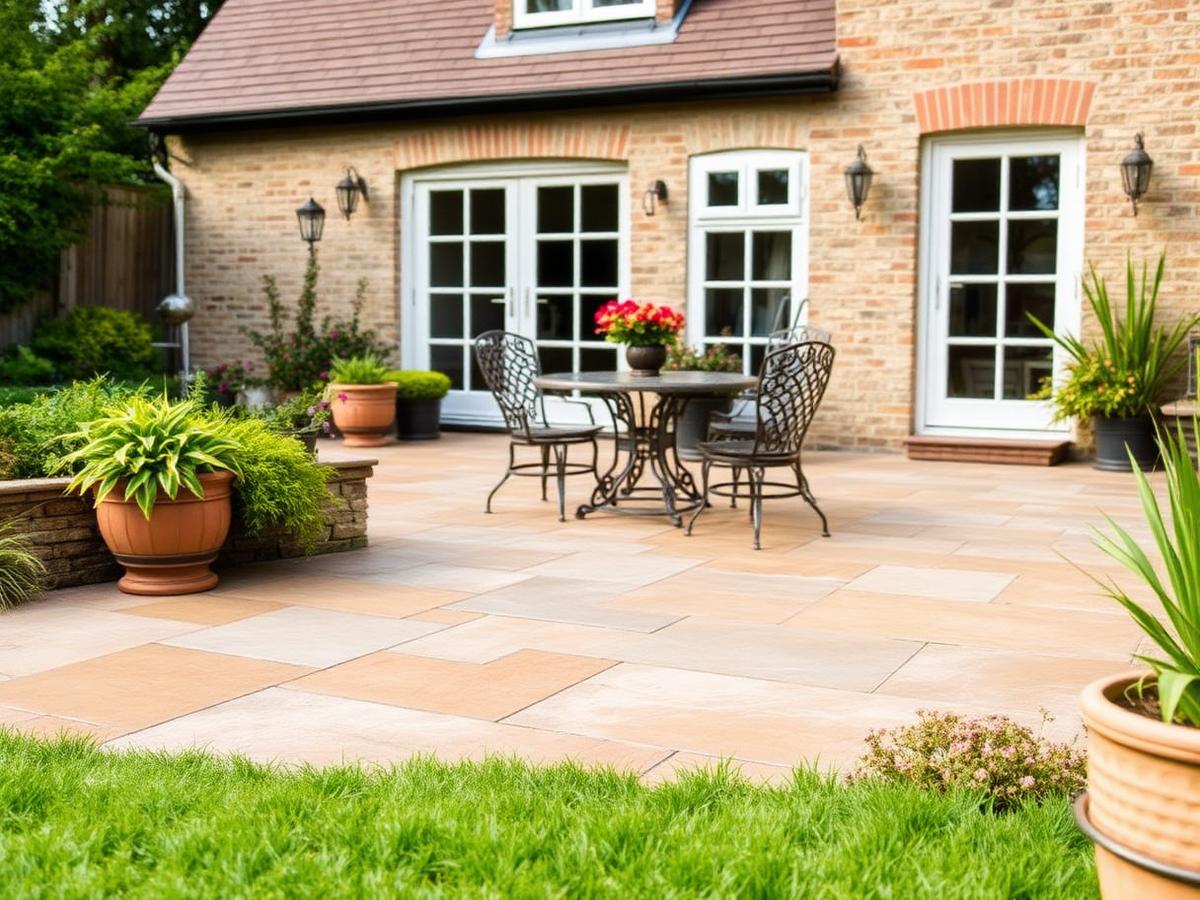
Rear patio extension behind a 1970s estate home near Whitwood
Many of the estate homes near Whitwood had rear patios added during the 1970s and 80s using standard concrete flags, a durable but fairly plain surface that's now showing decades of weathering. These patios were rarely sealed when laid, since sealing wasn't standard practice for this housing type at the time, so most have absorbed staining unchecked for years.
Concrete flags from a decades-old extension
Many of the estate homes near Whitwood had rear patios added during the 1970s and 80s using standard concrete flags, a durable but fairly plain surface that's now showing decades of weathering. These patios were rarely sealed when laid, since sealing wasn't standard practice for this housing type at the time, so most have absorbed staining unchecked for years.
Sitting on relatively flat ground with clay-heavy subsoil typical of this part of Castleford, these patios hold surface moisture longer after rain than a free-draining stone patio would, which has left many with a persistent damp grey-green tinge in shaded corners near fence lines and outbuildings.
Because these gardens have often been used continuously for decades — barbecues, planters, garden furniture left in place — the flags carry a mix of old organic staining and general wear that a first-time sealing job needs to address properly rather than simply sealing over.
How the sealing visit is run
- Step 1
Deep clean before sealing
The patio gets a thorough clean first, since sealing over ingrained staining locks it in rather than hiding it.
- Step 2
Spot treatment of persistent marks
Stubborn organic staining in shaded corners gets targeted treatment before the general sealer application to even out the final appearance.
- Step 3
Two-coat sealer build-up
Given the flags' age and porosity, sealer is generally built up in two thinner coats rather than one heavy application, for more even coverage.
What we assess before sealing an older patio
Existing staining depth
We check how far organic and damp staining has penetrated the concrete flags, since deep-set marks may need extended cleaning before sealing is worthwhile.
Flag surface condition
Decades-old concrete flags can be pitted or slightly friable at the surface, which changes how sealer is absorbed and how many coats are needed.
Moisture retention in shaded corners
Areas near fence lines and outbuildings are checked separately for ongoing damp retention that sealing alone won't resolve without other drainage changes.
What matters for this patio type
Before we start
- Decades of unsealed use means a thorough clean matters more than usual
- Clay-heavy ground nearby means drainage should be checked before sealing
- Shaded corners near fences often need spot treatment first
Once it's done
- Older, more porous flags may need two thinner coats rather than one
- Garden furniture and planters need clearing well before the visit
Getting kit in, getting water away
Rear gardens here are typically reached via a side gate between semi-detached properties, so we confirm the gate width and any obstructions like bins or bikes before the visit to keep equipment moving smoothly.
Given the clay-heavy ground common near Whitwood, we check that surface water from the patio has somewhere sensible to go — usually a border or a soakaway — before sealing, since a poorly draining patio will hold sealer-trapped moisture longer than one that sheds water freely.
- Nearest commercial hub
- Xscape Yorkshire and Junction 32 outlet
- Area type
- industrial town
- Postcode district
- WF10
- Local authority
- Wakefield MDC
- County
- West Yorkshire
- Main route in
- M62 J32 / A639
Our biocide treatment page covers tackling entrenched damp staining before sealing like this.
Scope agreed before anything is switched on
- We survey the surface first and say plainly if patio sealing is the wrong call for it.
- Scope is written down, so you can see exactly what is and isn't included.
- Where a stain or defect won't fully clear, we say so before you book.
Whitwood homeowners ask
Our patio has never been sealed before — is it too late?+
Not at all, though a first-time sealing job usually needs a more thorough clean beforehand to deal with decades of unsealed staining.
Why does one corner of the patio always look damp and dark?+
Shaded areas near fence lines on clay-heavy ground hold moisture longer, which is why staining often concentrates there rather than across the whole patio.
How long will the patio need to be kept clear?+
It varies with weather, but the surface needs to stay free of furniture and foot traffic through application and an initial cure period.
Will sealing stop the damp staining coming back?+
It significantly slows it by reducing how much moisture the flags absorb, though genuinely poor drainage nearby may need separate attention.
If your Whitwood-area patio has never been sealed, get in touch and we'll assess the flags before recommending a plan.
Bottom line
Unsealed 1970s concrete patios near Whitwood need a proper clean and staged sealing to finally get ahead of damp staining.