
Sandstone Sealing for Cottage Courtyards Around Horsforth
Original York stone flags in a converted cottage courtyard
Some of the converted cottages tucked behind Horsforth's older streets retain their original York stone courtyards, flags that predate the properties' conversion and often show decades of wear, weathering and previous repointing. This stone is naturally porous, which is part of its character but also why it absorbs moisture, algae staining and de-icing salt more readily than modern paving.
What matters when sealing sandstone here
Before we start
- Enclosed courtyards take longer to dry fully before sealing can safely begin
- A breathable sealer matters more here than on modern paving, given the stone's age and porosity
- Existing flaking or spalled areas are best addressed before sealing rather than sealed over
Once it's done
- Salt deposits from winter de-icing should be fully cleared beforehand
- Preserving the stone's aged character usually means avoiding a high-gloss sealer finish
Original York stone in a converted cottage setting
Some of the converted cottages tucked behind Horsforth's older streets retain their original York stone courtyards, flags that predate the properties' conversion and often show decades of wear, weathering and previous repointing. This stone is naturally porous, which is part of its character but also why it absorbs moisture, algae staining and de-icing salt more readily than modern paving.
Because many of these courtyards sit enclosed by cottage walls on two or three sides, they get less direct drying wind than an open driveway, so moisture sits in the stone longer after rain, which speeds up frost-related flaking if the surface isn't protected.
Owners of these properties are often keen to preserve the worn, aged character of the stone rather than make it look new, which shapes the choice of sealer toward something that protects without dramatically altering the surface appearance.
Getting kit in, getting water away
Courtyards like this are usually reached through a narrow side passage or an arched gateway between cottages, so equipment goes in on foot and any larger machinery is left on the street. Shared boundary walls with neighbouring cottages mean we're mindful of noise and access timing given how close properties sit.
Water in these enclosed courtyards often drains slowly toward a central gully or a gap in the boundary wall rather than a modern drainage run, and slow-draining corners are noted since sealer needs a fully dry surface, which can take longer here than in an open, breezy spot.
- Area type
- suburb
- Postcode district
- LS18
- Local authority
- Leeds City Council
- County
- West Yorkshire
- Main route in
- A65 / Leeds Ring Road A6120
- Nearest city
- Leeds — 5 miles
Sealing a courtyard of original York stone
- Step 1
Gentle clean without abrasion
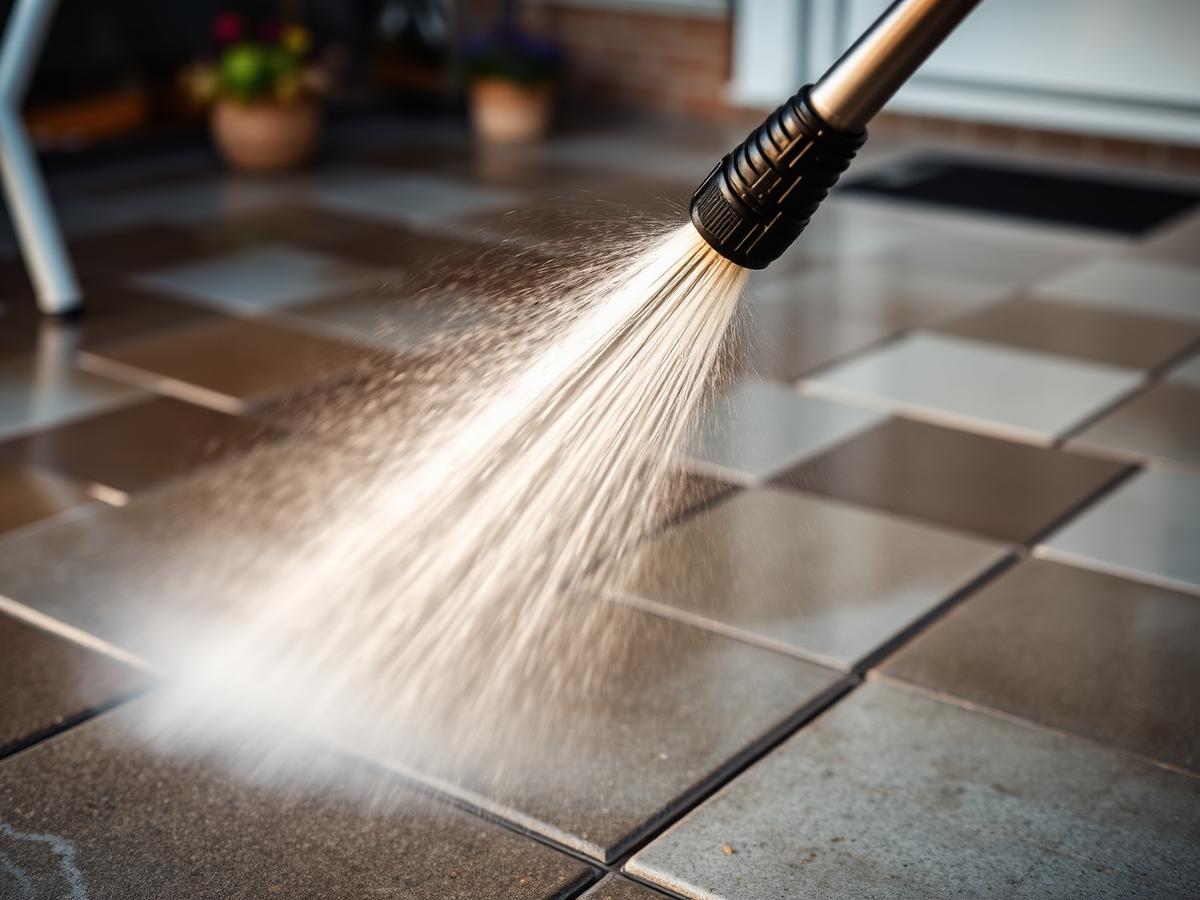
The courtyard is cleaned at low pressure to avoid accelerating wear on already-soft stone, focusing on lifting algae and salt rather than scouring the surface.
- Step 2
Breathable sealer selection
A breathable, natural-stone-rated sealer is chosen so moisture already in the stone can still escape rather than becoming trapped beneath the surface.
- Step 3
Slow, even coat application
Sealer is applied in thin, even coats given the stone's high porosity, allowing proper absorption between coats rather than rushing a single heavy application.
Assessing sandstone condition before sealing
Flaking and spalling check
We examine the surface for early signs of frost damage, since already-flaking stone needs repair consideration before sealing rather than sealing over a failing surface.
Porosity and absorption test
A small amount of water is applied to see how quickly it's absorbed, which tells us how many coats of sealer the stone is likely to need.
Salt staining assessment
White, powdery salt deposits from de-icing or general weathering are identified, since these need clearing before sealing or they'll be locked beneath the finish.
Questions about sealing older sandstone
Will sealing change the look of my original York stone?+
A breathable, natural-finish sealer is chosen specifically to protect without giving the stone a glossy, artificial appearance, keeping its aged character intact.
Why does my courtyard take longer to dry than a normal driveway?+
Being enclosed by cottage walls limits airflow, so moisture lingers longer after rain or cleaning, which we factor into scheduling the sealing visit.
Is my flaking stone too far gone to seal?+
Sealing won't reverse existing damage, but it can help slow further deterioration once any loose or badly spalled areas have been addressed.
How does salt from winter gritting affect the stone?+
Salt deposits draw moisture and can crystallise within the stone's pores, contributing to frost damage, so clearing it before sealing is an important step.
Scope agreed before anything is switched on
- We survey the surface first and say plainly if sandstone sealing is the wrong call for it.
- Scope is written down, so you can see exactly what is and isn't included.
- Where a stain or defect won't fully clear, we say so before you book.
See our steam cleaning page for how these same courtyards are cleaned before a sealing visit.
In summary
Original York stone courtyards in converted cottages need breathable sealing that protects porous stone without hiding its character.