
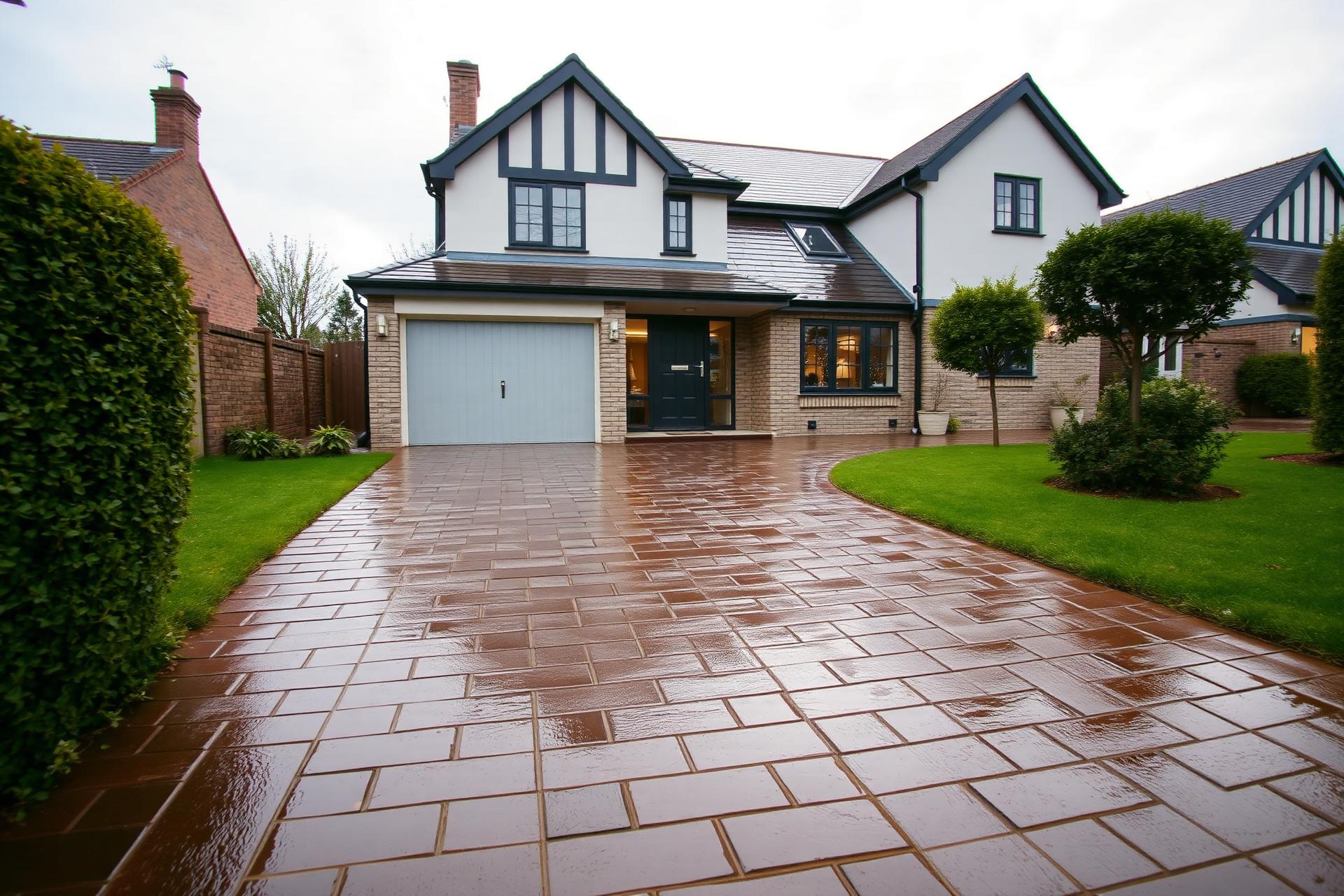
Driveway Care for Guiseley's New-Build Estate Homes
New-build estate development on the edge of Guiseley near the A65 bypass
The newest estate developments on Guiseley's edge, out toward the A65 bypass, have brought a wave of imprinted concrete and block-paved drives that are only a few years old at most. These surfaces are generally in excellent structural condition, but new-build sites bring their own specific issues — construction dust and cement residue left over from the build phase, jointing sand that hasn't fully bedded in yet, and sealant that's often applied by the developer to a bare minimum standard rather than a premium finish.
What's different about caring for a brand-new Guiseley drive
The newest estate developments on Guiseley's edge, out toward the A65 bypass, have brought a wave of imprinted concrete and block-paved drives that are only a few years old at most. These surfaces are generally in excellent structural condition, but new-build sites bring their own specific issues — construction dust and cement residue left over from the build phase, jointing sand that hasn't fully bedded in yet, and sealant that's often applied by the developer to a bare minimum standard rather than a premium finish.
Because these homes sit close to the bypass and were built as part of a larger development, there's also been a longer period of nearby construction traffic and dust than an established street would see, and that fine cement and grit residue settles into new joints and sealant far more than most new owners expect for a surface only a few years old.
Caring for a new-build drive properly early on genuinely extends how long it looks new, rather than letting construction-phase grime become permanently embedded before it's ever properly addressed.
Early-life care points for a new build
Before we start
- New-build drives benefit from a gentler first clean rather than the standard approach used on years-old surfaces.
- Developer-applied sealant is often basic and may be worth upgrading rather than assumed adequate long-term.
- Ongoing nearby construction traffic can mean repeat fine dust settling even after a clean, worth factoring into timing.
Once it's done
- Early jointing sand top-ups are more effective than waiting until sand loss is severe.
- A first proper clean and reseal within the first couple of years sets up much easier maintenance long-term.
How we approach cleaning on a still-settling drive
- Step 1
Gentle first clean for construction residue
Rather than a standard aggressive clean, a newer drive gets a gentler approach first specifically targeting leftover construction dust and cement splash without disturbing still-settling joints.
- Step 2
Assessment of existing sealant before any reseal
We check whether the developer's original sealant is worth topping up now or whether it's better to wait until it's fully worn through for a proper full reseal.
- Step 3
Light resanding where needed
Any early sand loss in block paving is topped up at this stage, which is easier and more effective done early than left until joints are significantly depleted.
Getting kit in, getting water away
New-build plots typically have generous, unobstructed drive access built to current standards, and visitor parking on estate roads is usually straightforward, though ongoing construction traffic on partially completed developments can mean coordinating timing around delivery lorries and other trades still working nearby.
These estates are built with modern SuDS-compliant drainage, often a dedicated soakaway or permeable sub-base beneath block paving, and we're particular about not overloading this system with heavy cleaning run-off while it's still relatively new and settling in, using a controlled approach rather than a maximum-pressure blast.
- Main route in
- A65
- Nearest city
- Leeds — 9 miles
- Typical surfaces
- block paving and imprinted concrete drives
- Common property stock
- 1930s semi, modern detached, 1970s estate home
- Nearest commercial hub
- Guiseley retail park and Otley Road
- Area type
- commuter village
What we check on newly laid surfaces
Residual construction dust and cement splash
We check for cement splash or fine construction dust that's settled into the surface, since this is common on newer developments and needs a different approach to years-old ingrained dirt.
Developer-applied sealant standard
We assess whether the original developer sealant, often a basic minimum-spec product, is still providing real protection or needs upgrading.
Jointing sand settlement
Newer block paving often hasn't fully settled, and we check sand levels haven't already dropped in the first couple of years before deciding on any resanding needed.
Scope agreed before anything is switched on
- We survey the surface first and say plainly if new-build estate homes is the wrong call for it.
- Scope is written down, so you can see exactly what is and isn't included.
- Where a stain or defect won't fully clear, we say so before you book.
See our block paving sealing service for upgrading a developer's original sealant standard.
Questions from new Guiseley homeowners
Is it too soon to clean a drive that's only a year or two old?+
Not at all — construction-phase dust and cement splash are common on new-build drives this age, and addressing it early with a gentle approach protects the surface long-term.
Should we trust the sealant the developer already applied?+
Developer sealant is often a basic minimum-spec product; we can assess whether it's holding up or whether an upgrade would offer better protection going forward.
Why is our new block paving already losing jointing sand?+
Some settlement is normal in the first couple of years as a new drive beds in, and topping up sand early is straightforward compared with waiting until it's significantly depleted.
Will ongoing building work nearby undo a clean straight away?+
It can bring some repeat dust if construction is still active close by, so we can advise on realistic timing to get the most lasting benefit from a clean.
The short version
New-build drives on Guiseley's A65 estates benefit from early, gentle care that clears construction residue before it embeds permanently.