
Driveway and Patio Care for New-Build Estates in Harrogate
Recently completed close on the edge of town with shared visitor parking
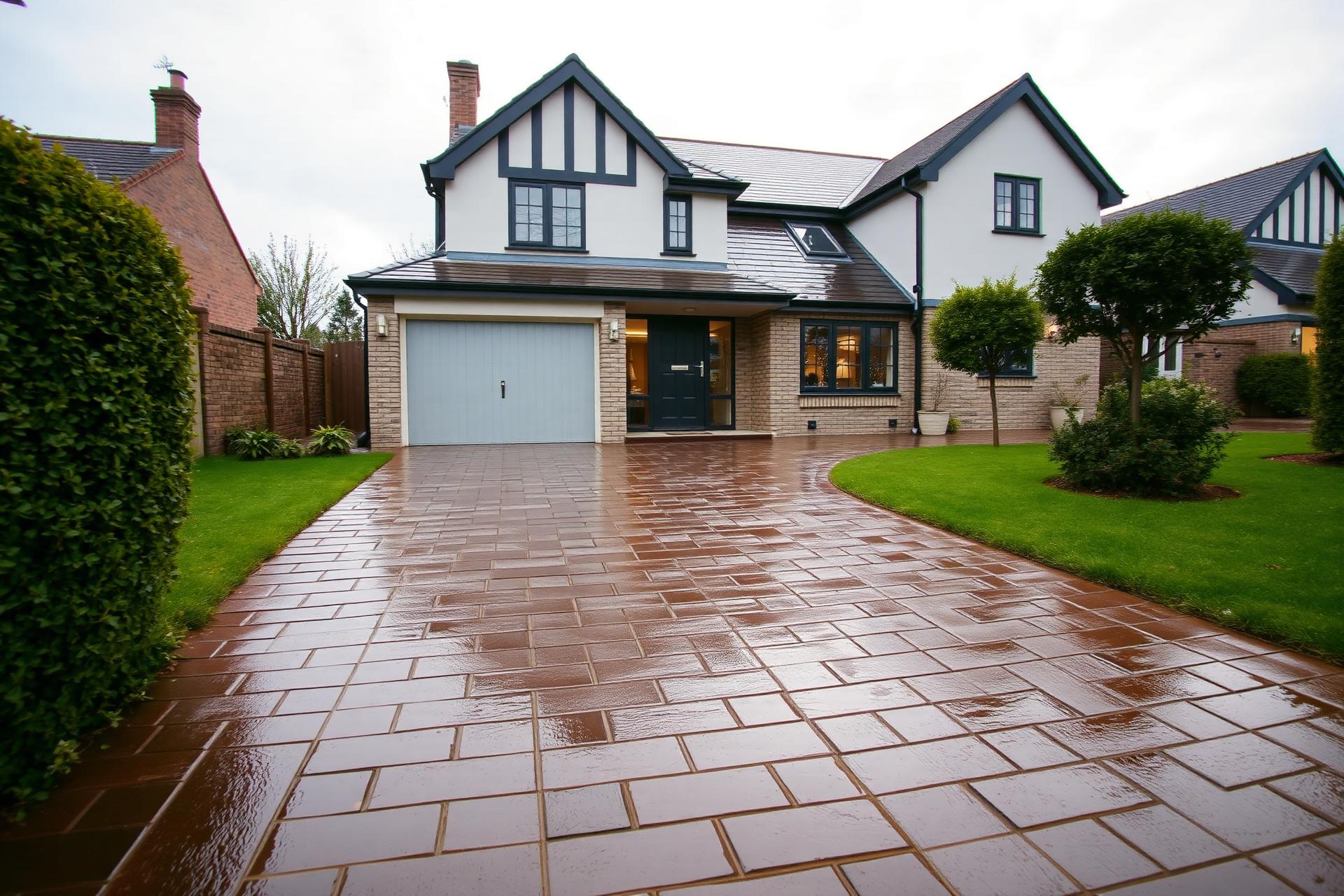
On the newer closes at the edge of Harrogate, driveways and patios are often only a year or two old, laid as part of the wider development in matching block paving or imprinted concrete. Construction dust and cement residue from ongoing work nearby can still settle on surfaces even after a household has moved in, particularly if later phases of the estate are still being built.
A recently finished close on the edge of Harrogate
On the newer closes at the edge of Harrogate, driveways and patios are often only a year or two old, laid as part of the wider development in matching block paving or imprinted concrete. Construction dust and cement residue from ongoing work nearby can still settle on surfaces even after a household has moved in, particularly if later phases of the estate are still being built.
Because these closes are laid out with shared visitor parking bays and communal turning areas, individual driveways sit close together with similar surfaces, meaning any staining or fading tends to become a visible comparison point between neighbouring properties.
New joint sand in block paving and fresh sealant on imprinted concrete are both still settling in these early years, so treatment decisions here differ from those on an older, well-established surface.
What matters in the first years of a new-build surface
Before we start
- Nearby ongoing construction can mean repeat dust issues in the short term.
- Shared visitor bays should be kept clear or freed up promptly if needed.
- New joint sand needs time to settle before sealing is worthwhile.
Once it's done
- Comparing your driveway to a neighbour's can help spot estate-wide versus isolated issues.
- Flexible timing helps around ongoing estate construction traffic.
How work is run around a still-settling development
- Step 1
Removing construction residue before general cleaning
Any cement dust or building residue is targeted specifically first, since it behaves differently to ordinary traffic grime and needs its own approach.
- Step 2
Working around shared visitor parking bays
Equipment and hoses are kept clear of shared bays as much as possible, moving promptly if a visitor needs the space during the visit.
- Step 3
Sealing only once joint sand and any recent laying has settled
Sealing is timed to follow proper settling of new joint sand, rather than rushed in immediately after the surface was laid.
Getting kit in, getting water away
Driveways on these closes are usually a defined single or double width, with shared visitor bays nearby that shouldn't be blocked for longer than necessary. Ongoing construction traffic elsewhere on the estate can occasionally affect access timing, so a flexible slot is often more realistic than a fixed early appointment.
New-build closes typically have engineered surface water drainage built into the estate design, so run-off during cleaning or sealing generally has a clear, formal route away from the property. This does mean any residue like cement dust needs proper removal rather than simply washing toward the drain.
- Main route in
- A61 / A59
- Nearest city
- Leeds — 17 miles
- Typical surfaces
- reclaimed York stone and honey-coloured setts
- Common property stock
- Victorian villa, Yorkshire-stone townhouse, large detached home
- Nearest commercial hub
- Cardale Park and Hornbeam Business Park
- Area type
- spa town
What newly laid surfaces need checked early on
Checking for cement or construction dust residue
Fine cement dust from nearby ongoing building work is checked for, since it needs targeted removal rather than a standard wash that can smear it further.
Assessing how far joint sand has settled
Block paving joints on newer surfaces are checked to confirm sand has compacted enough before any sealing goes ahead.
Comparing wear against neighbouring driveways
Where similar surfaces sit close together on the close, wear and fading are compared to judge whether an issue is isolated or estate-wide.
Scope agreed before anything is switched on
- We survey the surface first and say plainly if new-build estate homes is the wrong call for it.
- Scope is written down, so you can see exactly what is and isn't included.
- Where a stain or defect won't fully clear, we say so before you book.
See how established Harrogate surfaces are treated differently to newer estate driveways.
Questions asked by new-build owners about early maintenance
Why does my new driveway already have dust or residue on it?+
Ongoing construction elsewhere on the estate can deposit cement dust even after your own section is finished, and it needs specific removal rather than a standard wash.
Is it too early to seal a driveway that's only a year or two old?+
It depends on how settled the joint sand or laying is — checking this first avoids sealing over material that hasn't properly bedded in yet.
Will work block the shared visitor parking bays?+
Bays are kept clear wherever possible and freed up promptly if a visitor needs the space during the visit.
My neighbour's identical driveway looks different to mine — why?+
Comparing similar surfaces on the same close can help work out whether an issue is specific to your drive or affecting the estate more broadly.
The short version
New-build estate driveways in Harrogate need early care around construction dust, settling joint sand and shared parking bays.