
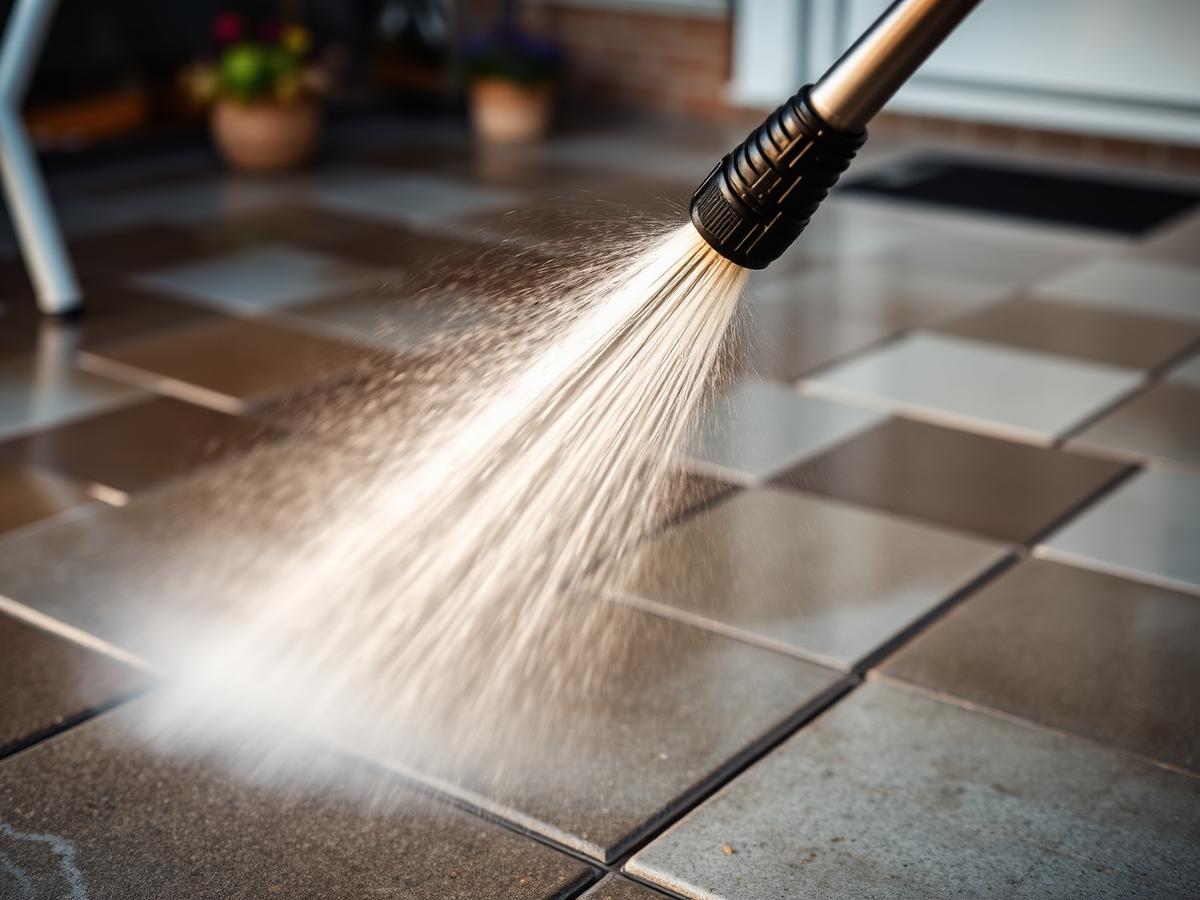
Black spot is one of the most misdiagnosed problems on UK paving. People try bleach, wire brushes and increasing pressure, and end up with a damaged surface and the spots still there.
What you're looking at
Black spot is a lichen — a partnership of fungus and alga — which anchors itself into the pores of porous stone. The visible spot is only the fruiting surface. The organism extends into the stone beneath it.
That's why mechanical removal fails. You can shear the top off and the spot reappears from the same anchor point.
Where it thrives
- Porous natural stone, particularly Indian sandstone and some limestone.
- Areas with clean, damp air and low pollution — which describes much of Yorkshire's garden environment.
- Shaded and semi-shaded terraces that stay damp between rain.
- Older paving that's never had a biocide treatment.
What works
- A lichen-rated biocide with proper dwell time — this is the actual removal step.
- Low-pressure rinsing after die-back, not high-pressure blasting during it.
- A second application on established growth rather than escalating pressure.
- Follow-up treatment on a maintenance cycle, because spores return from the surrounding environment.
What to avoid
Household bleach lightens the spot without killing the anchor, then bleaches surrounding stone unevenly. Acid-based cleaners can burn sandstone and permanently alter its colour. Wire brushing scars the face and gives the lichen more surface to grip.