
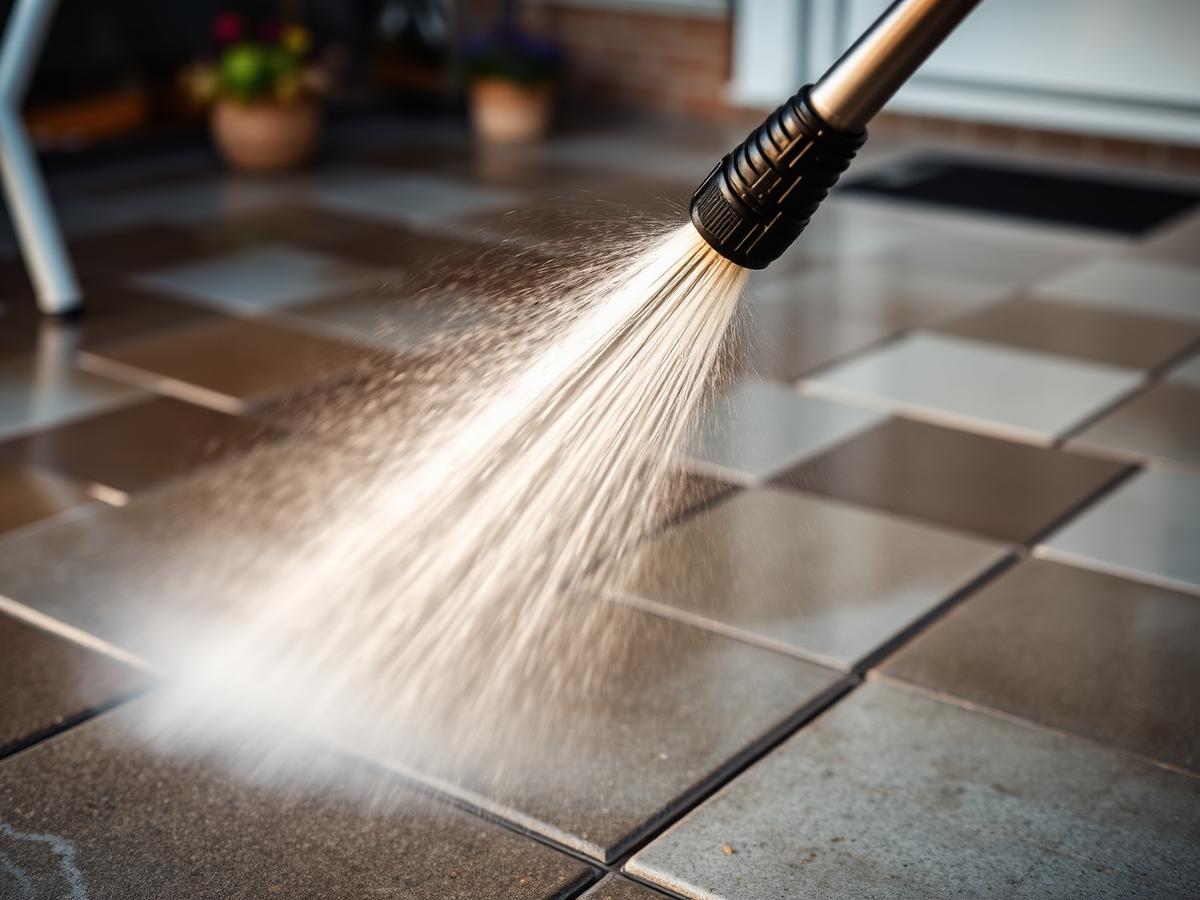
Patios are priced on area, but material does more to the number than square metres do. A porcelain terrace and a riven Yorkshire stone terrace of identical size are two different jobs, because one is non-porous and the other has held forty years of biological growth in its texture.
Everything below is about the work, not the sales pitch — so you can read a quote and know what's actually being done.
Material changes the method, and the method sets the price
- Porcelain: non-porous, cleans quickly, but the joints and any grout haze need care. Fast job, low risk.
- Indian sandstone: porous and prone to black spot lichen. Needs a biocide dwell, sometimes twice, rather than raw pressure.
- Yorkshire stone: often old, often riven, often bedded on lime. Soft-wash and hand detailing, never a hard lance.
- Concrete flag: robust, takes rotary cleaning well, but shows striping if it's cleaned badly.
Shade and drainage cost more than you'd think
A north-facing terrace under trees holds moisture almost year-round. That means deeper algae, thicker lichen and a longer biocide dwell — a genuinely slower job than the same patio in open sun.
Poor falls and standing water do the same thing. If water sits, growth returns faster, and we'll usually recommend a longer-kill biocide rather than a heavier wash.
Jointing: the part people forget
Failed pointing is common on older stone patios. Cleaning doesn't cause the failure, but it does expose it — washing out sand and crumbling mortar that was already loose.
We'll flag jointing condition before we start so there are no surprises, and we'll never blast a joint we've told you is fragile.