
From a few feet away, black spot lichen and green algae can both just look like 'dirty patio', which is exactly why so many people reach for the same solution for both and are disappointed with the result. They're different organisms, they behave differently, and they respond to different treatments.
Getting the identification right at the start saves a lot of wasted effort, because pressure that shifts algae in minutes can spend an hour barely touching lichen.
What algae actually looks like and does
- Forms a thin green or blackish-green film, often slippery underfoot when wet.
- Sits mostly on the surface rather than deep in the stone's texture.
- Thrives on constant damp — shaded corners, under trees, north-facing patios.
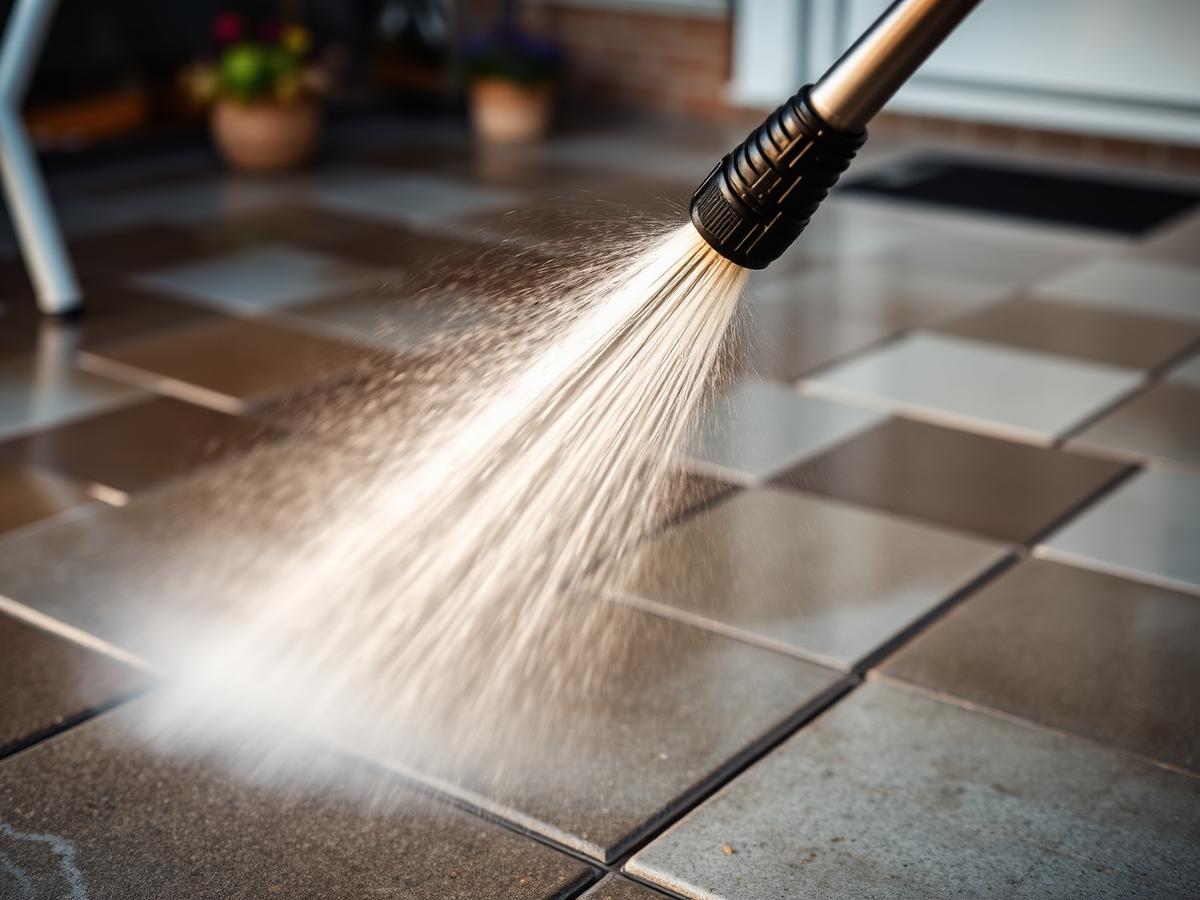
- Responds reasonably well to pressure alone, though it returns quickly without a biocide follow-up.
What black spot lichen actually looks like and does
- Appears as small, hard, dark speckles that don't smear or wipe off with a finger.
- Anchors into the pores of porous stone like Indian sandstone, not just sitting on top.
- Grows slowly but is stubborn once established, and tends to spread in patches over years.
- Barely responds to pressure alone — it needs a biocide kill and dwell time, sometimes repeated.
Why treating them the same wastes effort
Blasting lichen with high pressure to try to match algae's quick response usually just erodes the surrounding stone surface without shifting the lichen itself, because the pressure isn't reaching what's rooted below. Meanwhile, treating light surface algae with a long biocide dwell meant for lichen is overkill that adds time without adding much benefit.
A simple way to check which you've got
Run a fingernail across a spot. If it smears green, it's most likely algae. If it stays hard, dark and won't scratch off easily, it's more likely lichen and will need the slower chemical approach rather than more force.