Imprinted concrete and block paving were both sold on the same promise: a smart, textured surface without the cost of natural stone. Years on, they age in quite different directions — one as a continuous coloured slab that can fade and craze, the other as thousands of individual units that can shift, sink and let weeds through the gaps.
Knowing which failure pattern applies to your drive changes what you should be watching for and how a clean should be approached.
How imprinted concrete typically ages
- The colour sits mostly in a surface sealer, so as that wears thin the pattern can look duller even when the concrete underneath is sound.
- Hairline cracking can appear at panel joints or stress points over the years, which is a structural issue rather than a cleaning one.
- Because it's a single continuous slab, there are no individual joints for weeds to establish through — growth tends to sit on the surface instead.
- A worn sealer can trap dirt unevenly, giving a mottled look that a clean alone won't fully correct.
How block paving typically ages
Block paving ages at the joint level as much as the block level. Jointing sand washes and blows out gradually, and once gaps open up, weed seed finds an easy route in and moss follows behind it.
Individual blocks can also sink or lift slightly as the sub-base settles unevenly, which is a groundwork issue rather than a surface dirt issue, but it's often first noticed because a low block collects standing water and grows algae faster than its neighbours.
Cleaning approach for each
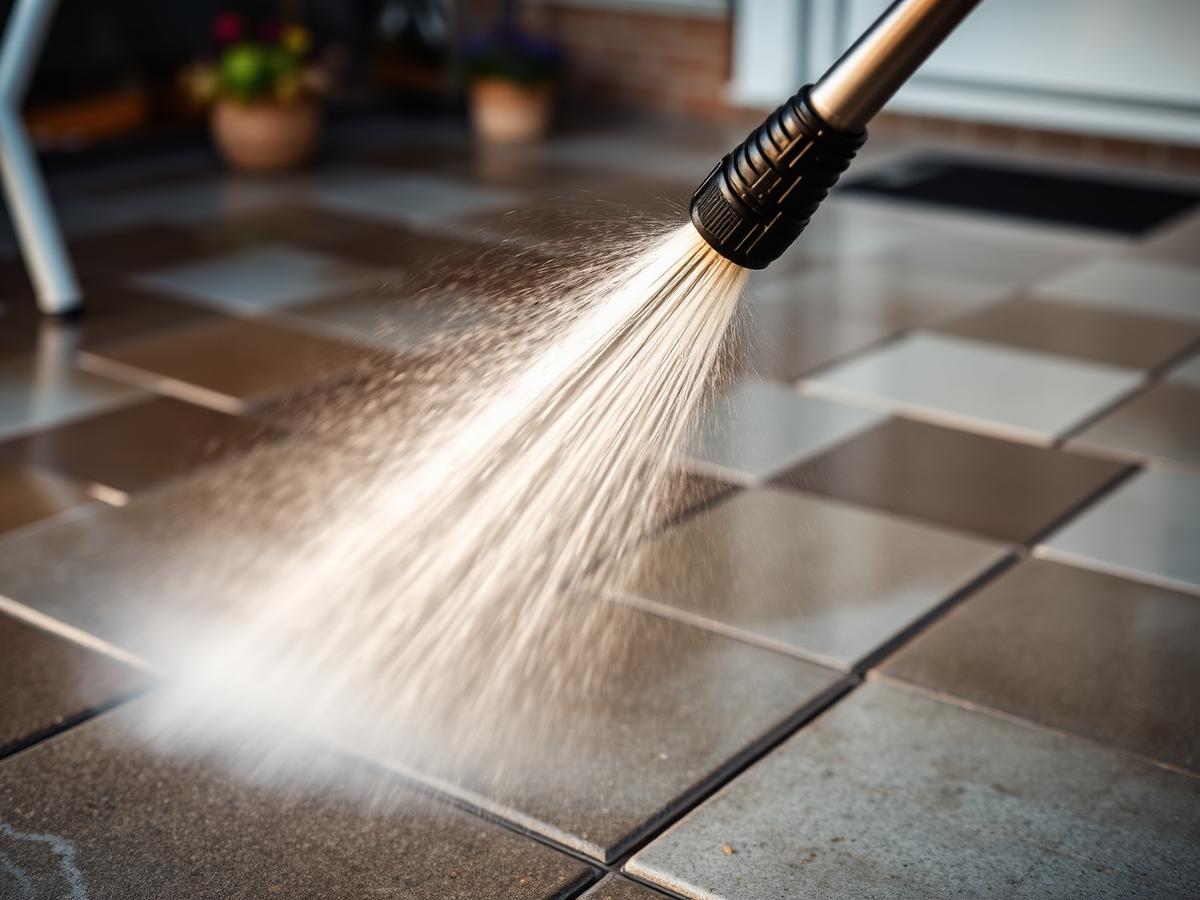
Imprinted concrete needs a gentler touch than block paving because pressure can chip the pattern edges or strip the remaining sealer unevenly. A soft wash with careful biocide use tends to suit it better than an aggressive rotary pass.
Block paving takes rotary cleaning well on the block faces, but the job isn't finished until the joints are re-sanded — cleaning without re-sanding just resets the clock until the next weed flush.
When each surface is worth resealing versus replacing
Faded imprinted concrete with no structural cracking is usually a good candidate for a clean and reseal, which can bring the pattern and colour back convincingly.
Block paving with a handful of sunken or lifted blocks is often better served by lifting and re-setting those individual blocks rather than treating the whole drive as a write-off — most of the surface is usually still sound.