
When people ask which patio material is 'easier to keep clean', they're usually really asking about porosity. Porcelain is manufactured to be dense and near non-absorbent; sandstone is a natural, layered rock that drinks in moisture, and that single difference explains almost everything else that follows.
Neither material is the wrong choice — they just ask for different habits from the person who owns them. This guide sets out what actually differs, so a maintenance plan can be built around the stone you have rather than the stone someone else has.
Why porosity decides so much
Porcelain's surface is fired at high temperature and finished to a tight, closed structure, so algae spores struggle to get a foothold beyond the very top layer. A rinse and a mild detergent pass usually lifts most of what's landed on it.
Sandstone's grain is open by comparison. Spores, pollen and organic dust work their way slightly below the surface, which is why sandstone tends to green up faster in shaded corners and why a simple hose-down often isn't enough to shift it once established.
Where each one actually struggles
- Porcelain: rarely grows algae on the tile face itself, but the joints — usually a softer grout or sand — can still harbour moss even when the tiles look clean.
- Sandstone: prone to black spot lichen in shaded, damp corners, which sits deeper in the stone and resists a quick wipe.
- Porcelain: can show a persistent haze from grout residue left after installation, mistaken for dirt.
- Sandstone: variable batches mean some flags absorb and stain faster than their neighbours from the same delivery.
Cleaning method differences that matter
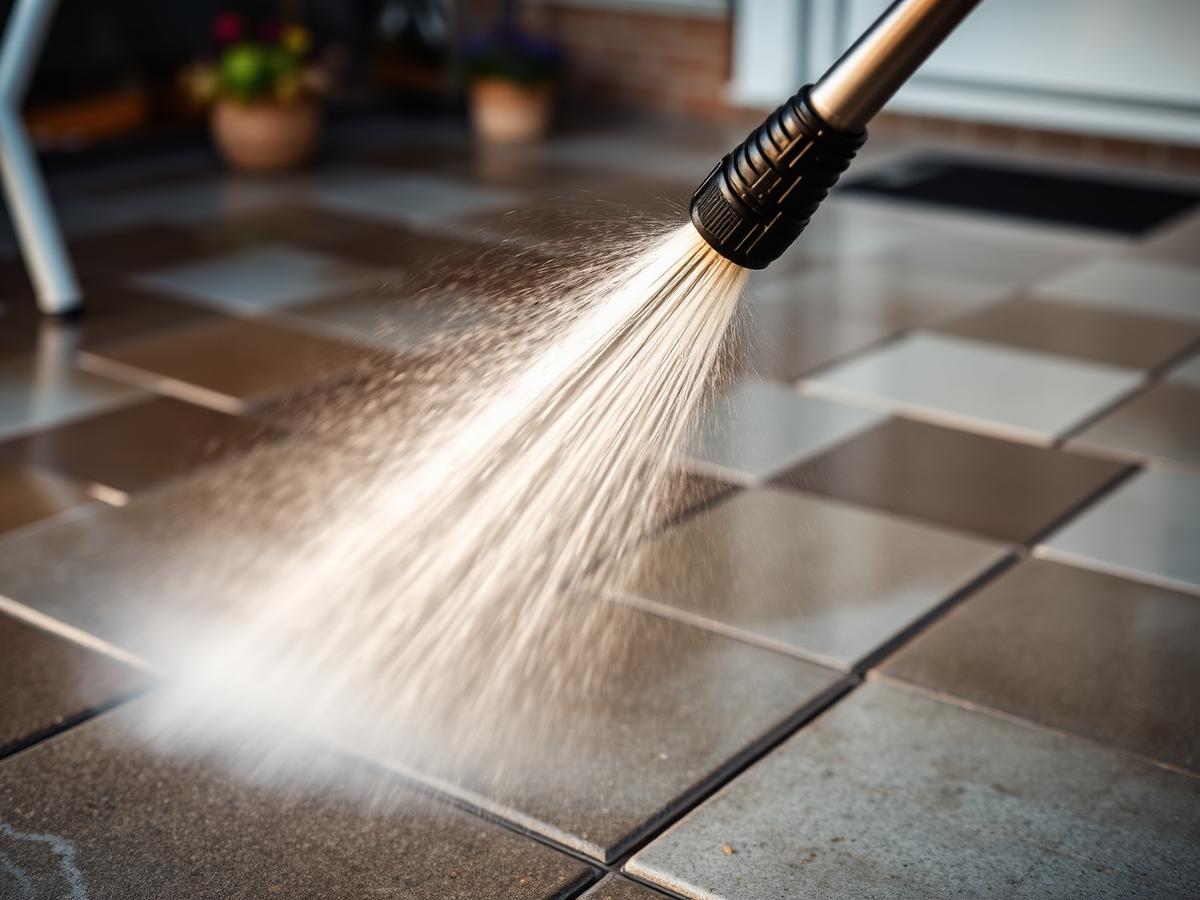
Porcelain tolerates a firmer rinse because it isn't going to pit or lose surface material, so the main risk is joint damage from careless lance work rather than damage to the tile.
Sandstone needs a gentler hand. A biocide dwell that's allowed to work before any rinsing is usually more effective than pressure alone, and heavy-handed pressure work can scour the softer bedding layers and leave patchy lightening.
Setting a realistic maintenance rhythm
A porcelain terrace in an open, sunny spot can often go a long stretch between attention because there's so little for growth to grip. A sandstone terrace under trees or against a shaded wall will need checking more often, particularly through the damper months.
The honest answer is that the material tells you the rhythm — porcelain rewards occasional light attention, sandstone rewards planned biocide treatments before growth becomes visible rather than after.