
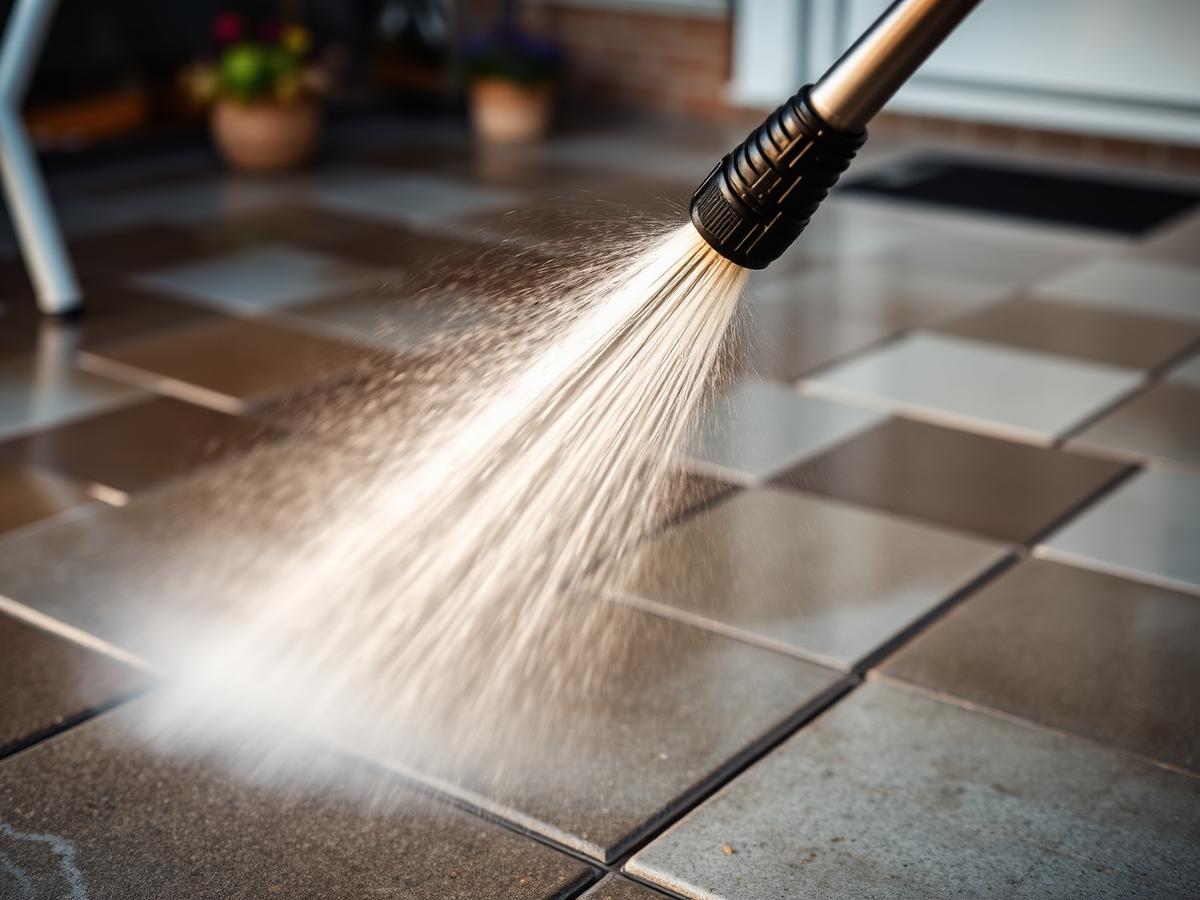
Years of moss, staining and crumbling joints can make an old stone patio look like a lost cause, but the stone underneath is often in far better condition than the surface suggests. Replacement is sometimes genuinely the right call, but it's a much bigger and more disruptive undertaking than restoration, so it's worth ruling restoration out properly first.
The judgement mostly comes down to the stone itself, not the dirt sitting on it — dirt is temporary, stone condition isn't.
Signs a patio is a strong restoration candidate
- The staining is biological — algae, moss, lichen — rather than structural cracking through the flags themselves.
- Individual flags are stable underfoot, even where joints have crumbled around them.
- The stone is a valued original material, like reclaimed Yorkshire flag, that would be expensive or impossible to match if replaced.
- Failed pointing is confined to specific joints rather than affecting the whole patio uniformly.
Signs replacement is the more realistic option
- Multiple flags are cracked through, not just surface-worn, and are becoming a trip hazard.
- The sub-base has failed broadly, causing widespread unevenness rather than isolated sunken spots.
- The stone type itself is unsuitable for its use — for example, thin flags never meant to bear vehicle weight.
- You want to change the layout, levels or drainage falls significantly, which cleaning and re-pointing can't achieve.
What restoration actually involves once cleaning is done
Beyond the wash and biocide treatment, restoring an old patio usually means addressing failed pointing joint by joint, re-bedding any genuinely loose flags, and deciding whether sealing suits the finish you want. Done properly, this can bring an old patio back to a condition that's very hard to distinguish from a newly laid one, without losing the character of aged stone.
The honest middle ground
Sometimes a patio is mostly a restoration job with one or two genuinely failed sections that need small-scale replacement or re-laying rather than a wholesale rip-out. Being told that plainly, rather than being sold a full replacement, tends to save both cost and disruption where it's a fair assessment.