
Stone that's decades or centuries old has usually already lost some of its original surface to frost, foot traffic and weather. That history matters when choosing a cleaning method, because the margin for further wear is smaller than on a modern flag.
Steam and jet washing sit at very different points on the intensity scale, and on genuinely old or listed stone that difference decides whether the surface comes through the clean unharmed.
What jet washing brings to old stone
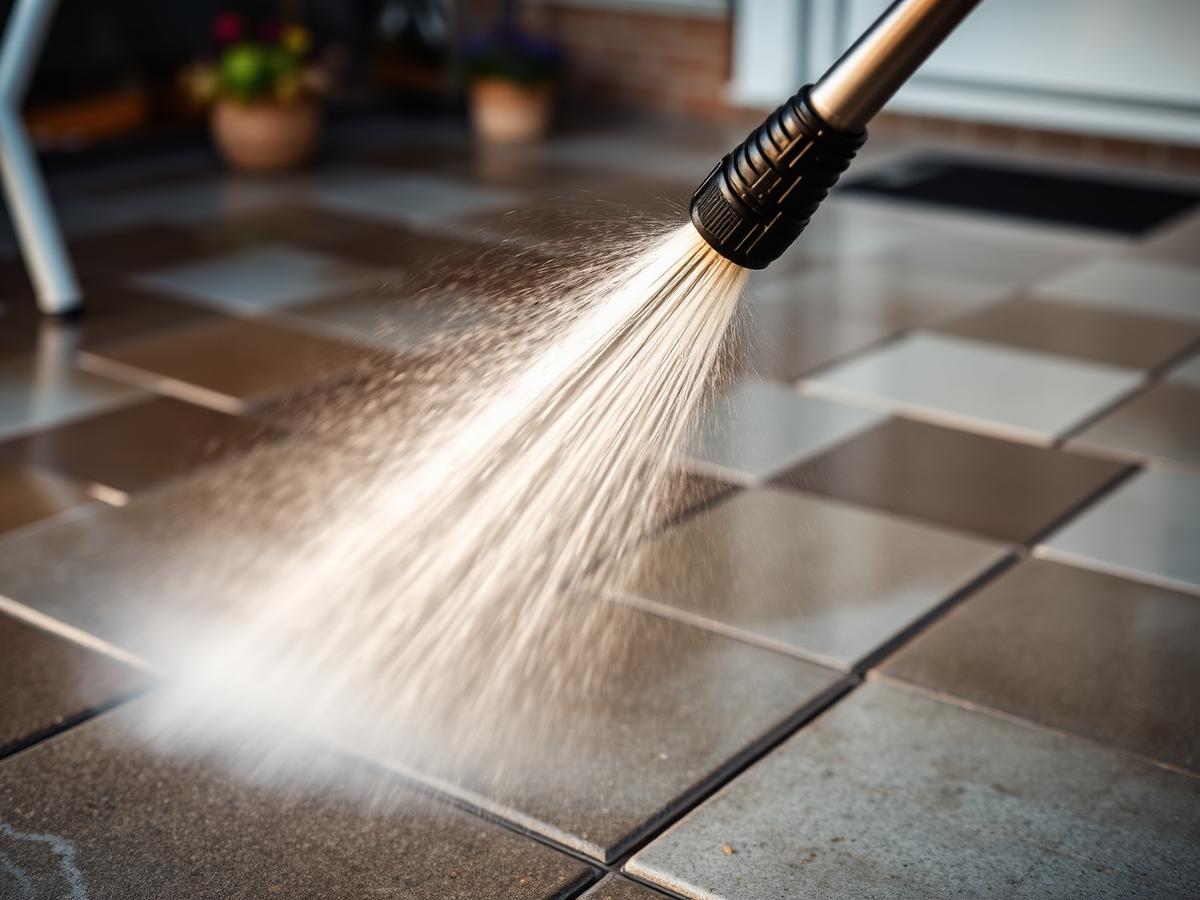
A jet wash relies on mechanical force — the concentrated impact of water at pressure — to strip contamination off the surface. On dense modern paving that's fine, but on stone with a soft, weathered face, the same force can round off worn edges further and open up the texture, accelerating the erosion that's already underway.
Used carefully, at a distance and low setting, jet washing can still be appropriate on old stone. The risk comes from treating it the same way as a modern driveway.
How steam behaves differently
- Relies more on heat and lower mechanical force to loosen dirt and biological growth.
- Reduces the risk of physically eroding a soft or already-worn surface compared with a high-pressure jet.
- Can be slower to lift heavy, ingrained contamination than a rotary jet wash would be.
- Still benefits from a biocide treatment alongside it for anything rooted, since heat alone doesn't guarantee a kill.
Judging what a specific stone can take
The safest approach on genuinely historic stone — reclaimed setts, worn flagstones, lime-bedded terraces — is to test a small, inconspicuous area first rather than assume either method is automatically safe. Softness, existing cracking, and how the stone was originally bedded all change the answer.
Lime-bedded work in particular needs a gentler approach throughout, because high pressure can wash mortar out of joints that a modern cement-bedded patio wouldn't lose.
Why speed shouldn't be the deciding factor
Jet washing will almost always finish a job faster than a steam-based approach. On stone that's genuinely old or of historic value, that time saving isn't worth trading against the risk of accelerating wear that can't be put back once it's gone.