
Hot Water Cleaning for Hawksworth-Fringe Farmhouse Yards in Menston
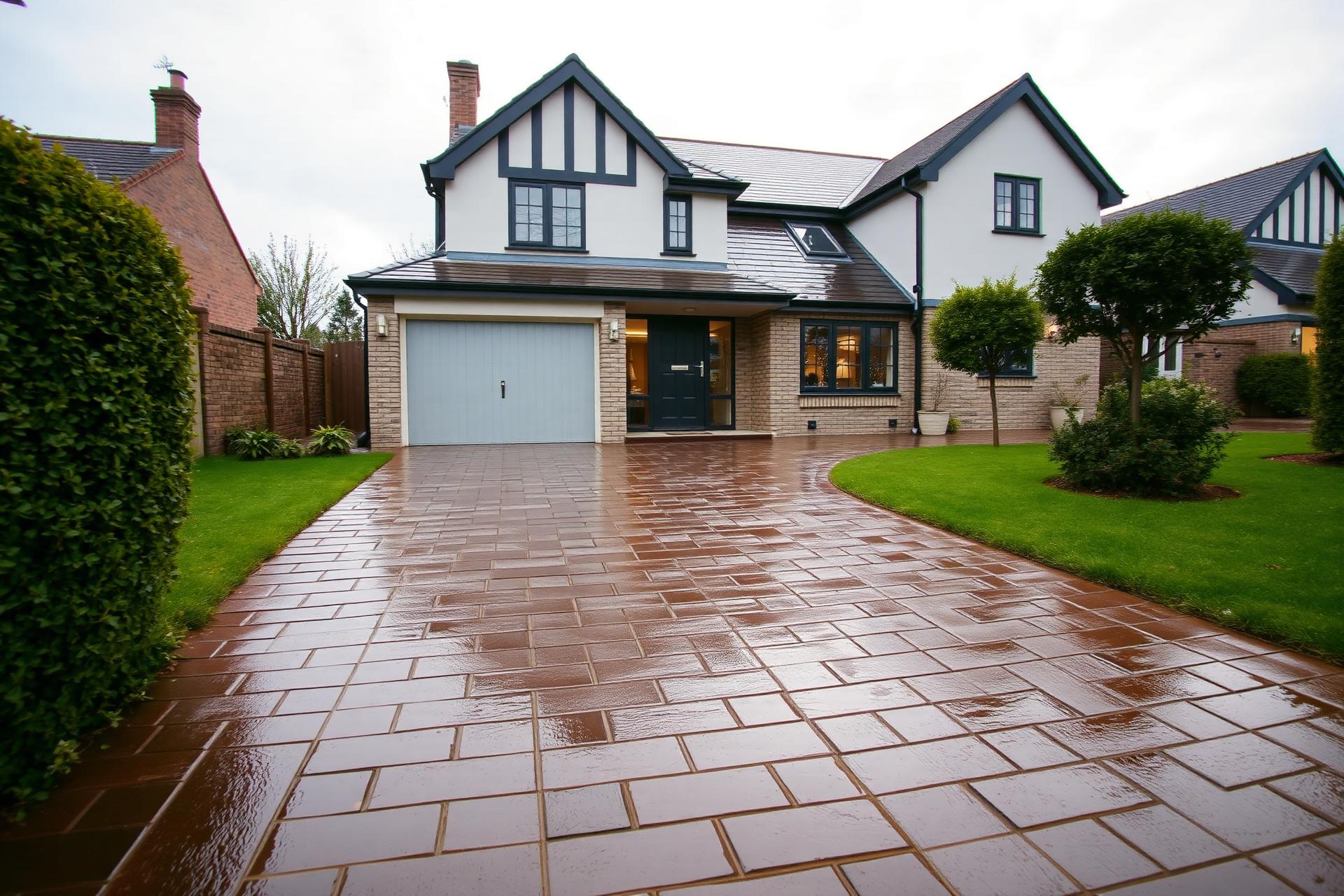
Converted farmhouse yard toward Hawksworth with oil and feed residue
Several of the converted farmhouses on the lanes running up toward Hawksworth kept their original stone or concrete yard surface when the barns became living space, and that yard often still carries traces of its working life — old oil drips from parked machinery, feed residue ground into the surface, and lime staining from years of agricultural use.
What owners should expect
Before we start
- Old oil stains may lighten rather than fully disappear on the first visit
- Uneven original cobbles need careful footing during the clean
- Ditch-adjacent yards get a gentler chemical approach
Once it's done
- Larger yards take a full morning or more depending on surface condition
- Concrete infill sections may show a colour difference from original stone once clean
What a working yard leaves behind after conversion
Several of the converted farmhouses on the lanes running up toward Hawksworth kept their original stone or concrete yard surface when the barns became living space, and that yard often still carries traces of its working life — old oil drips from parked machinery, feed residue ground into the surface, and lime staining from years of agricultural use.
Cold pressure washing struggles against this kind of legacy staining because oil-based residue doesn't lift with water pressure alone; it needs heat to break the bond between the contaminant and the stone or concrete pores. Hot water cleaning gets through grime that's been sitting for years rather than months.
These yards are also large by village standards, often the size of a small car park, which changes the practical rhythm of the job compared with a domestic driveway — it's more about steady coverage than a quick single pass.
Getting kit in, getting water away
Access is usually generous — a farm gate or open yard entrance wide enough for the van to park close by — but ground can be uneven where original cobbles or worn concrete have settled unevenly over decades, so hose runs are laid with that in mind to avoid snagging.
Older farm yards were frequently built without a formal drainage system, and run-off can head toward a field ditch, a soakaway, or simply spread across rough ground, so we check where water will travel before starting and use a lower-toxicity approach near any ditch or watercourse.
- County
- West Yorkshire
- Main route in
- A65
- Nearest city
- Leeds — 11 miles
- Typical surfaces
- Wharfedale stone flags and honey-toned setts
- Common property stock
- stone-built cottage, modern detached home, 1930s semi
- Nearest commercial hub
- Menston Main Street and Bingley Road parade
How the hot water visit is structured
- Step 1
Pre-treatment on heavy stains
Degreaser is applied to the worst oil and feed patches ahead of the hot water pass so heat isn't working against a fresh layer of contamination.
- Step 2
Systematic sweep of the yard
Given the size of these yards, we work in a fixed grid pattern rather than randomly, so no section gets double-treated or missed.
- Step 3
Spot recheck on stubborn patches
Areas that don't lift on the first pass get a second, more targeted treatment rather than repeating the whole yard at higher heat.
Reading the yard before applying heat
Oil staining depth
We test how far oil staining has penetrated the surface, since surface film responds differently to heat than staining that's soaked in over years.
Concrete versus original stone
Yards are often part original stone flag and part later concrete infill, and each needs a different heat and pressure combination.
Drainage direction
We trace where water naturally runs off the yard before starting, particularly if a ditch or field boundary is nearby.
Common questions from converted farmhouse owners
Will hot water get rid of oil stains that have been there for years?+
It significantly lightens most staining and often clears lighter marks completely, but very old, deeply soaked oil may leave a faint shadow that fades further with dry weather.
Is it safe to use hot water near my field ditch?+
We assess the drainage route first and adjust our chemical use and technique to avoid sending anything harmful toward a watercourse.
Can you work around livestock or machinery still stored in the yard?+
Yes, we ask what's staying in place beforehand and clean around fixed items, returning for those spots separately if needed.
Will the concrete and original stone end up looking mismatched?+
They may show a natural colour difference once clean, since concrete and old stone always weather differently — that's the material, not the cleaning.
Scope agreed before anything is switched on
- We survey the surface first and say plainly if hot water cleaning is the wrong call for it.
- Scope is written down, so you can see exactly what is and isn't included.
- Where a stain or defect won't fully clear, we say so before you book.
See related work on other farmhouse and barn conversions around Menston's outer lanes.
Bottom line
Hot water cleaning cuts through legacy oil and feed staining that cold pressure washing leaves behind on old farm yards.