
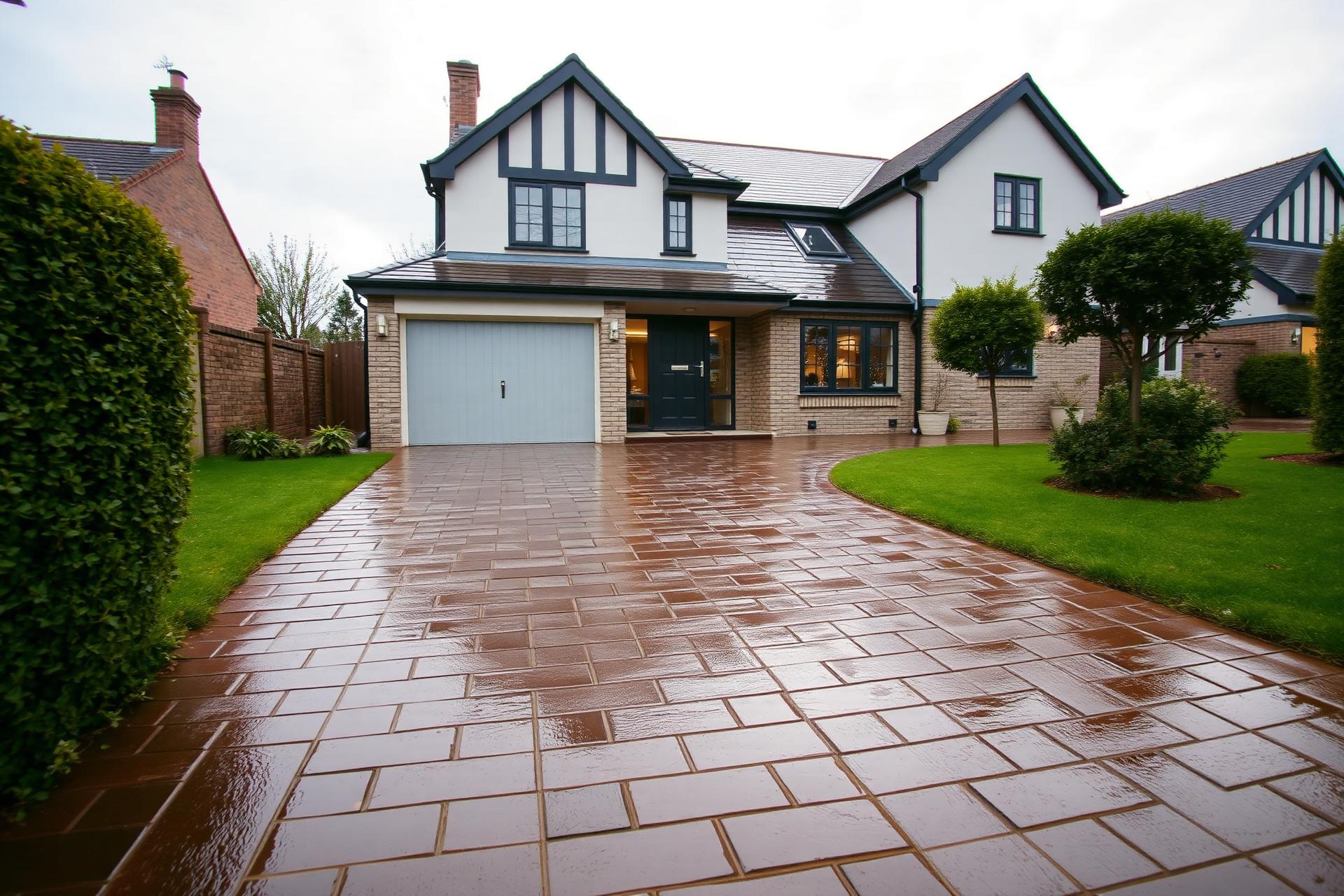
Hot Water Cleaning for Mews Cottage Courtyards in Ilkley
Converted mews cottage courtyard with ingrained oil staining
A number of the converted mews cottages tucked behind the main streets of Ilkley have small courtyard-style parking areas that were originally stable yards, often laid with dense stone setts that have absorbed decades of oil, grease and general vehicle drips before ever being cleaned properly. Cold water alone barely touches this kind of ingrained staining because the contaminant has cooled and hardened into the stone's pores.
Things worth knowing beforehand
Before we start
- Old oil staining may lighten significantly but not disappear entirely in one visit.
- Enclosed courtyards need a moment of ventilation between passes to let steam clear.
- A blocked central gully should be cleared before, not during, the cleaning visit.
Once it's done
- Vehicles need to be moved out for the full duration rather than partway through.
- Repeat oil drips from a regularly parked vehicle will undo progress faster than general weathering.
Why courtyard paving at converted mews cottages holds onto stains
A number of the converted mews cottages tucked behind the main streets of Ilkley have small courtyard-style parking areas that were originally stable yards, often laid with dense stone setts that have absorbed decades of oil, grease and general vehicle drips before ever being cleaned properly. Cold water alone barely touches this kind of ingrained staining because the contaminant has cooled and hardened into the stone's pores.
These courtyards tend to be enclosed on three sides by the original stable walls, which keeps them sheltered but also traps fumes and limits how quickly any cleaning solution can evaporate, so heat becomes the more useful tool here rather than stronger chemical dilution.
Because many of these mews properties are let out or used as a second parking space for a house on the main street, the courtyard often sees infrequent but heavy vehicle turnover, which is exactly the pattern that produces deep, layered staining rather than a single easy-to-lift mark.
Getting kit in, getting water away
Access is usually through a single archway wide enough for one vehicle, so equipment has to be brought in on a trolley rather than driven up alongside the work area, and we schedule around any resident vehicle that needs to move in or out during the visit.
These enclosed courtyards typically drain to a single central gully rather than sheeting off to open ground, so we work from the outer walls inward, pushing water and lifted contaminant toward that central point rather than letting it sit in corners where the old stable drainage has slowed with age.
- County
- West Yorkshire
- Main route in
- A65
- Nearest city
- Bradford — 12 miles
- Typical surfaces
- reclaimed York stone and honey-toned setts
- Common property stock
- Victorian villa, stone-built townhouse, moorland detached home
- Nearest commercial hub
- Ilkley Grove promenade and Leeds Road retail
How a hot water visit is structured
- Step 1
Working from the perimeter inward
We start at the courtyard walls and move toward the central gully, so lifted oil and grime travels toward drainage rather than being pushed into corners.
- Step 2
Heat applied in stages over stubborn staining
Rather than one long pass, oil-stained areas get repeated shorter passes at temperature, which lifts ingrained contaminant more effectively than a single extended blast.
- Step 3
Checking gully flow throughout
We periodically check the central drain is running clear during the visit, clearing any build-up rather than letting water back up across the courtyard floor.
What we assess before applying heat
Mapping the age of oil staining
Older, blackened staining needs a longer heat dwell than a fresher amber mark, so we identify which patches are decades old versus recent before choosing a temperature setting.
Checking the central gully for blockage
Given everything drains to one point, we check that the gully isn't already partially blocked with grit before starting, since a slow drain will undo the benefit of hot water lifting the stain.
Assessing wall proximity for heat and steam
With stone walls close on three sides, we note ventilation and any nearby timber features like a stable door before deciding how much heat to run at once.
Questions about hot water cleaning in Ilkley
Can hot water cleaning actually remove old oil stains from my courtyard setts?+
It can lift a significant amount of ingrained staining because heat breaks down oil in a way cold water can't, though very old, deep staining may lighten rather than disappear completely.
Will the heat damage the original stable-yard stone?+
The setts in these old stable yards are typically dense and well able to take heat, but we still check for any cracked or already-degraded stones before working over them at full temperature.
My courtyard only has one central drain — is that a problem?+
It just changes how we work; we clean from the walls inward so everything moves toward that drain rather than pooling, and we check the gully is running clear throughout.
How long before I can park back on the courtyard?+
The stone itself is usable again once surface water has cleared, generally within an hour or so depending on how enclosed and sheltered the courtyard is.
Scope agreed before anything is switched on
- We survey the surface first and say plainly if hot water cleaning is the wrong call for it.
- Scope is written down, so you can see exactly what is and isn't included.
- Where a stain or defect won't fully clear, we say so before you book.
Compare this with rotary surface cleaning for a more even finish across the same courtyard stone.
The short version
Enclosed mews courtyards with ingrained oil staining respond better to staged hot water passes than to cold water or chemical strength alone.