
Pressure Washing for Grove-Area Villa Driveways in Ilkley
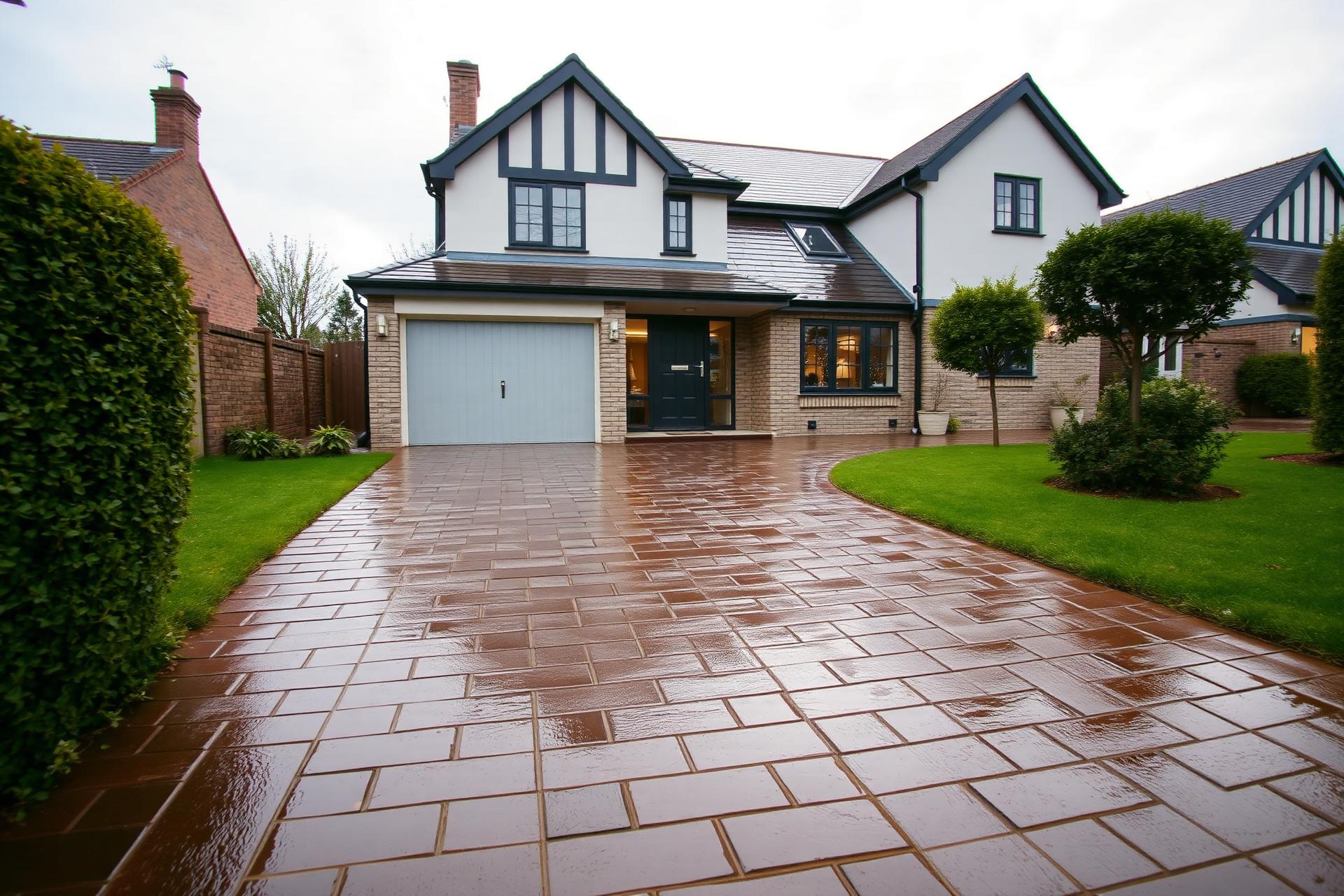
Villa driveway off the Grove with sloped setts down to the road
The villa driveways strung along the Grove and up toward Wells Road sit on a noticeable camber, laid decades ago in honey-toned setts that have since taken on a grey-green cast where the fall of the land keeps them damp. Leaf litter from the mature limes lining these streets washes down into the joints every autumn and rots there over winter, binding with grit tracked in from the moor road above.
Why the Grove's villa driveways silt up faster than they look
The villa driveways strung along the Grove and up toward Wells Road sit on a noticeable camber, laid decades ago in honey-toned setts that have since taken on a grey-green cast where the fall of the land keeps them damp. Leaf litter from the mature limes lining these streets washes down into the joints every autumn and rots there over winter, binding with grit tracked in from the moor road above.
Many of these properties are Victorian villas with a single wide apron of setts rather than a modern block-paved drive, which means the jointing sand is older and less tolerant of aggressive water pressure than a newer surface would be. Get the pressure wrong on this stone and you strip pointing that took a mason a full day to lay originally.
Because these drives sit close to the pavement and often share a boundary wall with a neighbour's identical apron, spray drift is a real consideration — not a theoretical one written into a method statement, but a genuine risk to a car parked six feet away.
Points worth knowing before booking
Before we start
- Autumn leaf-fall from the limes means late October bookings often need a second pass a fortnight later.
- Rocking or loose setts should be re-bedded before washing, not after.
- Shared aprons with neighbouring villas need a quick conversation about parking before the van arrives.
Once it's done
- South-facing sections dry within the hour; north-facing strips under the wall stay damp until evening.
- Old pointing on Victorian aprons is worth a look before, not during, the wash.
How the visit runs on a sloped sett drive
- Step 1
Working top to bottom, not side to side
Starting at the highest point of the Grove-style camber and moving downward keeps dirty water travelling in one direction, avoiding double-handling of the same run-off.
- Step 2
Adjusting bar pressure per stone band
Where reclaimed York flags meet the sett apron near the gate, pressure is dropped noticeably because the flag edges are thinner and chip more easily than the setts.
- Step 3
Rinsing joints last
Joint sand is only flushed once the surface dirt is lifted, and only with a wide fan pattern, so we're not blasting a channel through material that still needs to hold the setts in place.
Getting kit in, getting water away
Most Grove driveways are open to the road with no gate, but the gradient means a hose reel has to be anchored at the top rather than left to roll; several properties share a dropped kerb with next door, so we agree parking with both households before starting rather than assuming the whole width is fair game.
Run-off follows the camber straight toward a road gully at the pavement edge rather than into a soakaway, so we work from the highest point down and keep dirty water moving toward that gully rather than pooling against the garage door threshold, which on these older villas sits lower than the finished drive level.
- Postcode district
- LS29
- Local authority
- City of Bradford MDC
- County
- West Yorkshire
- Main route in
- A65
- Nearest city
- Bradford — 12 miles
- Typical surfaces
- reclaimed York stone and honey-toned setts
What we check before a single pass with the lance
Reading the joint depth on the honey setts
We run a scraper along a sample joint before switching the lance on, because sand that has already washed down to half-depth needs a lower bar setting than a fresh joint would tolerate.
Checking for loose or rocking setts
A quick walk of the apron by foot picks up any setts that have started to rock on their bedding — these get marked and avoided with direct jet pressure until they're re-bedded separately.
Assessing the gradient for water travel
On a sloped drive the water goes further than expected, so we note where a neighbour's car, bin store or basement window sits below the working area before choosing a start point.
Scope agreed before anything is switched on
- We survey the surface first and say plainly if pressure washing is the wrong call for it.
- Scope is written down, so you can see exactly what is and isn't included.
- Where a stain or defect won't fully clear, we say so before you book.
See how soft washing and biocide treatment handle the same stone where lichen rather than grit is the problem.
Questions Ilkley homeowners ask about pressure washing
Will pressure washing damage the reclaimed York stone edging on my drive?+
Not if pressure is matched to the stone — reclaimed flags are older and softer than the setts they border, so we drop the bar setting when working that edge rather than running one setting across the whole apron.
My drive is on a slope — does the water just run onto the pavement?+
We work top to bottom and keep dirty water directed toward the road gully rather than letting it sheet across the full width, so it shouldn't spread onto the pavement in the way an unmanaged wash would.
How soon after washing can I park the car back on the setts?+
The surface itself dries quickly, but we'd rather the jointing sand settles for a few hours first, so leaving the drive clear until early evening is sensible.
Do you work around the leaf litter from the street trees or clear it first?+
We clear loose leaf litter by hand before switching the lance on, since wet leaves through a pressure washer just smear tannin stains into the stone rather than lifting them.
The short version
A sloped sett driveway on the Grove needs pressure matched to stone age and worked top-down toward the road gully, not a single blanket setting.