
Rotary Surface Cleaning for Ring Road Estate Driveways in Bradford
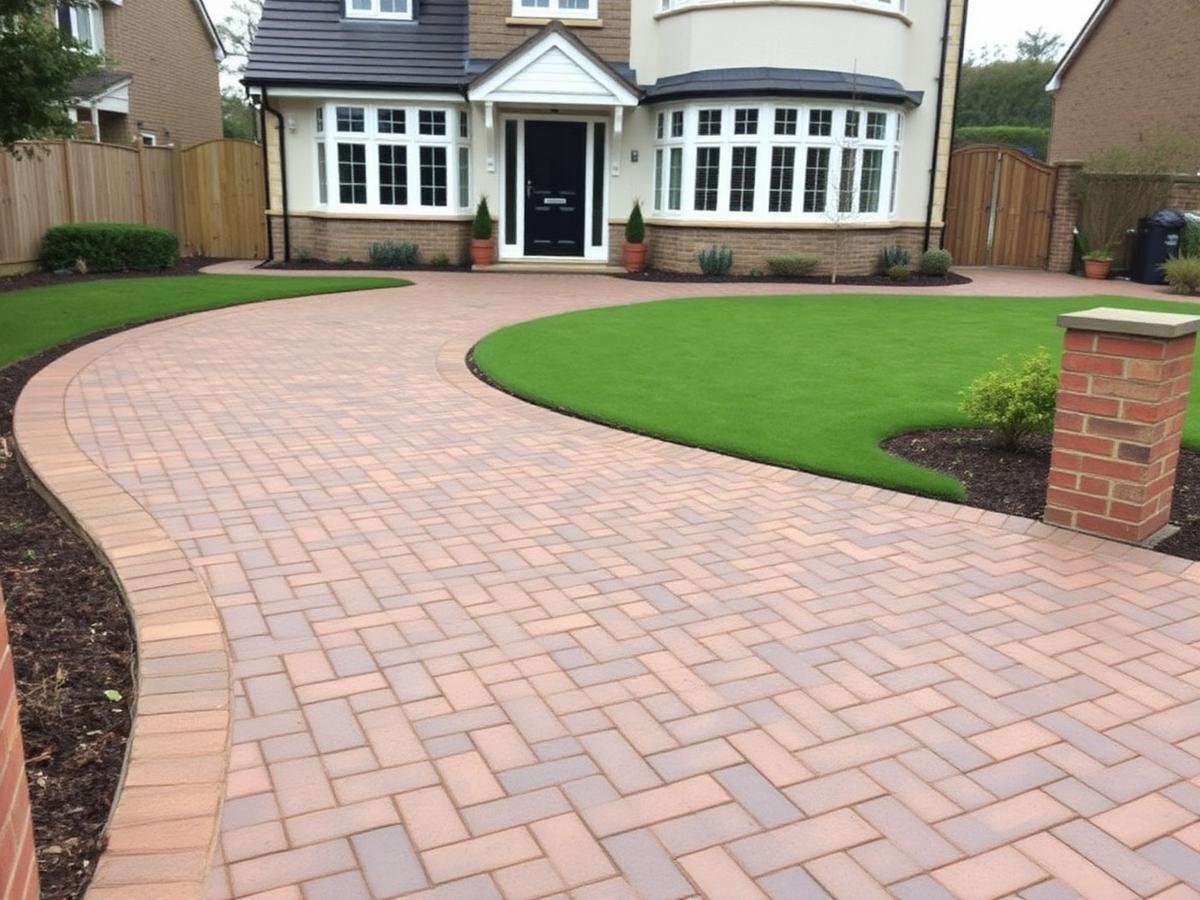
New estate driveway near the ring road with uneven block paving fade
Estates built along Bradford's outer ring road in the last couple of decades tend to have block-paved driveways laid in a herringbone or basketweave pattern, often with a lighter buff block bordered by a darker charcoal edging course. Traffic wear, tyre marks and general grime build up unevenly across that pattern, so the border often looks darker or lighter than the field long before the whole drive looks dirty.
Why newer estate drives near the ring road fade unevenly
Estates built along Bradford's outer ring road in the last couple of decades tend to have block-paved driveways laid in a herringbone or basketweave pattern, often with a lighter buff block bordered by a darker charcoal edging course. Traffic wear, tyre marks and general grime build up unevenly across that pattern, so the border often looks darker or lighter than the field long before the whole drive looks dirty.
These driveways sit close to the house, usually with a single garage or car port to one side, and neighbouring drives are laid to the same pattern, which makes any stripe or uneven patch from a badly handled clean stand out immediately against next door.
Because the block paving on these estates is relatively young, the joints are still tightly packed with the original kiln-dried sand in most cases, which is a different starting point to an older, more worn drive where the sand has already washed out.
Checking the paving before the head goes on
Wear pattern mapping
We note where tyre tracks, oil drips near the garage and the darker border course show heavier soiling, since that affects head speed and overlap.
Joint sand level
Sand levels in the joints are checked so the rotary head doesn't strip out material that's still doing its job of locking the blocks.
Surface levelness
Any settled or slightly sunken blocks are identified in advance, since an uneven head pass over a dip can leave a visible ring.
Getting kit in, getting water away
Most of these drives are single-vehicle width with a shared visibility splay onto the road, so we time the work to avoid blocking the pavement for pedestrians and check whether a car needs moving off-site rather than just onto the road. Where a garden gate borders the drive, it's left exactly as found.
Newer estate drives are built with a slight fall toward a permeable jointing system or a gully at the road edge, designed to handle rainwater under building regulations, and we work with that fall rather than against it so grime is carried toward the intended drainage point instead of pooling mid-drive. Any nearby soakaway is kept clear of debris during the clean.
- Main route in
- M606 / A650
- Nearest city
- Leeds — 9 miles
- Typical surfaces
- Yorkshire stone flags and 1930s red-brick pathways
- Common property stock
- Victorian terrace, 1930s semi, modern estate home
- Nearest commercial hub
- Bradford Broadway and Little Germany
- Area type
- city
What changes the outcome
Before we start
- Uneven overlap is the main cause of visible striping, so pass planning matters more than raw pressure here
- Oil or fuel drips near the garage door often need spot pre-treatment before the rotary pass
- Kiln-dried sand may need topping up after cleaning to keep the blocks locked
Once it's done
- A neighbouring identical drive makes any inconsistency far more noticeable, so evenness is the priority
- Dry, mild weather helps the surface dry evenly and shows the true finished colour sooner
How the rotary pass is worked
- Step 1
Overlap planning
Passes are planned with consistent overlap across the whole drive so there's no visible line between cleaned and uncleaned sections.
- Step 2
Working border and field separately
The darker edging course is treated as its own pass rather than rushed through with the field blocks, since it often needs a different dwell time.
- Step 3
Sand top-up check
Where the rotary action has disturbed jointing sand, we flag it for replacement so the paving stays properly locked.
Scope agreed before anything is switched on
- We survey the surface first and say plainly if rotary surface cleaning is the wrong call for it.
- Scope is written down, so you can see exactly what is and isn't included.
- Where a stain or defect won't fully clear, we say so before you book.
Questions from estate driveway owners
Why does my block paving look patchy after a previous clean?+
Patchiness is usually down to uneven overlap between passes rather than the paving itself; a properly planned rotary pass avoids that stripe effect.
Will cleaning strip out the sand between my blocks?+
Some disturbance is normal on any clean, which is why we check sand levels first and can top it up afterwards if needed.
Can you clean just the darker border blocks separately?+
Yes, the border course often needs different dwell time to the field blocks, so it's treated as its own section.
Is my drive too new to need cleaning yet?+
Even paving only a few years old picks up tyre grime and general soiling, particularly along the ring road where traffic dust settles.
Read how the same block paving is later protected on the Bradford block paving sealing page.
If your estate drive near the ring road has an uneven look to it, get in touch and we'll talk through the pattern before quoting.
Bottom line
Evenness of overlap matters more than raw power for a consistent finish on patterned block paving.