
Soft Washing North-Facing Patios in Ilkley and Ben Rhydding
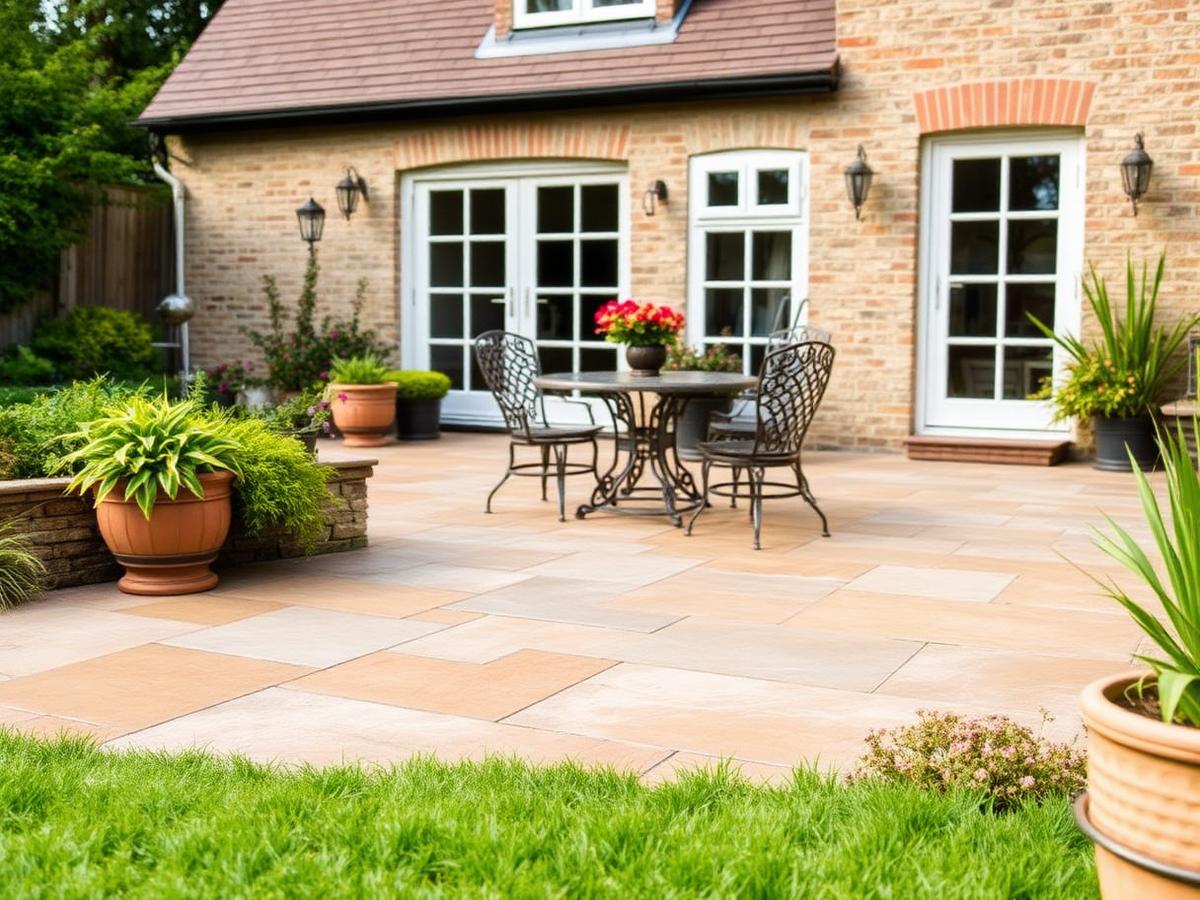
North-facing stone townhouse patio under tree cover near Ben Rhydding
The stone-built townhouses running up toward Ben Rhydding sit with the moor rising directly behind them, and the airflow that funnels down off that high ground keeps north-facing garden patios damp long after the front of the house has dried out. Lichen doesn't just sit on the surface here — it roots into the pitted texture of the York stone and comes back within a season if it's only ever blasted off.
Why lichen keeps returning on shaded stone toward Ben Rhydding
The stone-built townhouses running up toward Ben Rhydding sit with the moor rising directly behind them, and the airflow that funnels down off that high ground keeps north-facing garden patios damp long after the front of the house has dried out. Lichen doesn't just sit on the surface here — it roots into the pitted texture of the York stone and comes back within a season if it's only ever blasted off.
Many of these gardens were laid out with narrow side passages between terraced plots, meaning the patio itself often gets very little direct sun even in midsummer, and the flags are frequently laid tight-jointed with minimal fall, so water sits rather than sheeting away.
Because these are often mature gardens with established planting right up to the patio edge, whatever chemical goes down needs to be considered in relation to nearby borders, not just the stone itself.
How a soft-wash visit is actually run
- Step 1
Low-pressure application first
Solution goes down at low pressure across the whole patio before any mechanical work starts, giving it time to work into the lichen rather than being rushed.
- Step 2
Dwell time matched to shade level
North-facing, tree-covered sections get a longer dwell time than any sunnier corner of the same patio, because the growth is typically more established there.
- Step 3
Gentle agitation on stubborn patches
Only once the solution has worked do we use a soft brush on patches that haven't lifted cleanly, keeping mechanical force to a minimum on the pitted stone surface.
What we look for before choosing a soft-wash strength
Testing how far the lichen has rooted
A fingernail scrape on a sample flag tells us whether we're dealing with surface growth that will lift easily or rooted lichen that needs a longer dwell time.
Checking planting proximity
We map where herbaceous borders, shrubs or a lawn edge sit against the patio boundary so dilution and application method can be adjusted to protect them.
Assessing joint condition under the growth
Lichen often masks joint erosion, so we check whether the pointing beneath is sound or already washing out before deciding on solution strength.
What to bear in mind before and after
Before we start
- Results continue to improve for several days after treatment as the lichen dies back.
- Nearby planting should be covered or watered down if adjoining the treated area.
- North-facing sections may need a repeat visit sooner than sunnier parts of the same garden.
Once it's done
- Avoid walking pets on the treated area until it has dried and been rinsed.
- Autumn treatment ahead of the wet winter months tends to hold up better than a spring-only visit.
Getting kit in, getting water away
Access to these Ben Rhydding rear gardens is usually via a narrow side gate rather than the front of the property, so equipment gets carried through rather than wheeled, and we check gate widths in advance rather than turning up with kit that won't fit.
Most of these patios drain toward a gravel border or a soakaway pit at the garden's lowest corner rather than a formal gully, so the biocide solution is applied to soak in and work rather than being rinsed straight off, which would just carry it into the border soil unnecessarily.
- Local authority
- City of Bradford MDC
- County
- West Yorkshire
- Main route in
- A65
- Nearest city
- Bradford — 12 miles
- Typical surfaces
- reclaimed York stone and honey-toned setts
- Common property stock
- Victorian villa, stone-built townhouse, moorland detached home
Pair this with a biocide treatment visit or see how sandstone sealing helps once the lichen is cleared.
Scope agreed before anything is switched on
- We survey the surface first and say plainly if soft washing is the wrong call for it.
- Scope is written down, so you can see exactly what is and isn't included.
- Where a stain or defect won't fully clear, we say so before you book.
Questions about soft washing in Ilkley
Why does the lichen on my patio keep coming back even after cleaning?+
If it was pressure washed rather than soft washed, only the visible growth was removed while the roots stayed in the stone's texture, so it regrows quickly, especially in a shaded, moor-facing garden like these.
Is soft washing safe for the plants along the edge of my patio?+
We map borders before applying anything and adjust dilution and method near planting, but we'd still ask you to point out anything particularly delicate so it can be protected or covered.
Will my patio look clean straight away?+
Not immediately — soft washing works over several days as the lichen dies back, rather than lifting everything visibly in one pass like pressure washing would.
How often does a shaded patio near the moor need treating?+
Given the airflow off the moor keeps these gardens damp, an annual treatment tends to keep growth in check better than waiting until it's visibly thick again.
If your Ben Rhydding patio keeps growing lichen back within months of a clean, ask us about a soft-wash visit built around your garden's shade pattern.
The short version
Shaded stone patios toward Ben Rhydding need low-pressure treatment with dwell time, not a blast that only removes the surface growth.