
Imprinted Concrete Sealing for Infill Driveways in Bradford
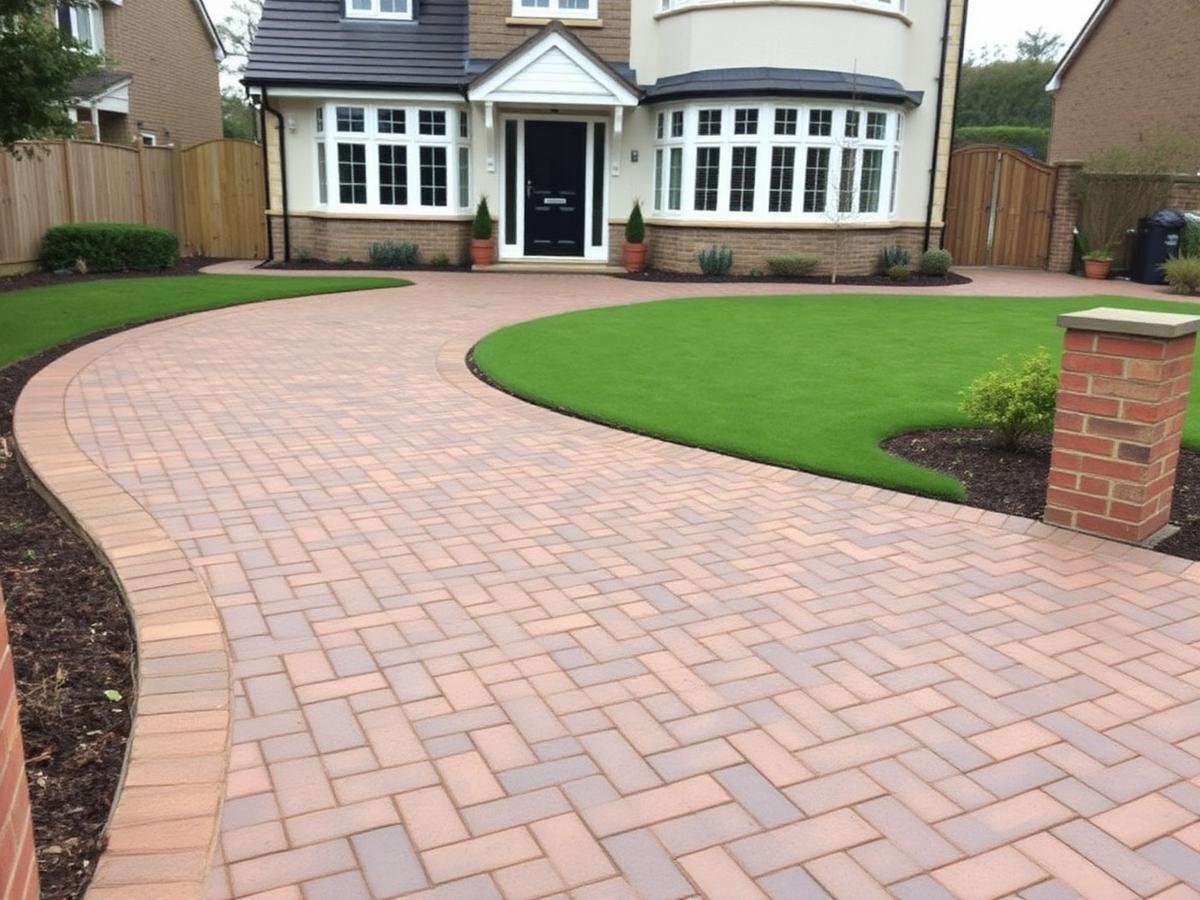
Imprinted concrete driveway on a 2000s infill plot near Thornbury
Infill plots built on smaller sites around areas like Thornbury during the 2000s often used imprinted concrete for the driveway, laid in a stamped pattern with an integral colour and a factory-applied sealer coat. That factory finish is only ever a starting protection, not a permanent one, and years of UV exposure and vehicle traffic gradually dull the colour and expose the pattern's texture to grime.
Why infill driveway colour fades faster than owners expect
Infill plots built on smaller sites around areas like Thornbury during the 2000s often used imprinted concrete for the driveway, laid in a stamped pattern with an integral colour and a factory-applied sealer coat. That factory finish is only ever a starting protection, not a permanent one, and years of UV exposure and vehicle traffic gradually dull the colour and expose the pattern's texture to grime.
Because these plots are often compact, the driveway usually does double duty as the main pedestrian route to the front door as well as parking, so wear tends to concentrate along a worn path rather than spreading evenly across the whole surface.
Owners of these properties often bought the house with the imprinted finish already a few years old, so there's frequently uncertainty about what sealer was originally used and how the surface has been maintained since, which is the first thing worth establishing before resealing.
Checking an imprinted surface before resealing
Existing sealer condition
We check whether a sealer is still present and how it's wearing, since resealing over a badly degraded old coat gives poor adhesion compared with proper stripping first.
Pattern groove wear
The imprinted grooves, which trap more dirt than the raised pattern, are inspected closely, as this is usually where colour loss shows first.
High-traffic path
The worn pedestrian route across the drive is identified separately, since it may need extra attention to blend with the less-worn field colour.
Getting kit in, getting water away
These driveways are typically single-width with a car parked most of the time, so we agree in advance whether the vehicle can be parked on the road for the duration of cleaning, sealing and cure, since the whole surface needs to be accessible at once. Bin collection day is worth flagging too, given the compact plot.
Imprinted concrete on these plots usually falls gently to a road-edge gully as required by planning conditions for the estate, and we make sure that fall isn't disrupted by sealer pooling in the imprinted grooves during application. Sealing is scheduled for a dry spell so the coating cures fully before any rain tests it.
- Postcode district
- BD1
- Local authority
- City of Bradford MDC
- County
- West Yorkshire
- Main route in
- M606 / A650
- Nearest city
- Leeds — 9 miles
- Typical surfaces
- Yorkshire stone flags and 1930s red-brick pathways
What determines how long the finish lasts
Before we start
- Old, degraded sealer often needs removing rather than simply coating over
- Imprinted grooves need as much attention during application as the raised pattern
- The worn pedestrian path across the drive may need extra blending
Once it's done
- Dry weather for both application and full cure is essential on this surface
- Colour restoration only works well if UV fade hasn't gone as far as surface erosion
How the resealing visit is carried out
- Step 1
Old sealer removal or preparation
Degraded or flaking sealer is stripped back or thoroughly prepared before recoating, since sealing over failing product traps problems rather than fixing them.
- Step 2
Colour restoration where needed
Where UV fade is significant, a colour-restoring sealer is used to bring the pattern's tone back closer to its original depth rather than just adding gloss.
- Step 3
Even application across the pattern
Sealer is worked into the imprinted grooves as carefully as the raised surface, since uneven application here is what causes a patchy look later.
Scope agreed before anything is switched on
- We survey the surface first and say plainly if imprinted concrete sealing is the wrong call for it.
- Scope is written down, so you can see exactly what is and isn't included.
- Where a stain or defect won't fully clear, we say so before you book.
Questions about imprinted concrete upkeep
My imprinted concrete has gone patchy and grey — can sealing fix that?+
In most cases yes, particularly if the fade is from UV exposure rather than deeper surface erosion, since a colour-restoring sealer can bring tone back.
How do I know what sealer was used originally?+
It isn't always possible to know for certain on an older infill build, which is why we assess the current coating's condition directly rather than relying on assumptions.
Does the whole driveway need resealing or just the worn path?+
It's best done as one job, since sealing only the worn section can leave a visible tone difference against the rest of the drive.
How long will a fresh seal last on a driveway this size?+
It depends on traffic and exposure, but a well-prepared reseal on a compact, well-used drive like this typically needs revisiting sooner than a rarely used surface.
See the Bradford new-build-estate page for more on the property type common to this kind of driveway.
If your imprinted concrete driveway near Thornbury has faded, get in touch and we'll assess the existing coating before quoting a reseal.
Bottom line
Faded imprinted concrete usually needs proper old-sealer assessment before a colour-restoring coat will hold.