
Imprinted Concrete Sealing on New-Build Driveways in Harrogate
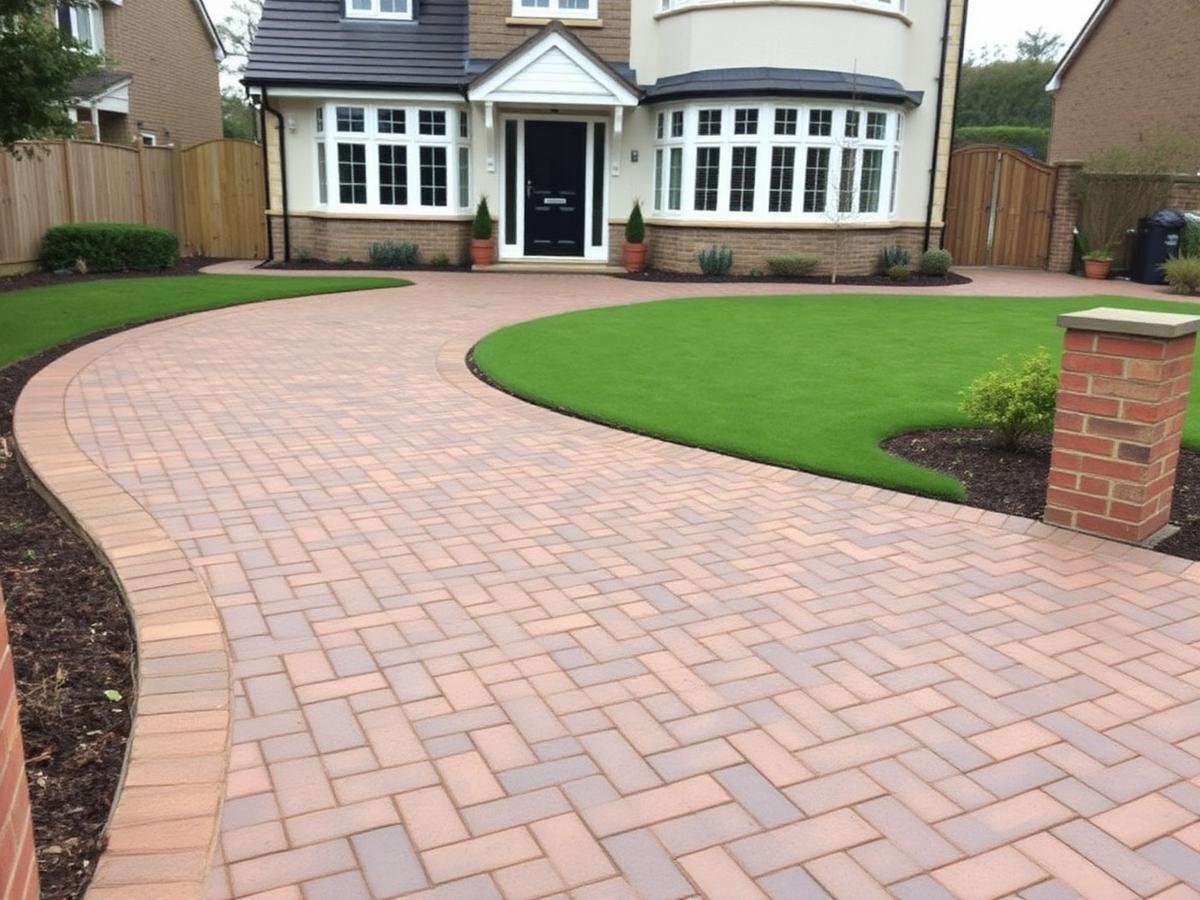
Imprinted concrete driveway on a new-build close near the outskirts
On some of the newer estate closes toward Harrogate's outskirts, driveways were laid in imprinted concrete during construction, patterned to resemble stone setts or cobble. A few years of UV exposure and general traffic usually fade the original colour tint well before the base concrete itself shows any real wear.
An imprinted concrete driveway on a newer estate close
On some of the newer estate closes toward Harrogate's outskirts, driveways were laid in imprinted concrete during construction, patterned to resemble stone setts or cobble. A few years of UV exposure and general traffic usually fade the original colour tint well before the base concrete itself shows any real wear.
Because the pattern relies on a stamped texture rather than genuine jointed units, any sealant needs to sit evenly across both raised and recessed sections of the pattern, or the contrast that gives it its stone-like look starts to flatten out.
These driveways are typically shared by close neighbours with similar houses and similar ages of imprinted concrete, so fading is often noticeable street to street, making colour restoration a visible, comparable result.
What fading imprinted concrete needs checked
Assessing colour fade across raised and recessed pattern areas
Raised sections of the stamped pattern typically fade faster under UV than the recessed grout-line detail, so both are checked before choosing a tint approach.
Checking for surface crazing or hairline cracking
Imprinted concrete can develop fine surface crazing over time, which is noted since sealant can either mask or highlight it depending on the finish chosen.
Testing existing sealant condition, if previously sealed
Where a driveway has been sealed before, the old coating's condition decides whether it needs full removal or can be cleaned and recoated.
Getting kit in, getting water away
New-build closes usually have clearly defined driveway spaces with room to work around a parked car if needed, and turning space on the close itself makes equipment access straightforward. Curing time does mean coordinating with household routines so the surface isn't driven on too soon after sealing.
Drainage on newer estates is typically well engineered, running to a formal surface water system built into the close, so sealant application just needs to avoid excess pooling before it's had time to soak in and begin curing. Mains water is usually accessible from an outside tap near the garage or side of the house.
- Postcode district
- HG1
- Local authority
- North Yorkshire Council
- County
- North Yorkshire
- Main route in
- A61 / A59
- Nearest city
- Leeds — 17 miles
- Typical surfaces
- reclaimed York stone and honey-coloured setts
What to expect from a resealed imprinted drive
Before we start
- Full UV fade typically shows within a few years of the original build.
- Vehicles should stay off until the sealant has properly cured.
- Old, patchy sealant should be removed rather than sealed over.
Once it's done
- Colour restoration works best on concrete that hasn't developed significant surface crazing.
- Neighbouring driveways of the same age may show comparable fading, useful for spotting the issue early.
How resealing is carried out on a patterned surface
- Step 1
Cleaning thoroughly to remove old sealant residue
Any flaking or patchy old sealant is cleaned back before reapplication, since sealing over a failing coat traps the problem underneath.
- Step 2
Applying colour-restoring sealant evenly across the pattern
Sealant is worked into both raised and recessed areas of the stamped pattern so the contrast that defines the stone-like look is kept consistent.
- Step 3
Allowing full cure before any vehicle use
The driveway is left untouched by vehicles for the sealant's full curing period, which matters more on a surface used daily by the household.
Scope agreed before anything is switched on
- We survey the surface first and say plainly if imprinted concrete sealing is the wrong call for it.
- Scope is written down, so you can see exactly what is and isn't included.
- Where a stain or defect won't fully clear, we say so before you book.
Questions asked by new-build owners about resealing
Why has my imprinted concrete driveway faded so much faster than expected?+
UV exposure fades the colour tint well before the underlying concrete shows structural wear, which is common on driveways just a few years old.
Can sealing restore the original colour?+
Colour-restoring sealant can bring back much of the original tint, applied evenly across both the raised and recessed parts of the pattern.
How long before I can park on the driveway after sealing?+
The surface needs to fully cure first, so vehicles are kept off for the period recommended for the sealant used.
Does old sealant need removing before resealing?+
Where existing sealant is flaking or patchy, it's better removed first, since sealing over it can trap the problem rather than fix it.
See other sealing options suited to Harrogate's newer housing stock.
If your new-build driveway has lost its original colour, get in touch to talk through imprinted concrete resealing.
The short version
Faded imprinted concrete on newer Harrogate estates needs resealing that restores tint evenly across the stamped pattern.