
Imprinted Concrete Sealing Near Menston's Guiseley Boundary
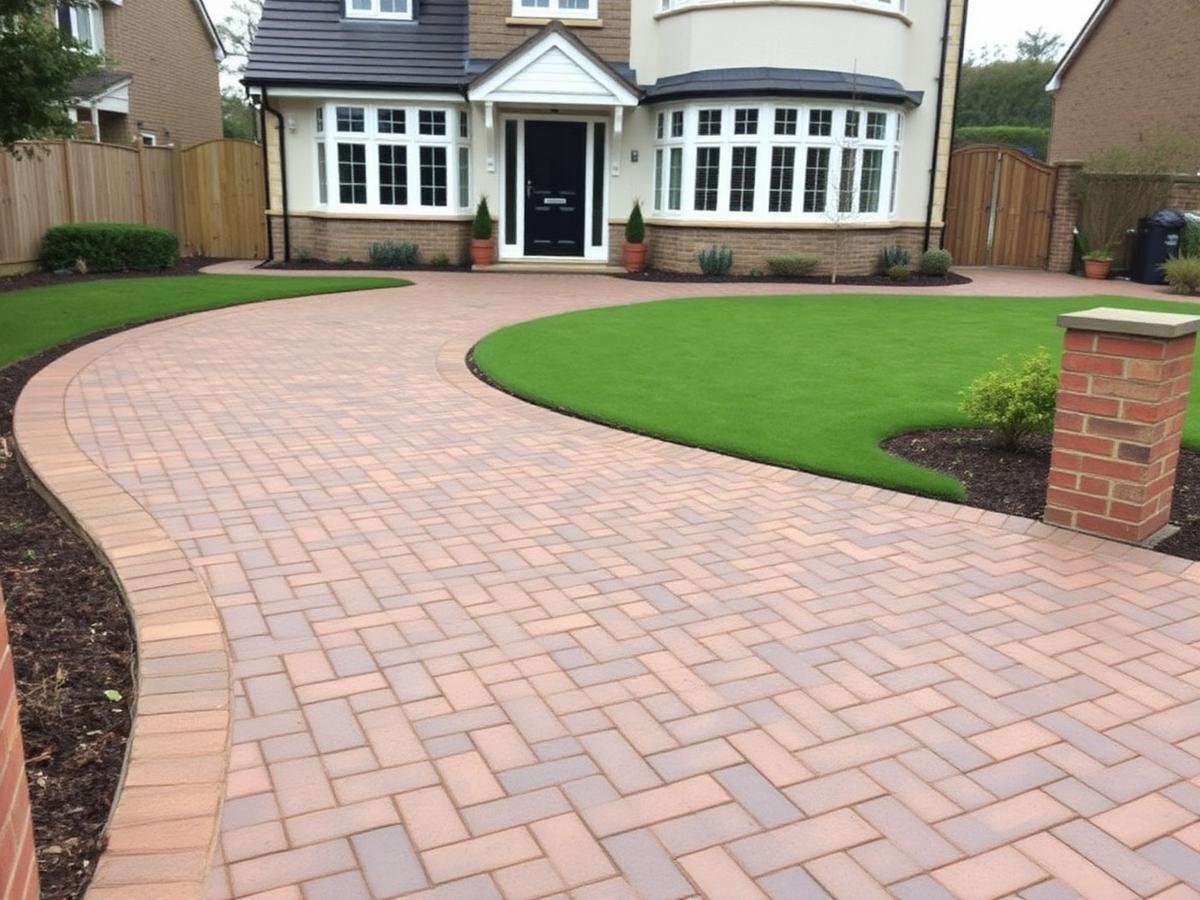
Imprinted concrete drive on a 1990s infill plot near Guiseley boundary
A handful of infill plots built nearer the Guiseley boundary during the 1990s and early 2000s used imprinted concrete for their driveways, a popular choice at the time for its cobble or slate-effect pattern. Two to three decades on, the original colour pigment has often faded and the pattern lines have flattened slightly under years of vehicle traffic, so what was once a crisp textured finish now reads as fairly plain grey concrete with a faint pattern ghost.
Why pattern definition fades on imprinted concrete
A handful of infill plots built nearer the Guiseley boundary during the 1990s and early 2000s used imprinted concrete for their driveways, a popular choice at the time for its cobble or slate-effect pattern. Two to three decades on, the original colour pigment has often faded and the pattern lines have flattened slightly under years of vehicle traffic, so what was once a crisp textured finish now reads as fairly plain grey concrete with a faint pattern ghost.
Resealing an imprinted drive isn't just cosmetic — the sealant layer is what originally gave the surface its colour depth and slight sheen, and once that layer wears through, both the look and the protective barrier against water ingress are gone. Left unsealed for too long, imprinted concrete becomes more prone to surface flaking, particularly through repeated winter freeze-thaw cycles this close to the moorland edge.
These drives back onto a mix of newer estate housing and older village fringe, so the finish needs to hold up in a fairly exposed position without looking out of place against either style of frontage.
Checking an imprinted drive before resealing
Pigment fade assessment
We check how much original colour pigment remains visible in the pattern grooves compared with the raised surface, since this affects whether a full colour-restoring sealer or a clear protective coat is the better option.
Surface flaking or spalling
Any small areas of surface flaking from past freeze-thaw damage are identified, since sealing can't repair existing spalling, only slow further loss.
Existing sealant breakdown
We assess how the old sealant layer has worn — patchily or uniformly — as patchy wear usually needs a light strip before resealing evenly.
Getting kit in, getting water away
These driveways are generally open-plan, without gates, giving clear access for equipment straight from the road, though the pattern and joints in imprinted concrete can trap more surface grime than plain concrete, so the clean beforehand needs a bit longer to get an even base for the new sealant.
Imprinted concrete is a largely impermeable surface laid with a fall toward a surface drain or the road channel, so any sealant used is chosen partly on how it affects surface slip resistance when wet, given that water will sit and run across the top rather than soak through.
- Postcode district
- LS29
- Local authority
- City of Bradford MDC
- County
- West Yorkshire
- Main route in
- A65
- Nearest city
- Leeds — 11 miles
- Typical surfaces
- Wharfedale stone flags and honey-toned setts
What to expect from a freshly sealed drive
Before we start
- Colour restoration works best when some original pigment remains visible
- Existing surface flaking won't be repaired by sealing alone
- A slip-conscious finish matters given how impermeable the surface is
Once it's done
- The drive needs to stay vehicle-free while the sealant cures fully
- Exposed, boundary-edge drives may need resealing sooner than sheltered ones
How the resealing visit works
- Step 1
Thorough pattern-groove clean
The clean focuses heavily on the recessed pattern lines, where grime collects most and where an uneven clean would show clearly once resealed.
- Step 2
Colour or clear sealant decision
Based on the fade assessment, we apply either a colour-enhancing sealer to restore pigment depth or a clear protective coat if the colour is still reasonably intact.
- Step 3
Slip-conscious even coat
The sealant is applied evenly across the full drive, factoring in a finish that maintains reasonable grip underfoot when wet, not just visual gloss.
Scope agreed before anything is switched on
- We survey the surface first and say plainly if imprinted concrete sealing is the wrong call for it.
- Scope is written down, so you can see exactly what is and isn't included.
- Where a stain or defect won't fully clear, we say so before you book.
Questions from imprinted concrete owners
Can sealing bring back the original colour of my drive?+
If some original pigment remains in the pattern grooves, a colour-enhancing sealer can noticeably restore depth of colour, though it won't recreate a colour that's completely gone.
Will sealing fix the small flaking patches I've noticed?+
Sealing won't repair existing flaking, but it helps slow further surface loss by reducing water getting into the concrete during freeze-thaw conditions.
Is a sealed imprinted drive slippery when wet?+
We factor in a finish that maintains reasonable underfoot grip, since imprinted concrete is impermeable and water sits on the surface rather than draining through.
How long does resealing an imprinted concrete drive last?+
It varies with traffic and exposure, but a drive in a fairly open position near the boundary generally needs attention sooner than one more sheltered by buildings or hedging.
Compare this with our colour-enhancing sealer work on other paved surfaces around Menston.
If your imprinted concrete drive has lost its colour and pattern definition, get in touch and we'll talk through a resealing plan suited to its age and exposure.
In short
Resealing restores both the colour and the protective barrier that ageing imprinted concrete drives near the Guiseley boundary have lost.