
Imprinted Concrete Sealing for Ilkley Driveways
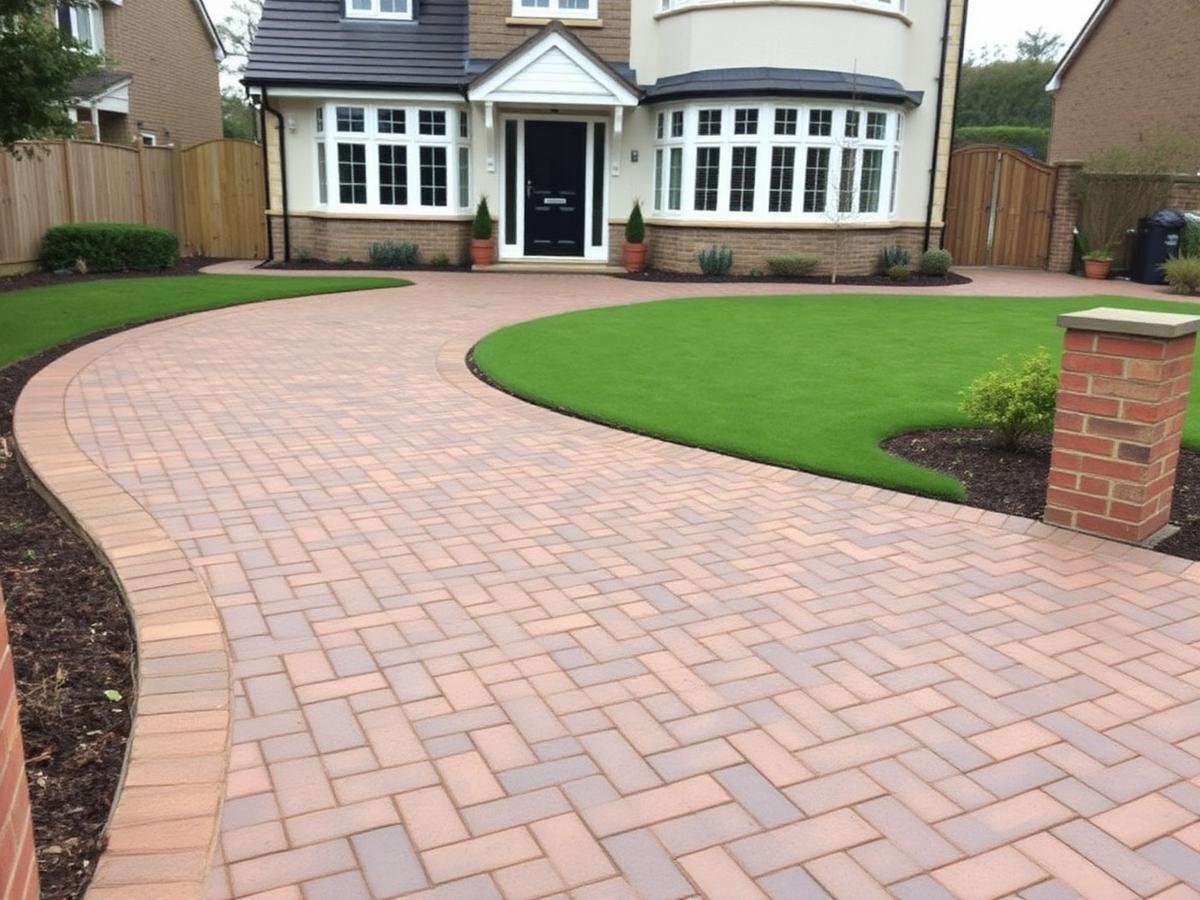
1990s-2000s detached property with faded pattern-imprinted concrete drive
A number of detached properties built in Ilkley through the 1990s and early 2000s chose pattern-imprinted concrete drives, styled to mimic setts or cobble at a fraction of the laying time, and these are now old enough that the original colour hardener has faded significantly, particularly on the sections that get the most sun and the most tyre contact.
Why imprinted concrete drives in Ilkley fade unevenly
A number of detached properties built in Ilkley through the 1990s and early 2000s chose pattern-imprinted concrete drives, styled to mimic setts or cobble at a fraction of the laying time, and these are now old enough that the original colour hardener has faded significantly, particularly on the sections that get the most sun and the most tyre contact.
Unlike a real sett or block driveway, an imprinted concrete surface is a single continuous slab, meaning any wear or fading tends to show as a broad patchy patterns rather than isolated stone-by-stone marks, which is quite noticeable once the original sealer has fully worn away and the surface starts to look chalky rather than glossy.
These driveways are usually on flatter, more modern plots than the older stone streets in town, and the wear pattern tends to concentrate directly under where vehicles turn or reverse, since that's where the pattern grooves see the most repeated flexing and grit abrasion.
What we check before resealing an imprinted drive
Assessing colour hardener fade across the drive
We compare faded sections against any area that's been sheltered, such as under a porch overhang, to judge how much colour restoration is realistic before resealing.
Checking pattern groove wear from vehicle turning
The turning area typically shows the most groove wear, and we check whether this has worn down to bare concrete or just lost its coloured surface layer.
Testing existing sealer adhesion
Where old sealer is peeling or flaking, we check how much needs to be mechanically removed before a new coat can bond properly rather than sealing over failing product.
Getting kit in, getting water away
These are typically standard suburban driveways with straightforward open access, though the turning circle where a car reverses to the road is often the section needing the most attention, so we schedule around when the vehicle can be moved clear for the full drying window.
Imprinted concrete is non-porous by nature, so water sheets across the surface toward the drive's edge and typically into a road gully or a soakaway strip along the boundary, meaning the sealer chosen needs to maintain enough surface texture in the pattern grooves to avoid creating a slip risk when wet.
- Postcode district
- LS29
- Local authority
- City of Bradford MDC
- County
- West Yorkshire
- Main route in
- A65
- Nearest city
- Bradford — 12 miles
- Typical surfaces
- reclaimed York stone and honey-toned setts
What affects how long a fresh seal lasts
Before we start
- Old, flaking sealer needs removing before a fresh coat is applied.
- The vehicle turning area usually shows the most wear and may need extra attention.
- Colour restoration works best when applied before rather than after sealing.
Once it's done
- Pattern grooves need to retain some texture to avoid a slip risk when wet.
- A full dry day either side of application gives the sealer the best chance to cure evenly.
How the resealing process is carried out
- Step 1
Removing failed or flaking old sealer
Any peeling or chalky old sealer is removed first, since a new coat applied over failing product will simply fail again within a short period.
- Step 2
Restoring colour before resealing
Where fading is significant, a colour restoration product matched to the original hardener tone is applied before the fresh sealer goes on top.
- Step 3
Maintaining pattern groove texture for grip
Sealer is applied in a way that doesn't pool in the pattern grooves, preserving enough texture there to avoid a slippery finish once cured.
Scope agreed before anything is switched on
- We survey the surface first and say plainly if imprinted concrete sealing is the wrong call for it.
- Scope is written down, so you can see exactly what is and isn't included.
- Where a stain or defect won't fully clear, we say so before you book.
Questions about imprinted concrete sealing
Can faded imprinted concrete actually look freshly coloured again?+
A colour restoration product applied before resealing can significantly improve faded areas, though the result depends on how far the original hardener has worn away.
Why does my driveway look patchy rather than evenly faded?+
Fading is usually heaviest where sun exposure and tyre contact combine, such as the turning circle, while sheltered edges under a porch or wall often retain more original colour.
Will sealing make the drive slippery when wet?+
Not if applied properly — sealer is worked to avoid pooling in the pattern grooves, which keeps enough texture there for grip in wet weather.
How do you know if the old sealer needs removing first?+
We check adhesion across the surface, and any peeling or chalky patches indicate the old coat is failing and needs removing before a new one is applied.
Rotary surface cleaning is a useful first step on imprinted concrete before any resealing work begins.
If your imprinted concrete drive has faded or the old sealer is peeling, get in touch and we'll assess what's needed before a fresh coat goes on.
The short version
Faded imprinted concrete drives need old sealer properly removed and colour addressed before resealing, particularly around the turning area.