
Patio Sealing for Reclaimed York Stone in Guiseley
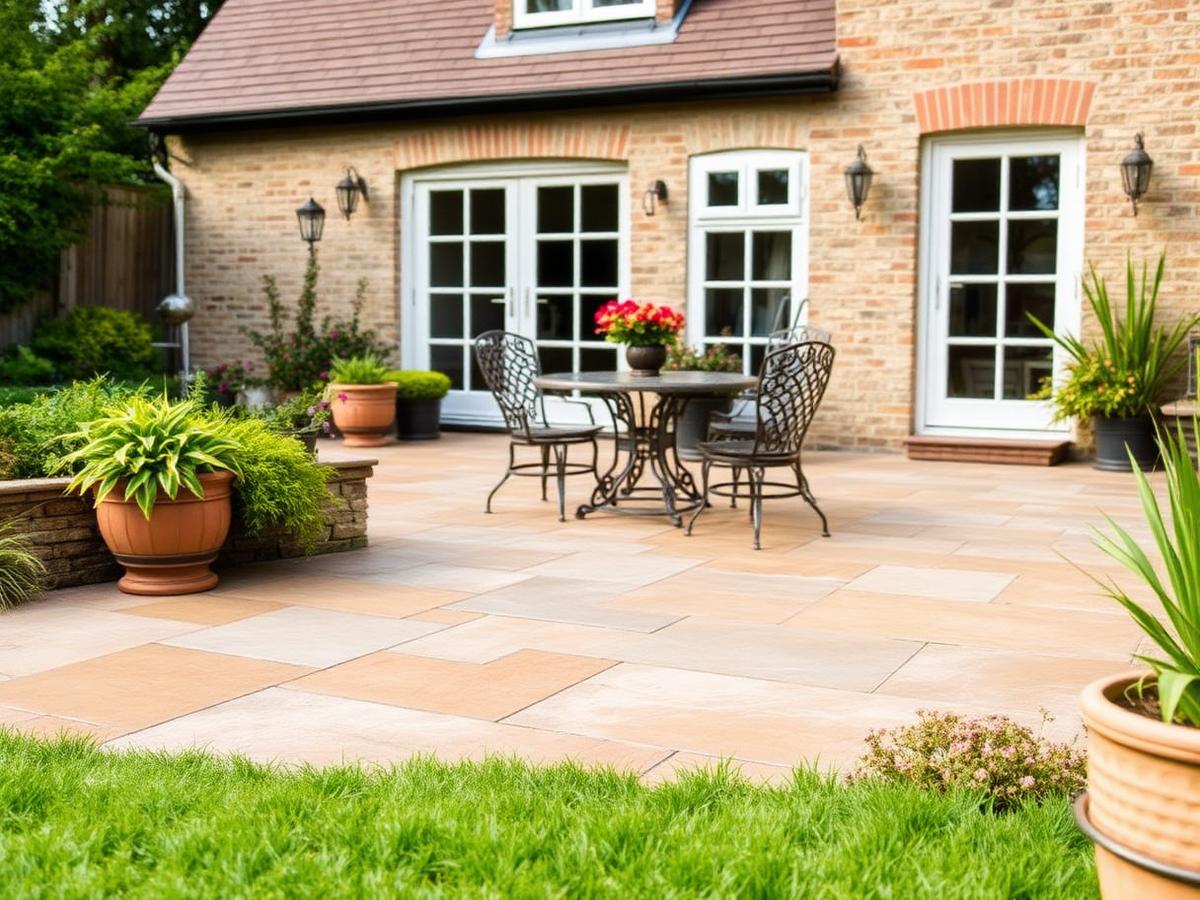
Victorian terrace back yard with reclaimed York stone flags near the town centre
Guiseley's older terraces close to the town centre often have small back yards laid with reclaimed York stone flags, sometimes original to the property and sometimes sourced from other demolitions decades ago. These flags carry genuine character — variable thickness, worn edges, subtle colour variation — but that same reclaimed nature means porosity varies considerably from one flag to the next.
Why older terrace yards need particular care when sealing
Guiseley's older terraces close to the town centre often have small back yards laid with reclaimed York stone flags, sometimes original to the property and sometimes sourced from other demolitions decades ago. These flags carry genuine character — variable thickness, worn edges, subtle colour variation — but that same reclaimed nature means porosity varies considerably from one flag to the next.
Because these yards are compact and enclosed by high boundary walls typical of terrace housing, they don't dry out as quickly as an open modern patio, and moisture sits in the more porous flags for longer after rain. Left unsealed, this leads to uneven staining as some flags absorb grime faster than their neighbours, and in winter that trapped moisture is exactly what causes frost damage at the stone's surface.
Sealing reclaimed stone properly means treating it as the variable material it is rather than applying a single uniform coat as you might on a modern, consistently manufactured patio slab.
How sealing is applied to older, porous flags
- Step 1
Flag-by-flag moisture check
Rather than assuming uniform dryness, we check moisture levels across a sample of flags given the variability in reclaimed stone, since sealing over a damp flag traps moisture underneath.
- Step 2
Test patch application
A test patch is applied in an inconspicuous corner first, particularly important on reclaimed stone where colour response to sealer can vary between flags.
- Step 3
Careful edge work near pointing
Sealer is applied with attention to how it interacts with older pointing, avoiding heavy build-up in joints that could trap moisture against lime mortar.
What we assess on reclaimed stone before sealing
Porosity variation across flags
We test how quickly different flags absorb water, since reclaimed stone from mixed sources rarely behaves uniformly and this affects how much sealer each flag actually needs.
Existing frost damage or flaking
Any flags already showing surface flaking from past frost damage need identifying before sealing, since sealer won't reverse existing damage and shouldn't be expected to.
Pointing condition between older flags
Original lime-based pointing common in older terraces behaves differently under sealer to modern cement pointing, so we check which is present before choosing a product.
Weather and material points to plan around
Before we start
- Reclaimed stone can react differently to the same sealer flag by flag, which is why a test patch matters here more than on uniform modern paving.
- Sealing should wait for a settled dry spell given how slowly enclosed terrace yards dry out after rain.
- Flags already showing frost damage won't be fixed by sealing, though it will help slow further deterioration.
Once it's done
- Lime-based pointing needs a breathable sealer rather than a fully non-porous product.
- Reapplication intervals may be shorter on more porous reclaimed flags than on newer stone.
Getting kit in, getting water away
Terrace back yards are almost always reached via a rear ginnel or through-house access rather than a side gate, so equipment needs to be compact enough to carry through a narrow passage. Shared ginnels with neighbouring terraces mean we coordinate timing to avoid blocking access during the work.
These small enclosed yards often drain to a single central gully rather than a soakaway, given how terrace properties were originally built, and we check this gully is clear and unobstructed before sealing, since a blocked drain combined with a newly sealed surface can lead to standing water pooling in the yard.
- Nearest commercial hub
- Guiseley retail park and Otley Road
- Area type
- commuter village
- Postcode district
- LS20
- Local authority
- Leeds City Council
- County
- West Yorkshire
- Main route in
- A65
See how sandstone sealing and other treatments apply to Guiseley's older stone surfaces.
Scope agreed before anything is switched on
- We survey the surface first and say plainly if patio sealing is the wrong call for it.
- Scope is written down, so you can see exactly what is and isn't included.
- Where a stain or defect won't fully clear, we say so before you book.
Questions about sealing reclaimed stone patios
Will sealing make our old flags look too shiny or modern?+
We can choose a matt, natural-look sealer specifically to avoid an artificial shine, which is usually the better fit for reclaimed stone character.
Can you seal around our lime pointing without causing damage?+
Yes — we use a breathable sealer suited to lime mortar so moisture can still escape through the pointing rather than being trapped.
Why does one flag look different to the rest after sealing?+
Reclaimed stone varies in porosity flag by flag, so slight colour variation after sealing is common and reflects the stone's natural inconsistency rather than an application fault.
How long will the seal last in an enclosed yard like ours?+
Enclosed terrace yards that stay damp longer after rain may need resealing a little sooner than an open, sunnier patio, generally reviewed every few years.
If your terrace yard's reclaimed flags are staining unevenly, get in touch about a sealing approach that respects the stone's variability rather than treating it as uniform.
In brief
Sealing protects Guiseley's reclaimed York stone terrace yards from uneven staining and frost damage caused by trapped moisture.