
Care for New-Build Estate Driveways in Baildon
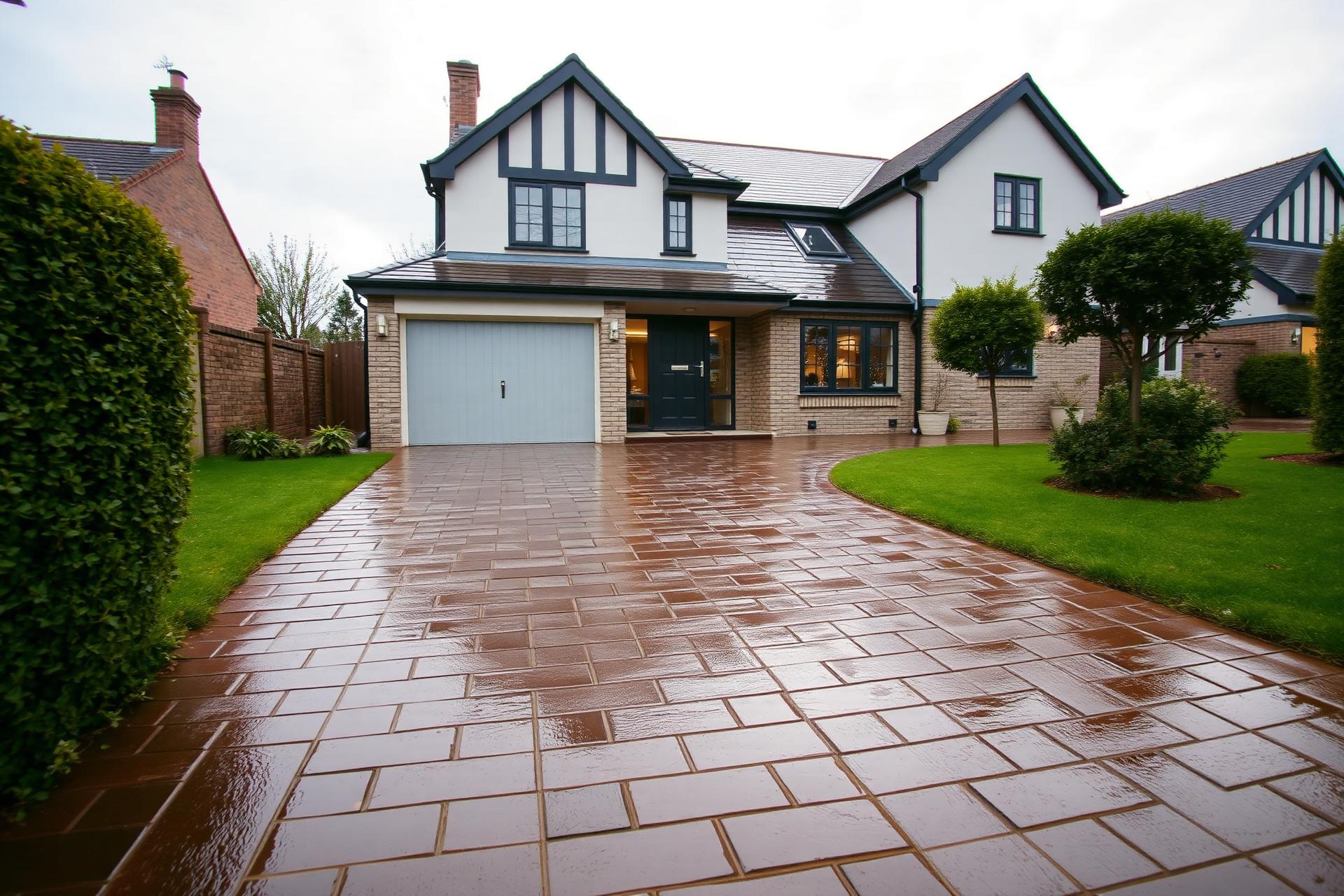
New-build estate near the bypass edge with developer-laid block paving still under two years old
The estate developments near the Baildon bypass have brought a wave of new-build homes over recent years, most with block-paved driveways laid by the developer's contractor to a standard specification rather than a bespoke design. These surfaces are young — often under five years old — but that doesn't mean they're maintenance-free, and early care genuinely affects how they look a decade on.
What's different about a driveway that's barely two years old
The estate developments near the Baildon bypass have brought a wave of new-build homes over recent years, most with block-paved driveways laid by the developer's contractor to a standard specification rather than a bespoke design. These surfaces are young — often under five years old — but that doesn't mean they're maintenance-free, and early care genuinely affects how they look a decade on.
Developer-laid paving is typically consistent and well-jointed at handover, but jointing sand on a brand-new drive hasn't yet settled and compacted the way older paving has, making it more vulnerable to washing out in the first couple of winters if left untreated. Homeowners moving in often assume a new drive needs nothing until it visibly looks dirty, by which point some avoidable joint erosion may already have happened.
These estates sit slightly more exposed toward the bypass edge of Baildon than the sheltered town centre, meaning wind-driven rain and general weathering start working on jointing sooner than owners might expect for such a new surface.
Protecting a new drive without over-treating it
Before we start
- A new driveway doesn't need heavy cleaning in year one, but light attention to jointing sand pays off long term.
- Permeable paving systems need joints kept clear rather than treated like standard drainage.
- Construction dust from nearby ongoing building work may need addressing separately from general grime.
Once it's done
- Sealing is usually best timed once the paving has had a settling period rather than immediately.
- Shared visitor parking on these estates should be checked before scheduling a visit.
How an early-life visit differs from an older driveway job
- Step 1
Gentle early clean rather than a heavy reset
A young driveway typically needs a lighter clean than an older one, so we scale the visit to what's actually needed rather than treating it like a decade-old surface.
- Step 2
Joint sand assessment and top-up
Any early signs of sand loss are addressed with a top-up as part of the same visit, getting ahead of erosion before it becomes visible unevenness.
- Step 3
Protective sealing option at the right stage
Where appropriate, we discuss sealing once the paving has settled sufficiently, rather than recommending it immediately at handover before the joints have bedded in.
Getting kit in, getting water away
New-build driveways are generally straightforward to access, being wide and unobstructed with clear estate roads for any equipment, though shared visitor parking bays nearby sometimes need checking so we're not blocking a neighbour's space during the visit.
Newer estates are often built with permeable paving systems designed to manage surface water on-site rather than sending everything straight to a road gully; we confirm which drainage approach applies before choosing a cleaning method, since permeable systems need their joints kept functional rather than cleared out.
- Main route in
- A6038
- Nearest city
- Bradford — 4 miles
- Typical surfaces
- Yorkshire stone flags and older buff sandstone
- Common property stock
- stone-built terrace, moor-edge detached, 1930s semi
- Nearest commercial hub
- Baildon Browgate and Otley Road parade
- Area type
- market town
Checking developer-laid paving for early signs of wear
Early jointing sand settlement check
We assess how well the original sand has bedded in during the first year or two, since a young drive can lose sand faster than an established one if untreated.
Permeable paving function test
Where the drive uses a permeable system, we check water is still draining through the joints as designed rather than pooling on the surface.
Construction debris and residue
New-build sites can leave fine cement dust or residue on paving from surrounding building work; we identify this since it needs different treatment to ordinary weathering grime.
Scope agreed before anything is switched on
- We survey the surface first and say plainly if new-build estate homes is the wrong call for it.
- Scope is written down, so you can see exactly what is and isn't included.
- Where a stain or defect won't fully clear, we say so before you book.
Other property types and services across Baildon are linked below.
Questions from new-build owners
My drive is only two years old — does it really need attention already?+
Not a heavy clean, but checking jointing sand settlement early can prevent avoidable erosion before it becomes a visible problem later.
Is my paving permeable, and does that matter for cleaning?+
Many newer Baildon estates use permeable systems; if yours does, we adjust our approach so the joints keep draining properly rather than getting cleared out.
Should I seal my driveway straight away?+
Usually it's better to let a new drive settle for a period first rather than sealing immediately at handover, and we can advise on the right timing.
What's that dust on my drive from nearby building work?+
It's likely fine cement or construction dust from ongoing development nearby, which we can identify and treat differently to normal weathering grime.
The short version
New-build estate driveways near the bypass benefit from early, light attention to jointing rather than waiting until problems show.