
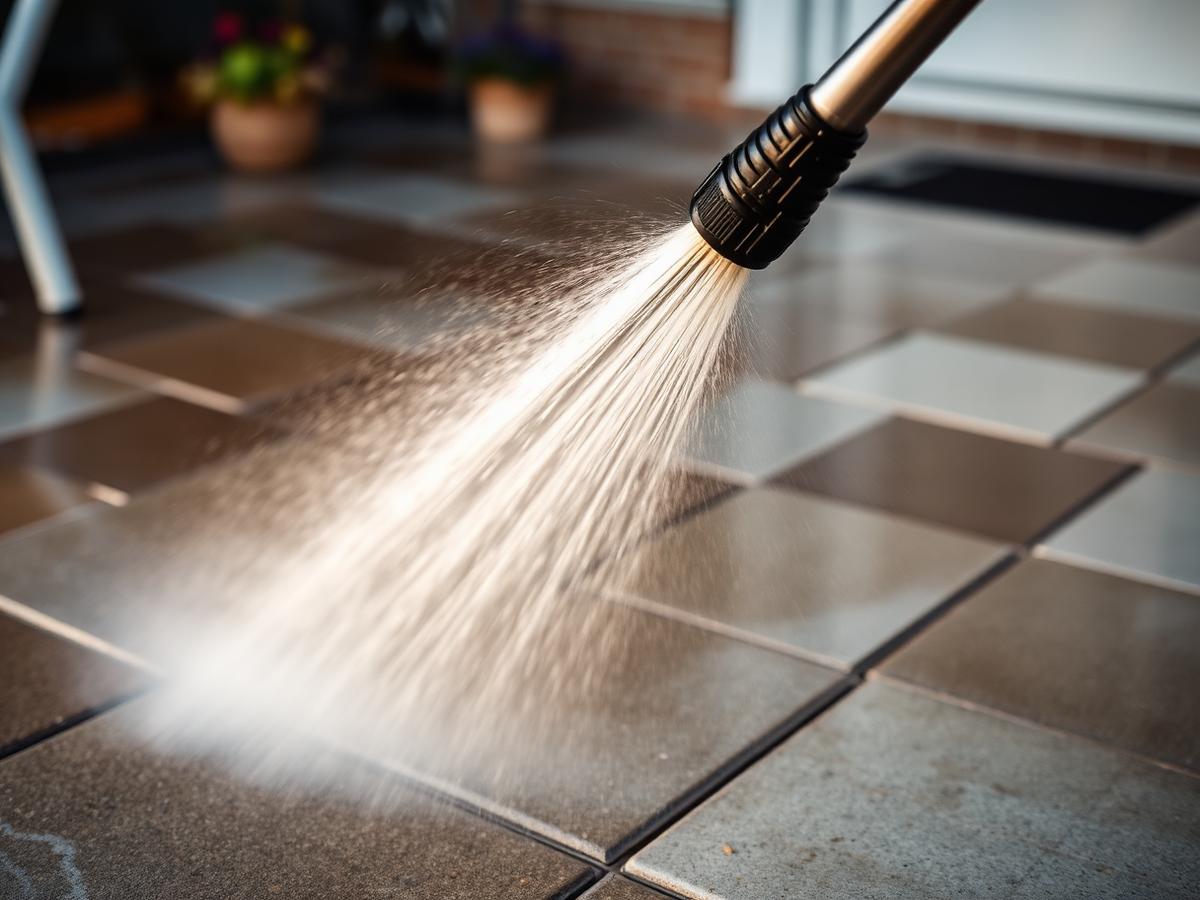
Old, trodden-in chewing gum is best removed with a combination of heat and controlled pressure, working spot by spot, followed by a general clean of the surrounding paving so the area doesn't look patchy. Cold pressure washing on its own tends to smear gum or leave a grey ghost mark, and scraping damages softer stone.
Gum removal is part of our commercial exterior cleaning service for shop fronts, forecourts, entrances and external walkways. This guide explains what happens, which surfaces need a gentler approach, and how to keep a high-footfall entrance looking presentable between visits.
Why gum is so hard to shift
Fresh gum is soft and sits on top of the surface. Once it has been stepped on it is pressed into every pore of concrete flags or block paving, then it hardens and collects grime, which is why old gum shows as flat black discs. By that stage it is physically keyed into the texture of the paving.
Blasting it cold with high pressure breaks the disc into smaller pieces and drives some of it deeper. Softening it first lets it release from the surface in one go, leaving far less residue behind.
How the removal is done
- Each piece is softened with heat so the gum loosens its grip on the surface.
- Controlled pressure lifts the softened gum out of the texture rather than spreading it.
- Stubborn residue is given a second pass instead of more force.
- The wider area is then cleaned with a rotary flat-surface cleaner so gum spots don't stand out as clean patches.
- Grease drift and oil staining nearby are treated with a degreaser as part of the same visit where needed.
Surfaces that need extra care
Concrete flags and commercial block paving are generally robust. Natural stone, particularly softer sandstone, and coloured or imprinted concrete need lower pressure and more patience, because aggressive work can etch the surface or strip surface colour and leave a permanent pale mark where the gum used to be.
Tarmac is sensitive to heat and solvents, so the approach is adjusted there too. We look at the surface first and choose the method to suit it rather than applying the same settings everywhere.
Working around trading hours
Gum builds up most at entrances, bus-stop edges, smoking areas and outside food outlets — exactly where people are walking during the day. A typical retail forecourt is cleaned overnight or before opening in a single visit so customers and staff aren't disrupted and the area is dry and safe when doors open.
Walkways are kept clear of slip hazards during the work, and run-off is managed so it doesn't pool at thresholds.
For multi-site operators, landlords or schools, the same approach can be repeated on a regular schedule across entrances, car park walkways and outdoor seating areas, with each visit focused on the spots where gum and grease collect fastest.
Keeping on top of it
- Place bins close to entrances and smoking points — gum is dropped where there is nowhere to put it.
- Spot-remove fresh gum while it is still soft; it lifts far more easily than old, flattened pieces.
- On busy sites, a scheduled maintenance visit keeps build-up from reaching the point where a big clean is needed.
- A scheduled quarterly clean keeps trading forecourts consistently presentable year-round.