
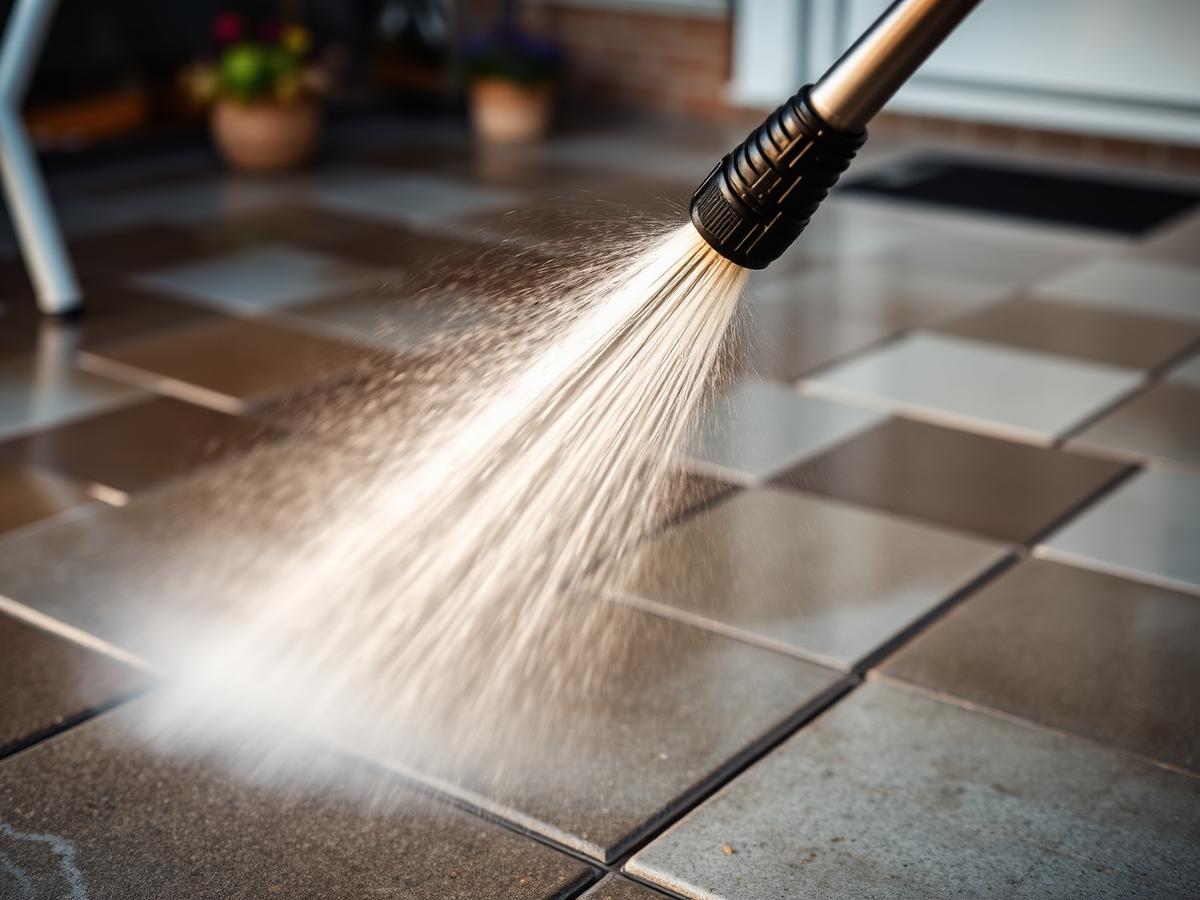
Hot water cleaning gets talked about as an upgrade, but outdoors it's a specific tool for a specific type of contamination rather than a blanket improvement over cold water. Understanding where heat genuinely changes the outcome saves paying for it where it wouldn't have mattered anyway.
The honest answer sits between the two extremes some quotes imply: heat isn't a gimmick, but it also isn't the reason a driveway or patio comes up clean.
Where heat makes a real difference
- Engine oil, grease and tyre marks soften and lift more readily when the water carrying the detergent is warm.
- Old sealer or coating residue that's gone tacky can be easier to break down with heat assisting the chemical.
- Chewing gum and similar sticky contamination responds better to warmth than to cold water alone.
Where cold water does the same job
Moss, algae, lichen and general grime — the vast majority of what makes a driveway or patio look tired — are removed by mechanical action and biocide chemistry, not by water temperature. A cold-water rotary clean with the right dwell time gets the same result as a hot one on this kind of dirt.
This is why most routine exterior cleaning is done cold: the temperature of the water isn't the variable doing the work.
The trade-offs of running hot
Heating water for outdoor use adds equipment, fuel and time to a job, and on porous or delicate stone there's a case for caution — heat can interact with certain sealants and coatings in ways cold water won't, so it needs to be used deliberately rather than as a default.
It's also simply unnecessary on surfaces with no oil, grease or coating residue to deal with, so specifying hot water for a standard moss-and-algae clean adds cost without adding a better result.
Matching the water temperature to the contamination
The practical approach is to identify what's actually on the surface first. A drive with a fresh oil patch and years of general grime might get a hot-water pass over the stain and a standard cold rotary clean everywhere else, rather than one blanket setting for the whole area.