
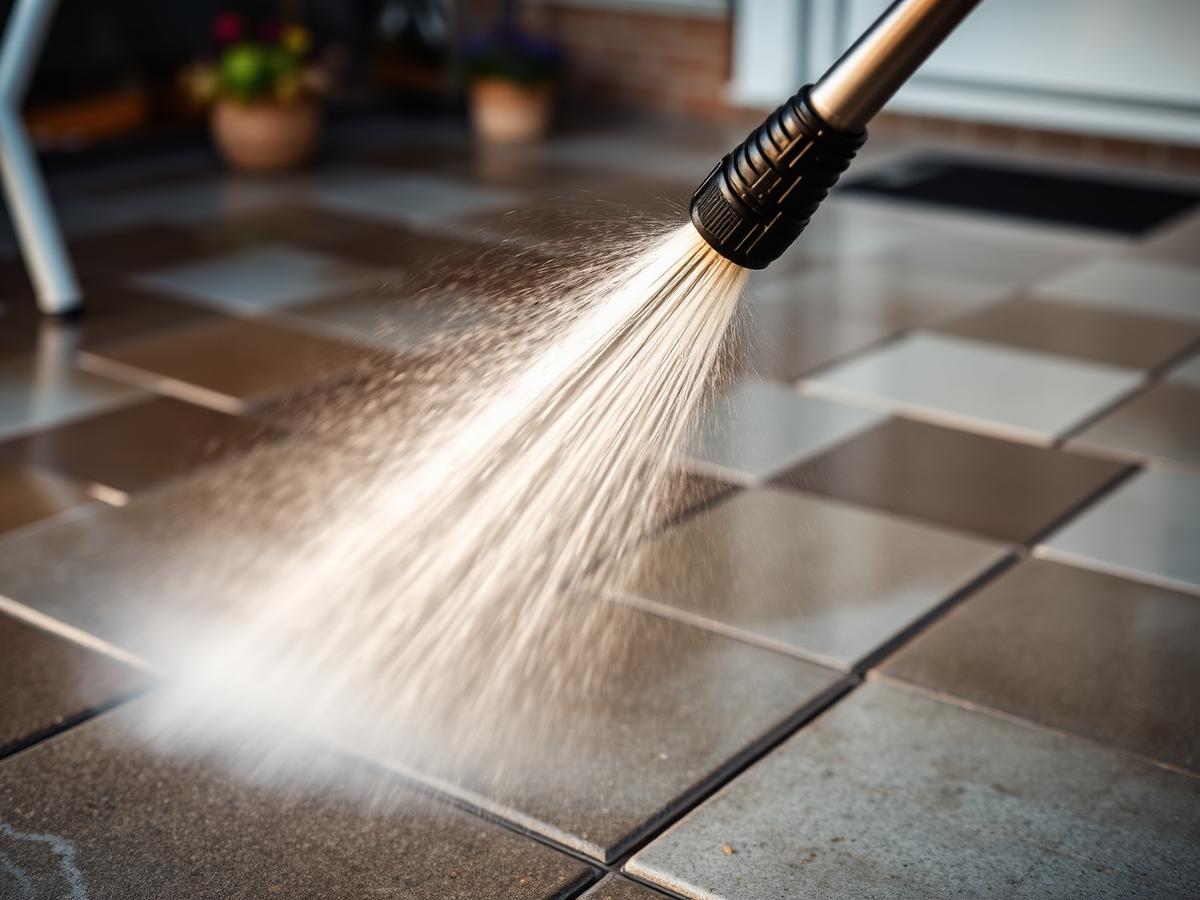
Homeowners often get a relaying quote before they've ever seen the drive clean. Sometimes relaying is right. Far more often the paving is sound and the problem is twenty years of biological growth, lost joint sand and a couple of settled blocks.
This is a checklist, not a sales pitch — if your drive genuinely needs relaying we'll say so, because a clean won't fix it.
Signs it's a cleaning job
- The surface is green, black or dulled but blocks and flags sit level underfoot.
- Weeds are growing through joints rather than through cracks in the units themselves.
- Joints are empty or low on sand.
- Colour looks faded, but the units are physically intact.
- There's staining — oil, tyre marks, barbecue grease, rust from furniture.
Signs it may be a groundwork job
- Wide areas dish or hold standing water after rain across many units, not just one dip.
- Blocks rock consistently across a whole section, suggesting the sub-base rather than the bedding has failed.
- Flags are cracked through repeatedly, not just chipped at edges.
- Tarmac has crazed, potholed or lost its binder over a large area.
- Edge restraints have failed and the whole surface is spreading outward.
The middle ground
A lot of drives are somewhere between: sound overall, with a settled section by the gate where cars turn, or a few lifted blocks near a drain. That's a clean plus localised re-setting, done in the same visit — a fraction of the cost of relaying.
Our promise
100% satisfaction — or we re-clean free.