Driveway cleaning is priced per job, not per hour, and almost every quote comes down to five things: the surface area, the material, how much biological growth has taken hold, whether the joints need re-sanding, and how easy the drive is to reach with a hose run and a machine.
We quote fixed prices after seeing photos or the drive itself, so the figure you're given is the figure you pay. This guide explains what sits behind that figure so you can compare quotes properly rather than just picking the lowest one.
The five things that set the price
- Area: measured in square metres, not 'bays'. A two-car drive and a long shared drive can differ by a factor of three.
- Material: imprinted concrete and resin need gentler pressure and more care than tarmac, so they take longer.
- Contamination: light surface algae washes off fast; years of thick moss and black spot lichen needs a biocide dwell and a second pass.
- Re-sanding: block paving joints need kiln-dried sand replacing after cleaning. That's labour and materials, and it's the step cheap quotes usually skip.
- Access: water supply, a place to park the van, gates, steps and drainage all change the time on site.
Where the cheap quote usually cuts corners
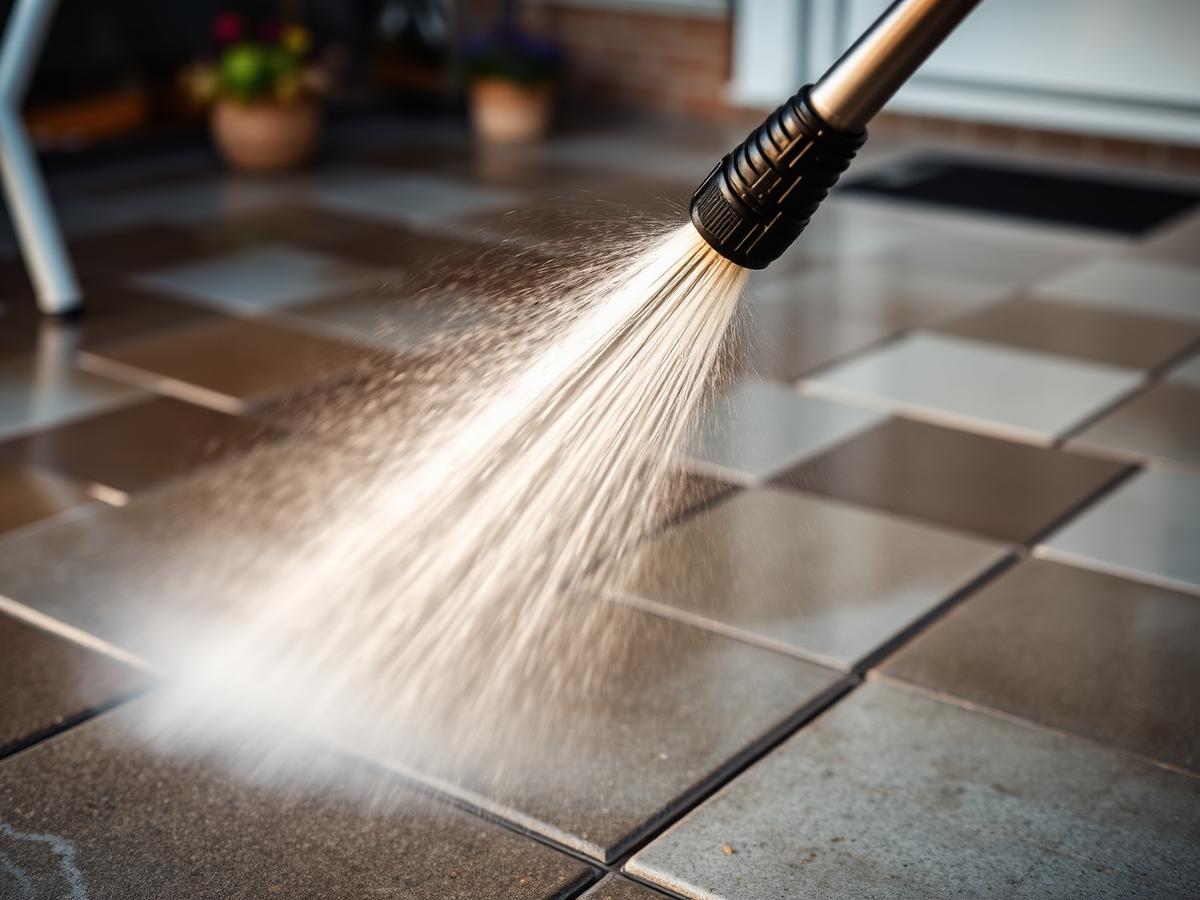
A very low price normally means one of three things: no biocide treatment, no joint re-sanding, or a lance being dragged over the surface instead of a rotary flat-surface cleaner. All three look fine on the day.
Skipping the biocide means the algae regrows within months because the root structure was never killed, only stripped. Skipping re-sanding means the blocks lose their interlock and weeds return through open joints. Lance-only work leaves visible zebra striping that never fully evens out.
How to compare two quotes fairly
- Ask whether the price includes a biocide treatment, not just a wash.
- Ask whether kiln-dried sand re-sanding is included on block paving.
- Ask what machine is used on the open surface — rotary or lance.
- Ask whether sealing is quoted separately (it should be — it's an optional extra, not a default).
- Ask whether the price is fixed or an estimate that can move on the day.
Sealing as an optional extra
Sealing is quoted separately because it isn't right for every drive. A sealer needs a fully dry, fully cured surface and it changes the look — matt keeps the surface close to natural, satin lifts the colour. It also adds a return visit in most cases, because the drive has to dry properly first.
If you want the colour to hold and the joints to stay locked for longer, sealing earns its money. If you're selling the house next month, a clean and re-sand usually does the job.