
Indian sandstone is the most common patio material in British gardens and one of the most misunderstood. It is porous, it is naturally variable in colour, it is softer than people expect, and it arrives from the quarry with mineral content that behaves in ways an owner rarely anticipates.
Sealing addresses several of sandstone's genuine weaknesses. It also introduces its own risks if applied to the wrong stone, at the wrong time or in the wrong way. This guide sets out both sides so the decision is an informed one.
Why sandstone stains so readily
Sandstone is made of sand grains bound together, with a network of pores between them. Those pores draw liquid in by capillary action, which is why a drop of red wine or a barbecue grease splash on unsealed sandstone soaks in rather than sitting on the surface.
The same porosity is why it holds moisture, and why north-facing sandstone patios grow algae so persistently. The stone stays damp for days after rain, providing exactly the conditions growth wants.
A sealer fills or lines those pores. It does not make the stone waterproof, and it does not make it stainproof, but it dramatically increases the time you have to wipe something up before it becomes permanent.
The problems sealing does and does not solve
- Solves, largely: rapid absorption of food, drink, grease and leaf tannin stains.
- Solves, largely: how quickly algae re-establishes, because the surface sheds water rather than holding it.
- Helps: keeping colour looking fresh, particularly with an enhancing product.
- Does not solve: iron or rust spotting, which comes from mineral inclusions inside the stone itself.
- Does not solve: efflorescence or picture framing driven by moisture rising from the bedding beneath.
- Does not solve: structural issues such as rocking or cracked flags.
Iron spotting and picture framing explained
Iron spotting appears as small rust-coloured marks that seem to emerge from within the stone, because they do. Sandstone contains iron-bearing minerals, and when they oxidise they stain outwards. Sealing the surface does not stop the process; if anything, sealing over active spotting locks the discolouration in.
Picture framing is the darker border that appears around the edge of individual flags. It is caused by moisture and salts moving up through the joints and the perimeter of the stone from the bed below. It is a moisture path problem, and sealing without addressing it can make it more visible, not less.
In both cases, the correct order is to deal with the underlying cause and let the stone stabilise before sealing. Rushing to seal a patio exhibiting either issue is a common and expensive mistake.
Preparation for sandstone specifically
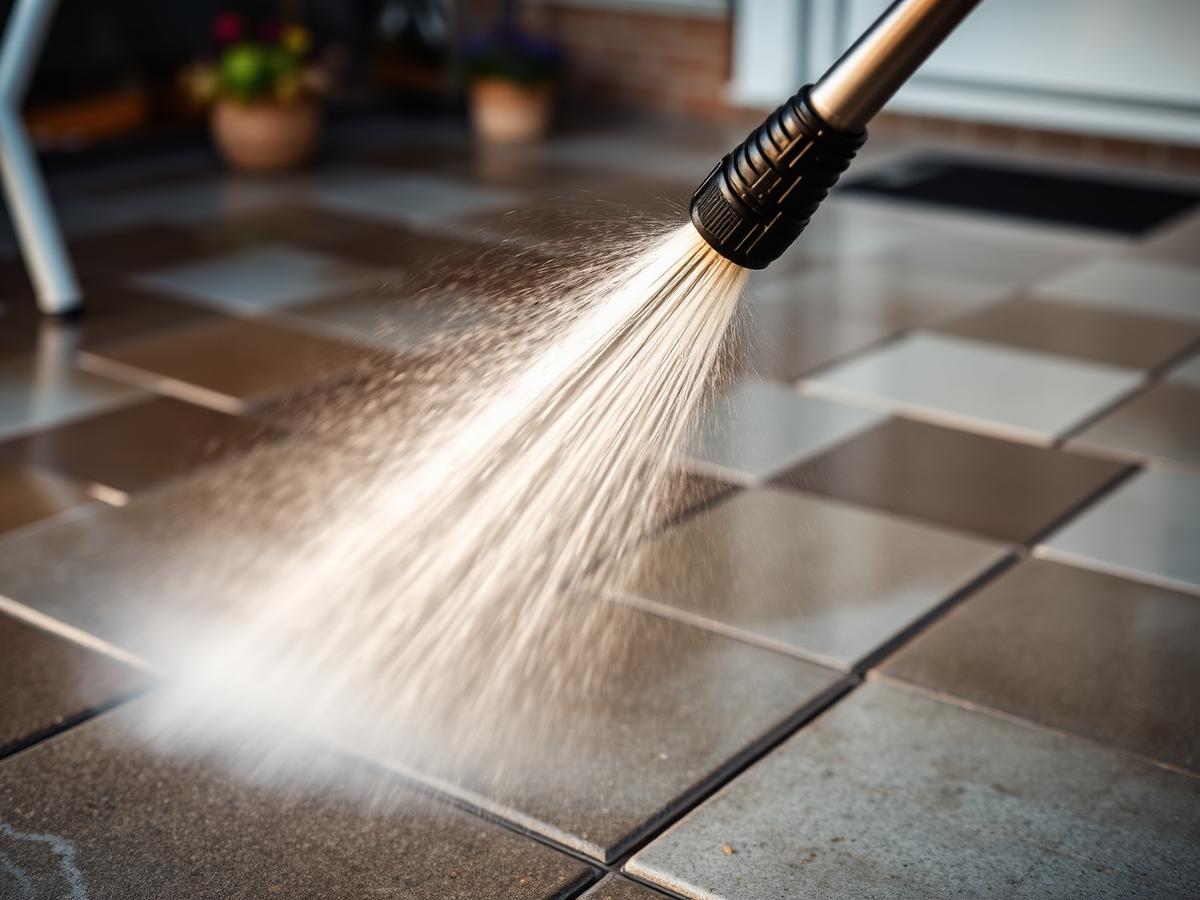
- Clean at reduced pressure — sandstone delaminates under aggressive washing and the damage cannot be undone.
- Use a biocide with a proper dwell rather than force; chemistry does the work that pressure would damage.
- Never use acid-based cleaners casually; they can etch and alter the colour of the stone permanently.
- Re-point or re-sand joints and let them cure fully.
- Allow days of genuine drying, remembering that porous stone holds water long after the surface looks dry.
- Test for absorption: a drop of water should soak in readily, confirming the stone is ready to accept sealer.
Choosing the finish
A natural or invisible finish protects without changing the appearance, which suits owners who chose sandstone for its muted, weathered look. It is the safest choice aesthetically.
A colour enhancer deepens the buffs, greys and rust tones that riven sandstone hides when dry, and the effect on a tired patio can be striking. The way to preview it is simply to wet the stone with water — that is roughly what enhancement will look like.
Wet-look and gloss finishes are the most divisive and the most slippery. On a shaded, sloping or stepped patio they are worth avoiding, or at least specifying with a grip additive.
Impregnating sealers sit within the pores and leave little or no surface film, so they wear gradually and rarely peel. Film-forming sealers give more surface protection and more sheen but can flake if moisture gets behind them. On British sandstone patios, impregnating products are generally the more forgiving choice.
Application method
Work in complete sections and keep a wet edge, because sandstone's absorbency makes overlaps very visible. Riven stone has an irregular surface, so pay attention to the hollows where product pools — a pooled patch dries darker and glossier than its surroundings.
Apply thin and even, and expect the first coat to disappear into the stone quickly. A second coat is normally required, and on particularly thirsty stone a third. Follow the recoat interval on the product rather than piling coats on wet.
Keep the patio clear of furniture and foot traffic for the full cure period. Feet on a partly cured sealer leave marks that need the whole area redoing.
Mask adjacent brickwork and protect planting. Sealer overspray on house brick is very difficult to remove.
Living with a sealed sandstone patio
- Wipe spills promptly — sealing buys time, not immunity.
- Sweep regularly through autumn to keep tannin-rich leaves off the surface.
- Wash gently once a year rather than aggressively every few years.
- Avoid harsh acidic or highly alkaline cleaners, which shorten sealer life.
- Watch for water no longer beading; that is the signal a recoat is due.
- Recoat with a compatible product; changing chemistry mid-life causes adhesion problems.