
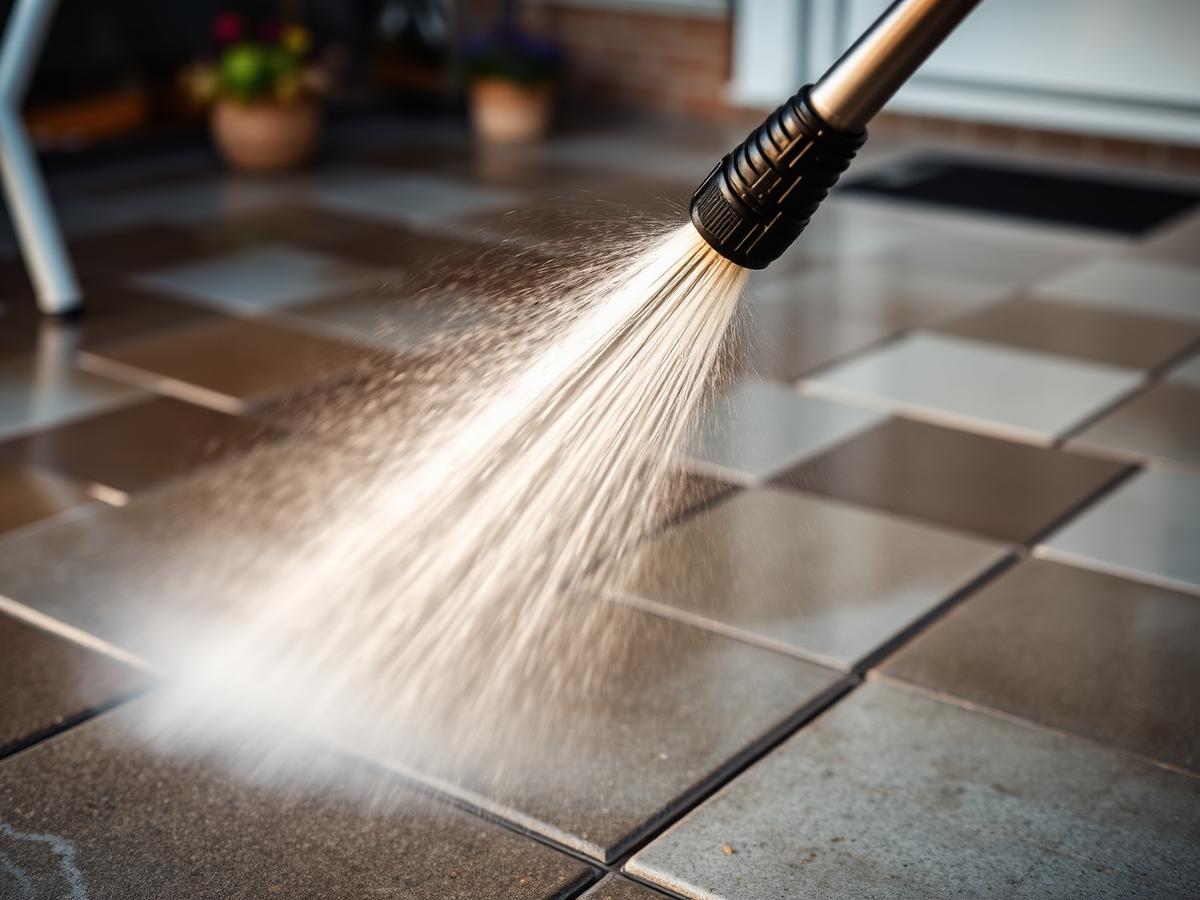
An oil patch under where a car sits is often the thing that finally prompts a call, but it's rarely the only thing wrong with the drive by that point — it's just the most visually obvious problem. Deciding between spot treatment and a full clean comes down to what the rest of the surface actually looks like once you stop staring at the stain.
Both are legitimate options; the mistake is picking one without honestly assessing the other 90% of the drive.
When spot treatment alone makes sense
- The rest of the drive is genuinely clean and free of significant algae, lichen or grime build-up.
- The stain is recent rather than deeply set over months, since fresh oil lifts more readily than old, baked-in staining.
- You're not planning to sell or present the property imminently, so a slight colour mismatch around the treated patch is acceptable short-term.
When a full clean is the better call
- General algae, moss or black spot cover has been building for a while alongside the oil mark.
- Joint sand on block paving is visibly low or weed growth has started, since spot treatment won't address either.
- You want the whole drive to match evenly rather than one bright degreased patch next to duller surrounding surface.
Why oil residue is harder than ordinary grime
Oil and diesel penetrate porous surfaces like block paving and concrete rather than sitting on top, which is why they respond to a targeted degreasing agent rather than water pressure alone. Old, deeply set staining may lighten significantly rather than disappear completely, particularly where it's had months to soak in.
Combining the two without wasting either treatment
Where both are needed, oil degreasing is generally best done as part of the same visit as a full clean rather than beforehand, so the surrounding surface is brought to the same standard and the treated patch doesn't stand out as an obviously cleaner rectangle on an otherwise tired drive.