
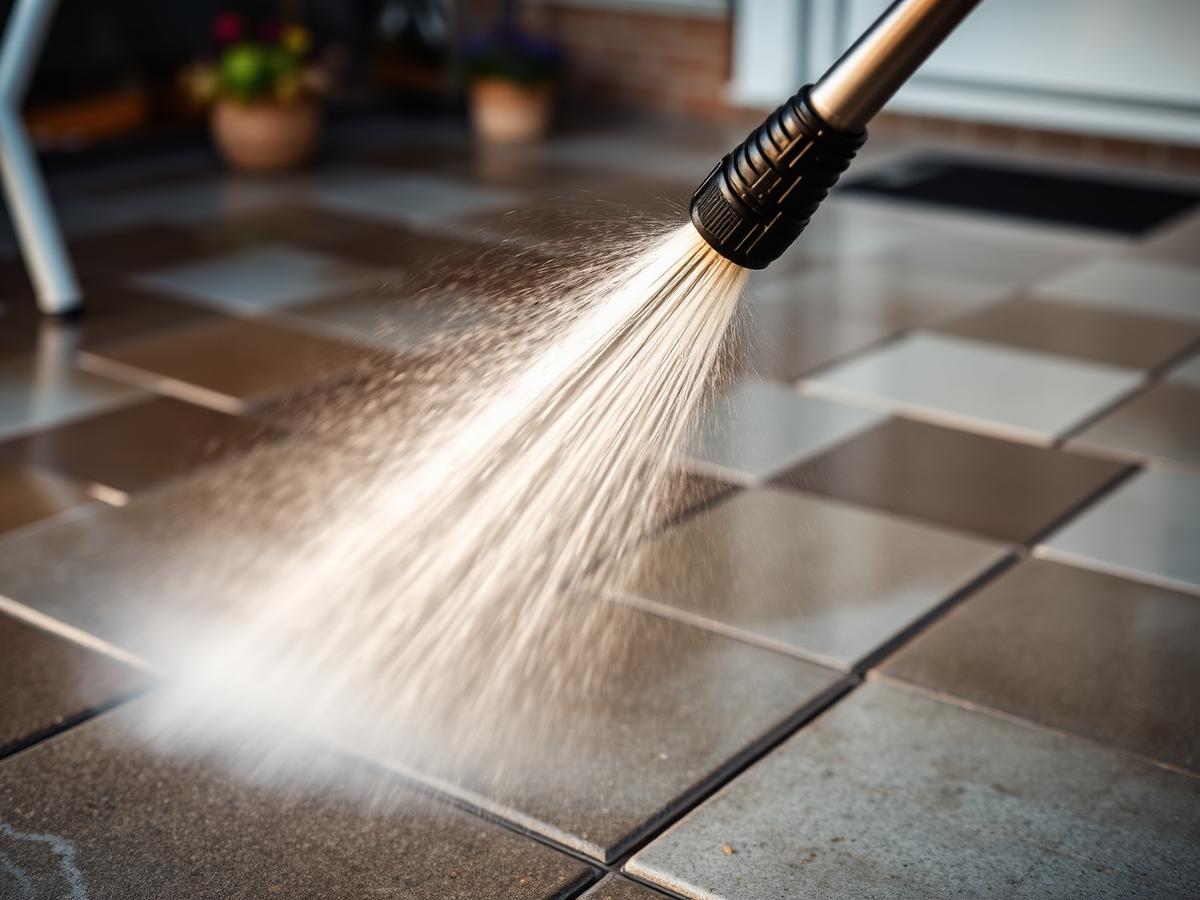
Exterior cleaning generates a surprising volume of water carrying dislodged organic matter, silt and whatever treatment was used. Where that water goes matters — to your borders, to your neighbour's drive, to the pond and to the surface water drain that may well discharge to a watercourse.
This guide covers the practical precautions that keep a clean from becoming a garden problem. Most of them cost nothing beyond a few minutes of forethought.
Control the run-off first
- Work out the fall of the surface before starting, and know where the water is going to end up.
- Dam vulnerable edges with sandbags, a rolled towel or a length of foam pipe insulation to divert flow.
- Divert run-off onto lawn or a soakaway rather than into a border or a pond, where concentration does the damage.
- Keep silt out of gullies; a gully full of washed-in slurry blocks and causes ponding all winter.
- Never allow run-off carrying degreasers or fuel residue into a surface water drain.
- Sweep and collect the heavy debris before washing so there is less material in the water to begin with.
Protecting planting
Water foliage down thoroughly before you start. A plant with wet leaves and moist roots absorbs far less of anything that splashes onto it, in the same way that a wet sponge takes up less than a dry one.
Cover what you can with a sheet — particularly low bedding, alpines and anything newly planted, which are the most vulnerable. Remove the sheeting promptly afterwards so plants are not cooked or crushed underneath it.
Rinse foliage again once you have finished. Whatever landed on the leaves is easier to dilute immediately than to deal with after it has dried on.
If a border does get a dose of treatment, the response is dilution: water it heavily and repeatedly rather than doing nothing. Most damage occurs at concentration.
Pets, and what actually matters
- Keep pets off the area during application and until the surface has been rinsed and dried, which is the sensible default with any product.
- Follow the re-entry period on the product label rather than a rule of thumb; different chemistries differ substantially.
- Empty and refill outdoor water bowls afterwards; a bowl standing next to the work is an obvious exposure route.
- Rinse gates, low walls and door thresholds where a dog might lick or a cat might brush past.
- Be aware that cats walk through anything and then groom, so shared surfaces need a proper rinse rather than a quick one.
- If you keep chickens or rabbits with outdoor runs, move them well away and rinse any surface they will later stand on.
Ponds and wildlife
Ponds are the highest-risk feature in most gardens. Fish and amphibians are sensitive to a range of cleaning chemistries at concentrations that would be trivial elsewhere, and a pond is a closed system that cannot dilute what it receives.
The precaution is physical: cover the pond, dam the run-off path completely, and if the pond sits directly downhill of the work area, consider doing that section by hand with plain water instead.
Hedgehogs, frogs and other visitors shelter in exactly the shaded, damp corners you are about to wash. A quick look under garden furniture, behind pots and along the base of a hedge before starting takes a minute and avoids an unpleasant surprise.
Choosing products with the surroundings in mind
Household bleach is the product people reach for and the one that causes most collateral damage. It runs off readily, scorches foliage, corrodes metalwork and offers only a short-lived visual improvement because it does not kill root structures reliably.
Proper exterior biocides are designed for the job, applied at controlled dilution, and generally more predictable in how they behave. They also allow you to use much less pressure, which reduces the volume of contaminated water you generate.
Whatever is used, follow the dilution instructions exactly. Mixing something stronger than specified does not clean better; it increases run-off risk and can damage the surface as well as the garden.
Never mix products. Combining a bleach-based product with an acidic one produces genuinely dangerous gases, and this happens in real gardens more often than it should.
Neighbours and shared boundaries
- Tell neighbours before you start, especially in a terrace or on a shared drive.
- Ask them to close windows on the affected elevation and bring in washing.
- Check where your run-off crosses a boundary; silt deposited on someone else's paving is your responsibility to clear.
- Watch out for shared drainage — what you wash into a gully may surface in their garden.
- Move their belongings only with permission, and photograph the condition of shared surfaces beforehand.
If something does go wrong
For plant damage, dilute immediately and heavily. Do not fertilise a stressed plant; give it water and time. Many apparently scorched plants recover through the following season if the root zone was not badly affected.
For a spill into a pond, a partial water change with dechlorinated water is the usual response, done gradually rather than all at once so the temperature and chemistry do not swing.
For anything entering a surface water drain that should not have, act promptly — contain what you can and seek advice, rather than hoping it dilutes. Small volumes of degreaser or fuel residue can cause disproportionate problems downstream.