
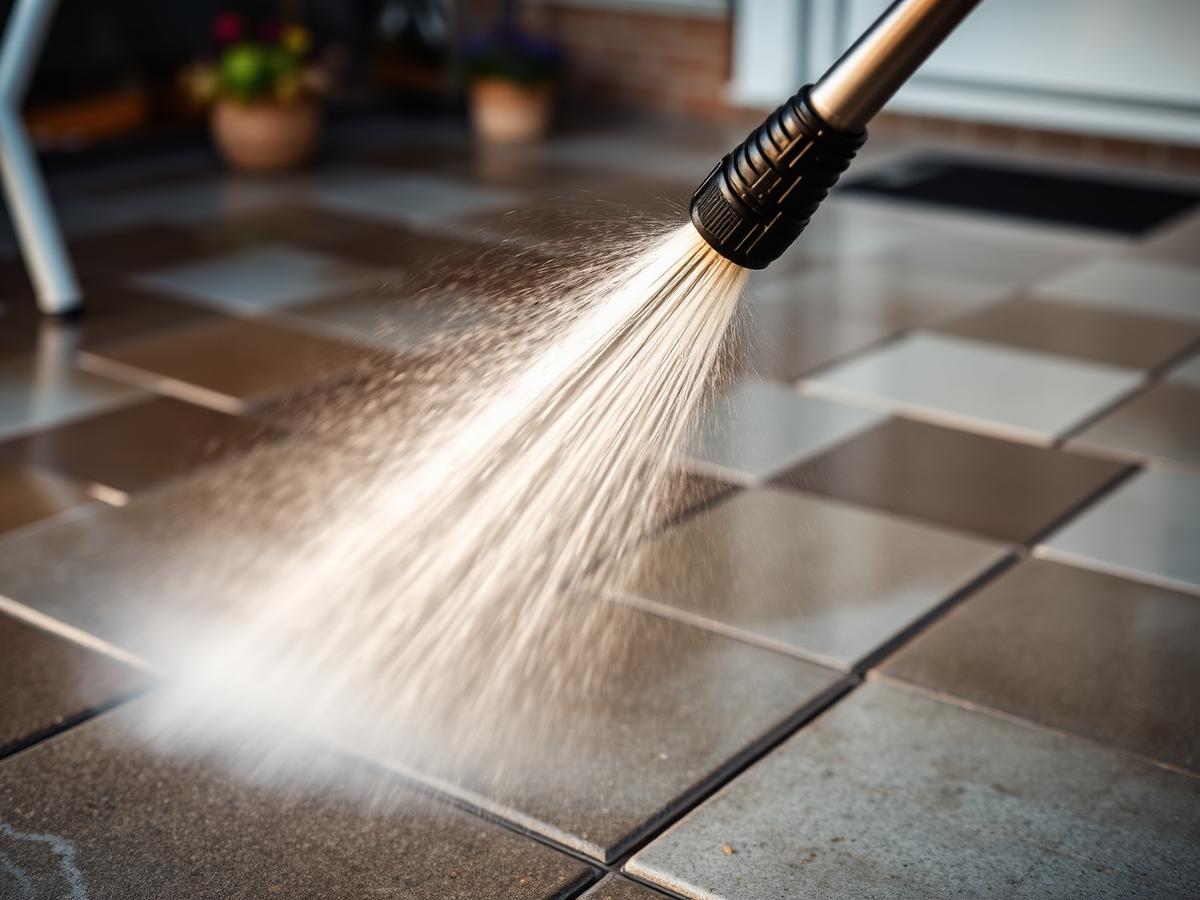
Tarmac and concrete are both common drive surfaces, and both get lumped together in casual conversation as 'the drive', but they behave very differently once a jet wash or a biocide comes anywhere near them. Tarmac is a bound aggregate held together with bitumen; concrete is a poured, cured slab that can be plain, brushed or exposed-aggregate.
Getting the method wrong on either one produces a visible result, whether that's a dulled, gravelly tarmac surface or a blotchy, striped concrete slab. This comparison covers what actually needs to change between the two.
How the two surfaces take pressure differently
Tarmac is somewhat forgiving of moderate pressure because the aggregate is bound into bitumen, but sustained close-range blasting can dislodge loose stone chippings on an older or already-worn surface, leaving bald patches.
Concrete is harder underfoot but its finish is more delicate to the eye — a brushed or exposed-aggregate texture can show pressure marks as lighter, cleaner streaks against the surrounding dirtier concrete if the pass isn't kept even.
Staining behaves differently on each
- Tarmac is dark to begin with, so oil staining is often less visually obvious but can still soften the surface over time.
- Concrete is pale, so even light oil or rust marks show clearly and often need a dedicated stain treatment rather than a general wash.
- Tarmac rarely needs re-sanding or jointing work since it has no block joints.
- Concrete with expansion joints can trap dirt and moss along the joint lines even when the slab itself looks clean.
Drying and colour recovery
A cleaned tarmac drive tends to darken back toward its natural colour as it dries, which can look uneven for a short while before it settles evenly.
Concrete generally dries paler and more evenly since there's no bitumen binder to darken with moisture, so any patchiness that remains after drying is more likely to be a genuine cleaning inconsistency worth revisiting.
Sealing considerations
Sealing tarmac is a different product and process to sealing concrete or block paving, and it's not something every tarmac drive needs — plenty of tarmac surfaces are left unsealed by choice.
Concrete can take a sealer well once fully cleaned and dried, and it can help resist future oil staining, but it should be considered a separate decision from the clean itself rather than an automatic add-on.