Hot Water Cleaning for Driveways Near Crossflatts, Bingley
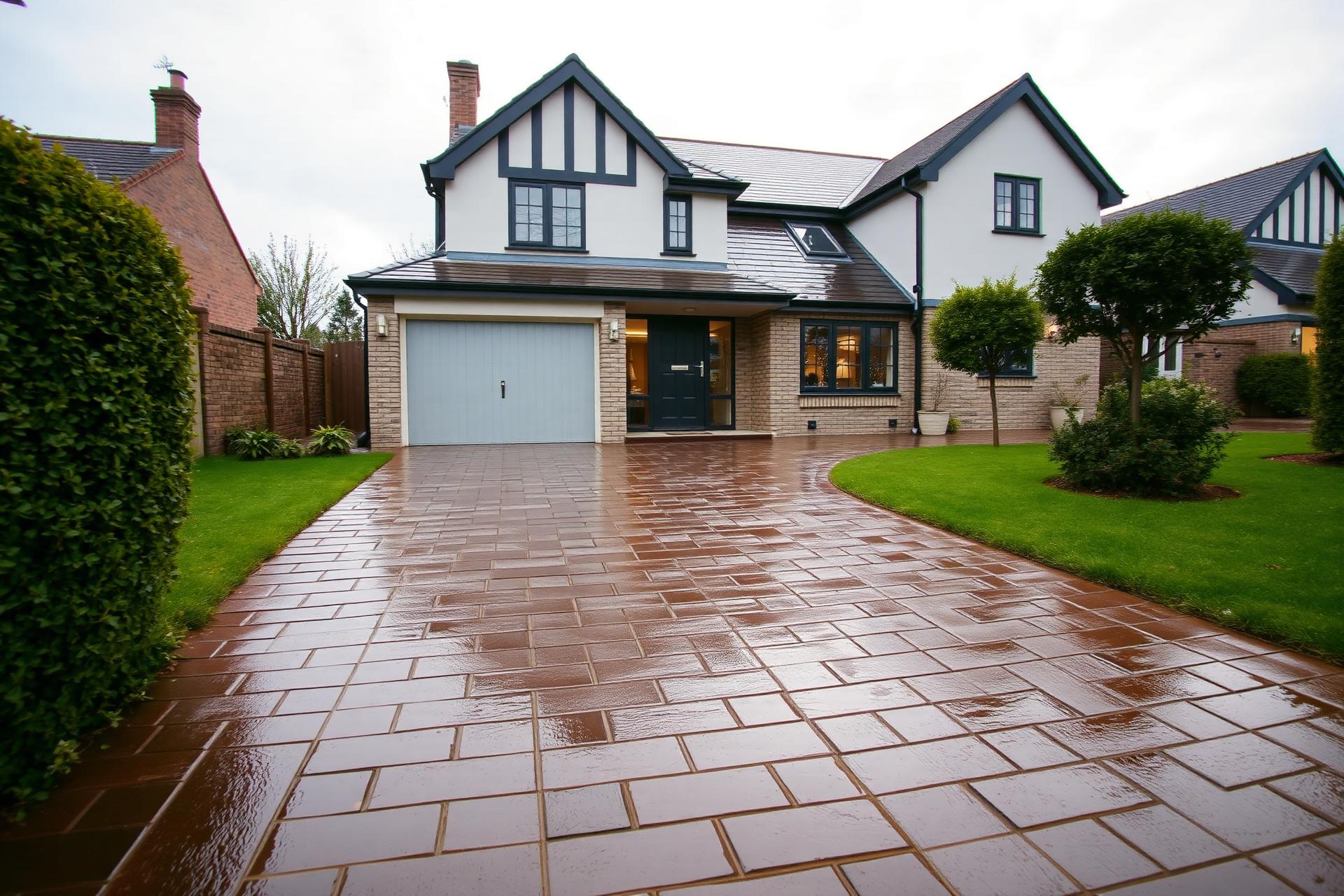
1930s semi driveway with oil staining near Crossflatts
The 1930s semis running toward Crossflatts often have concrete or block-paved driveways used for more than parking — home mechanics, trailer storage and the odd oil change are common on this stretch, close to the industrial estate.
Things that change the outcome
Before we start
- Heavy oil staining may need a return visit rather than one pass
- Block paving with sand joints is rinsed more gently to avoid washing sand out
- Shared dropped kerbs mean neighbours are given notice of hose and cable placement
Once it's done
- Degreaser is intercepted before the road gully wherever oil is present
- Older concrete drives with surface crazing are checked before hot water is applied at full temperature
Driveways that double as informal workshops
The 1930s semis running toward Crossflatts often have concrete or block-paved driveways used for more than parking — home mechanics, trailer storage and the odd oil change are common on this stretch, close to the industrial estate.
That means staining here is rarely just moss; it's frequently a mix of engine oil, diesel spots and rubber transfer that cold water and detergent alone won't shift.
Being close to the industrial estate also means a fine film of airborne grime settles on paving faster than in the quieter parts of town, so the base layer under any stain is often already darker than homeowners expect.
Getting kit in, getting water away
Most driveways here are open-fronted with direct road access, though several share a dropped kerb with a neighbouring semi, so vehicles are moved and parking coordinated before the hose and heater unit are set up on the drive itself.
Crossflatts driveways generally drain to a road gully at the pavement edge; where oil contamination is present, we avoid pushing that run-off straight to the gully and instead pre-treat and lift the worst of it before general rinsing begins.
- County
- West Yorkshire
- Main route in
- A650
- Nearest city
- Bradford — 6 miles
- Typical surfaces
- Yorkshire stone flags and buff-toned setts
- Common property stock
- stone-built cottage, canal-side conversion, 1930s semi
- Nearest commercial hub
- Bingley Main Street and Crossflatts industrial estate
How the hot-water visit unfolds
- Step 1
Pre-treatment on stains
A degreasing agent is applied directly to oil and rubber marks and given time to break down the residue before hot water is introduced.
- Step 2
Hot water pass at graded temperature
The main clean uses heated water at a temperature suited to the paving type, higher for concrete, more measured for blocks with jointing sand.
- Step 3
Final cool rinse
A cooler final rinse settles any disturbed jointing sand back into place and clears remaining degreaser residue.
Working out what's actually in the stain
Stain source identification
Dark patches are checked to see whether they're oil-based, rubber transfer, or simple ground-in dirt, since each responds differently to heat.
Paving material check
Block paving versus poured concrete changes the water temperature and dwell time used, as blocks can shift under prolonged very hot jetting.
Gully proximity
The nearest road gully is identified so any oil residue can be intercepted before it reaches it rather than after.
Questions we get near Crossflatts
Can hot water actually remove old oil stains?+
It significantly lifts them when paired with a proper degreasing pre-treatment; very old, deep-set stains may lighten rather than disappear entirely.
Will it damage block paving joints?+
We adjust temperature and pressure for block paving specifically, and top up jointing sand afterward if any has been displaced.
Why not just use cold water and detergent?+
Oil and rubber residue common on these driveways need heat to break down properly — cold water tends to just spread the stain rather than lift it.
Is the oily run-off a problem for the drain?+
We treat and intercept it before it reaches the road gully rather than letting it wash straight through.
Scope agreed before anything is switched on
- We survey the surface first and say plainly if hot water cleaning is the wrong call for it.
- Scope is written down, so you can see exactly what is and isn't included.
- Where a stain or defect won't fully clear, we say so before you book.
For the same driveway once it's clean, our block paving sealing page covers keeping it that way.
The gist
Hot water cleaning is the right tool for the oil and rubber staining common on driveways near Crossflatts.