Hot Water Cleaning Near Salts Mill Retail Frontages in Shipley
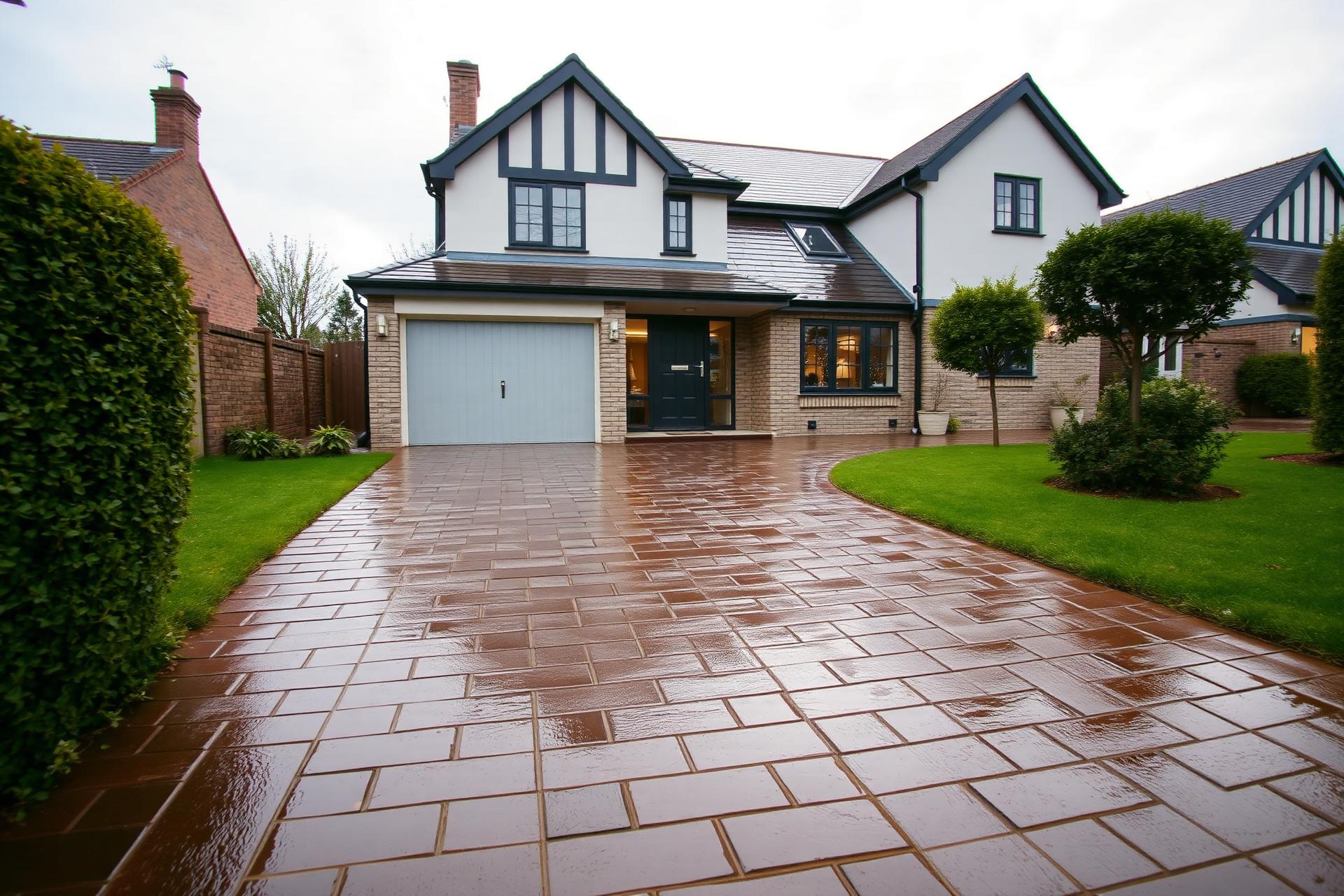
Salts Mill retail forecourt with heavy foot traffic and old oil staining
The stone forecourts and shared paving around Salts Mill retail in Shipley see thousands of feet a week, and with that comes chewing gum, spilled coffee, food grease from nearby cafés and tyre marks from delivery trollies rolled straight off the loading bays.
Practicalities for a commercial-facing frontage
Before we start
- Best scheduled before or after trading hours to limit disruption
- Grease and gum need longer hot water dwell time than general dirt
- Polished stone areas require a lighter mechanical touch to avoid dulling
Once it's done
- Wet sections should be cordoned briefly while they dry for safety
- Repeat grease build-up near food outlets may need more frequent attention than the rest of the frontage
Retail flagstones under constant footfall near Salts Mill
The stone forecourts and shared paving around Salts Mill retail in Shipley see thousands of feet a week, and with that comes chewing gum, spilled coffee, food grease from nearby cafés and tyre marks from delivery trollies rolled straight off the loading bays.
Cold water alone struggles against baked-on grease and gum on Yorkshire stone that's been polished smooth by decades of shoes, so the harder deposits here sit deep in the surface rather than resting on top of it.
Because these frontages are visible to visitors year-round, including during the mill's busiest weekend trading periods, cleaning has to be planned around footfall rather than treated as a quiet residential job.
Getting kit in, getting water away
Trading hours mean access is usually agreed for early morning before shops open or after closing, with barriers or cones used to protect a working area on paving that otherwise has no fixed boundary from the public walkway.
Run-off from a hard-standing retail area like this typically reaches a surface water drain serving the wider site, so grease and detergent are managed carefully and, where required, collected rather than allowed to flow freely into shared drainage.
- County
- West Yorkshire
- Main route in
- A650 / A657
- Nearest city
- Bradford — 3 miles
- Typical surfaces
- Yorkshire stone flags with older buff sandstone paths
- Common property stock
- stone-built terrace, canal-side conversion, post-war semi
- Nearest commercial hub
- Shipley town centre and Salts Mill retail
How a hot water clean is run during trading hours
- Step 1
Pre-treating stubborn gum and grease
Hot water is applied first to soften ground-in deposits before any mechanical agitation, reducing the risk of scouring the stone surface.
- Step 2
Working section by section around footfall
The forecourt is cleaned in manageable sections so part of the area can reopen to pedestrians while another section is still drying.
- Step 3
Final rinse and drainage check
A closing rinse clears remaining detergent and grease residue, with drainage points checked to make sure nothing is left pooling near an entrance.
What we look for on a heavily trafficked forecourt
Mapping gum and grease hotspots
We walk the forecourt first to mark where gum, oil drips and food grease have built up, since these need targeted hot water dwell time rather than a single uniform pass.
Checking stone polish and wear
Years of foot traffic can polish stone smooth in places, and we note this because a polished surface behaves differently under heat and pressure than a textured one.
Identifying delivery and bin areas
Loading points tend to carry the heaviest, oldest staining, so these zones are treated as a separate stage with longer contact time.
Questions we get from Salts Mill area occupiers
Can you clean without closing the shopfront?+
Yes, we typically work section by section around trading hours or schedule outside peak footfall times.
Does hot water actually remove old chewing gum?+
Heat softens gum considerably, making it far easier to lift than with cold water alone, particularly on textured stone.
Will the stone become slippery once it's clean?+
Freshly cleaned stone can be more noticeably slick until fully dry, so we advise cordoning wet sections briefly after cleaning.
How often does a retail frontage like this need cleaning?+
It depends on footfall and nearby food outlets, but high-traffic areas generally need more frequent attention than a quiet side path.
Scope agreed before anything is switched on
- We survey the surface first and say plainly if hot water cleaning is the wrong call for it.
- Scope is written down, so you can see exactly what is and isn't included.
- Where a stain or defect won't fully clear, we say so before you book.
See our approach to rotary surface cleaning and imprinted concrete sealing for other commercial areas.
The short version
Heat-led cleaning designed to shift the grease and gum that cold water can't touch on busy retail stone.