
Hot Water Cleaning for Driveways Near Otley Road, Baildon
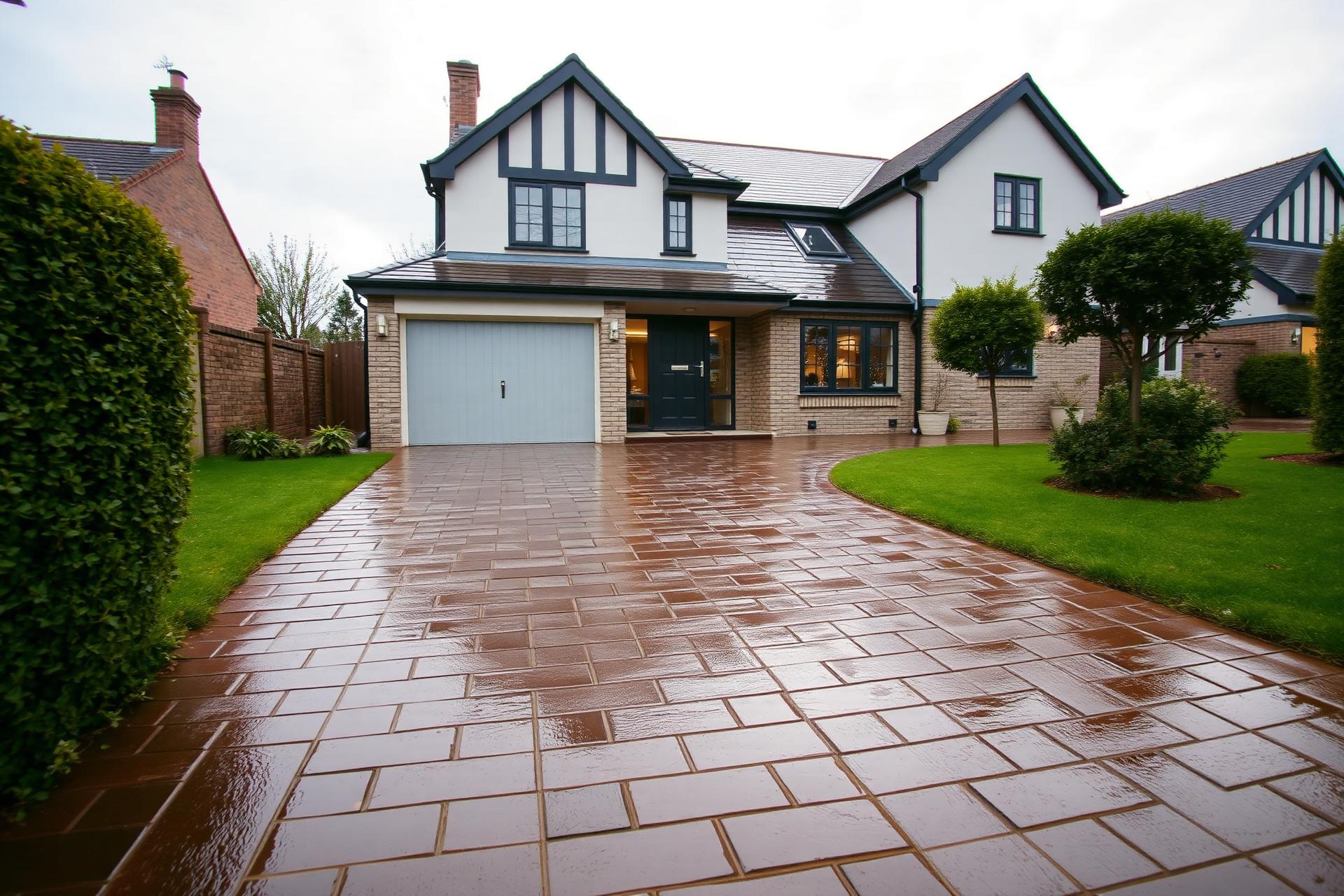
1930s semi on a cul-de-sac near Otley Road with an oil-stained garage apron
The cul-de-sacs off Otley Road were largely built up in the 1930s, with semis set back behind short concrete or block-paved aprons wide enough for one car and a garage. Decades of the same car parked in the same spot leave a stubborn dark patch of oil and rubber directly under where the engine sits, which cold water alone barely touches.
What to expect on an oil-marked apron
Before we start
- Old, deeply bonded oil stains may lighten significantly rather than disappear completely.
- Hot water cleaning works fastest on a mild, dry day rather than in frost.
- Keep the car off the apron for the full working period, not just while we're actively cleaning.
Once it's done
- Degreaser run-off is contained and directed away from garden borders during the pre-treatment step.
- A sealant afterward can help stop future oil drips soaking straight back in.
The garage-apron problem on Baildon's 1930s semis
The cul-de-sacs off Otley Road were largely built up in the 1930s, with semis set back behind short concrete or block-paved aprons wide enough for one car and a garage. Decades of the same car parked in the same spot leave a stubborn dark patch of oil and rubber directly under where the engine sits, which cold water alone barely touches.
Because these driveways see daily use rather than occasional foot traffic, the surface picks up ground-in tyre marks and fuel drips that sit on top of ordinary weathering grime. Heat matters here specifically because hot water breaks down the oil's bond to the concrete or block paving in a way that ambient-temperature water simply can't manage regardless of pressure.
Many of these driveways also border a narrow front garden strip, so overspray control matters as much as cleaning power when a border of bedding plants sits inches from the working area.
Getting kit in, getting water away
These aprons are usually just wide enough for one car with a narrow path to the front door alongside, so we typically ask for the drive to be clear rather than working around a parked vehicle. Bin storage and side-access gates for garden hoses are checked in advance since space is tight.
Run-off from a garage apron on these cul-de-sacs generally reaches a road gully at the kerb rather than a garden soakaway, given the hard standing runs straight to the pavement edge. Any oil residue lifted by hot water is treated with an appropriate degreaser first so it isn't simply pushed toward that gully in concentrated form.
- County
- West Yorkshire
- Main route in
- A6038
- Nearest city
- Bradford — 4 miles
- Typical surfaces
- Yorkshire stone flags and older buff sandstone
- Common property stock
- stone-built terrace, moor-edge detached, 1930s semi
- Nearest commercial hub
- Baildon Browgate and Otley Road parade
How heat changes the outcome on the day
- Step 1
Degreaser pre-treatment
A suitable degreasing agent is applied to the worst oil staining first, giving the hot water pass something already broken down to lift rather than fighting it cold.
- Step 2
Hot water pass across the whole apron
The full driveway is cleaned with heated water rather than just the stained patch, so the finish is even and the stain doesn't stand out against cleaner surrounding concrete.
- Step 3
Border-safe edging technique
Along the garden strip we work parallel to the border rather than pointing the jet toward it, keeping spray contained to the hard surface.
Checking what's actually bonded to the concrete
Oil patch depth test
We check whether the staining is surface-level or has soaked into porous concrete, which decides whether one hot water pass is enough or a degreasing step is needed first.
Garden border proximity
Where a flower bed sits close to the apron edge, we map out how tight the working line needs to be to avoid overspray onto plants.
Concrete surface integrity
Older 1930s concrete can be crazed or cracked; we note this before applying heat and pressure so we don't force water into existing hairline cracks.
Questions about heat versus cold cleaning
Will hot water finally shift the oil patch under my garage door?+
It significantly improves it in most cases, especially combined with a degreaser first, though very old, deep staining may leave a faint shadow.
Is hot water safer for the concrete than just using more pressure?+
Yes — heat does more of the work chemically, so we can use less raw pressure and reduce the risk of pitting older concrete.
Will my border plants be affected?+
We keep the working angle away from borders and use containment on the degreaser step specifically to protect nearby planting.
How soon can I park back on the apron?+
Once the surface is visibly dry, which is usually the same day in typical weather, though we'll advise on the day depending on conditions.
Scope agreed before anything is switched on
- We survey the surface first and say plainly if hot water cleaning is the wrong call for it.
- Scope is written down, so you can see exactly what is and isn't included.
- Where a stain or defect won't fully clear, we say so before you book.
More Baildon-specific cleaning approaches are covered in related pages.
The short version
Heated water tackles bonded oil and tyre marks on 1930s garage aprons that cold cleaning can't reach.