
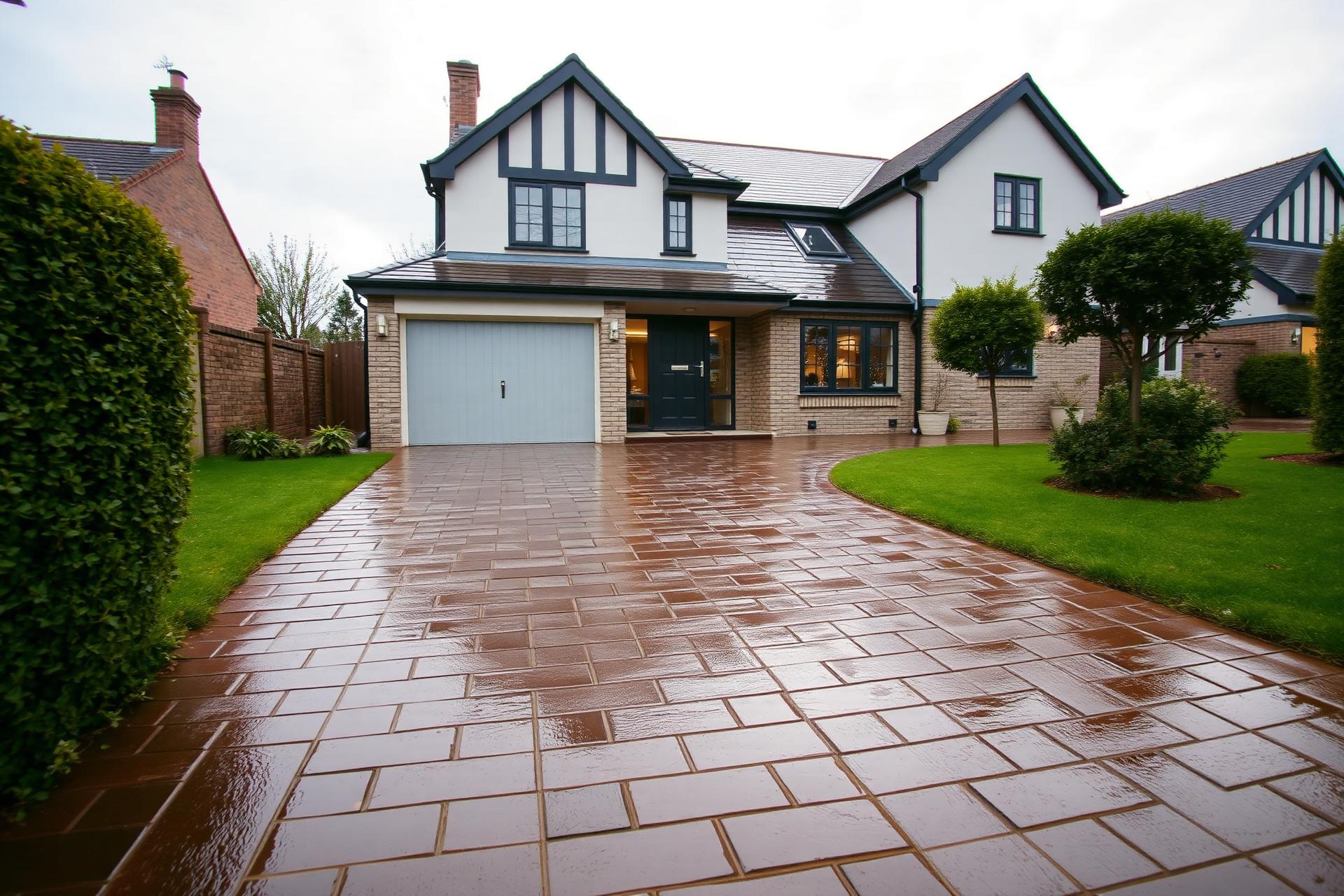
Hot Water Cleaning for Canal-Side Patios in Saltaire
Canal towpath-facing patio at a converted mill apartment
The converted mill apartments backing onto the Leeds–Liverpool towpath often have small paved terraces that sit only a few metres from the water. Narrowboat traffic, diesel residue and organic matter drifting off the canal surface settle onto these patios in a way inland gardens never experience.
Things worth planning for
Before we start
- Towpath foot traffic means equipment is kept tidy and out of the walking line
- Diesel residue may need a repeat pass rather than one wash
- Communal terraces often need neighbour coordination before booking
Once it's done
- Canal water levels after heavy rain can affect how close work can get to the edge
- Sealed paving should be checked before use to avoid stripping any existing finish
What the canal actually deposits on a towpath patio
The converted mill apartments backing onto the Leeds–Liverpool towpath often have small paved terraces that sit only a few metres from the water. Narrowboat traffic, diesel residue and organic matter drifting off the canal surface settle onto these patios in a way inland gardens never experience.
Because these terraces are shared amenity space in some blocks and private in others, the grime pattern varies from one unit to the next depending on how sheltered the spot is and how often it's walked over.
Salts Mill's proximity means a fair amount of foot traffic passes within sight of these terraces, so residents often want them looking presentable without resorting to anything that would strip the modern paving finish installed during conversion.
Getting kit in, getting water away
Access to these terraces is usually via an internal corridor or a narrow gate off the towpath itself, meaning equipment has to be wheeled rather than driven in, and towpath users need to be considered as pedestrians passing directly alongside the work.
Water and any dislodged residue on these terraces tends to run either into a communal drain built into the paving or, on older sections, straight toward the canal edge, so we're careful about what's used and how much volume goes down in one go this close to open water.
- County
- West Yorkshire
- Main route in
- A657 / A650
- Nearest city
- Bradford — 4 miles
- Typical surfaces
- original Bradford millstone grit and buff sandstone
- Common property stock
- Grade II stone terrace, mill-worker cottage, canal-side conversion
- Nearest commercial hub
- Salts Mill and Victoria Road boutiques
Running a hot water clean on a mill conversion terrace
- Step 1
Debris and loose matter removal
Leaf litter, algae clumps and any canal-blown debris are cleared before hot water is introduced, so it isn't just being pushed around.
- Step 2
Temperature-matched wash pass
Water temperature is set according to the residue type identified in diagnostics, higher for oily marks, lower for general organic grime.
- Step 3
Contained rinse toward drainage point
Rinse water is directed toward the identified drainage point rather than allowed to spread across the full terrace and toward the canal edge.
Reading the grime before choosing a temperature
Oil and diesel residue check
We look for a slick sheen rather than plain dirt, which needs the temperature setting adjusted since oily residue responds differently to heat than organic staining.
Paving material and sealant status
Modern conversion paving is often pre-sealed; we check whether a sealant is present and its condition before deciding on temperature and dwell time.
Proximity to canal edge
Terraces sitting right at the water's edge get assessed for how contained any run-off can realistically be kept.
Questions from canal-side residents
Does hot water actually shift diesel marks from boats?+
Heat helps break down oily residue far more effectively than cold water alone, though stubborn marks sometimes need a second pass.
Will run-off go into the canal?+
We direct rinse water toward the terrace's own drainage point rather than letting it spread toward the water's edge.
Is this safe for our sealed conversion paving?+
We check the sealant's condition first and adjust temperature accordingly so we're not stripping a finish that's still doing its job.
Can you work without disturbing the towpath?+
We keep hoses and equipment clear of the walking line and work around passing foot and boat traffic.
Scope agreed before anything is switched on
- We survey the surface first and say plainly if hot water cleaning is the wrong call for it.
- Scope is written down, so you can see exactly what is and isn't included.
- Where a stain or defect won't fully clear, we say so before you book.
See related canal-corridor work covered for Bingley and Shipley.
The short version
Hot water cleaning cuts through the oily, canal-borne residue that settles on Saltaire's towpath-facing terraces.