
Rotary Surface Cleaning for Station-Area Driveways in Menston
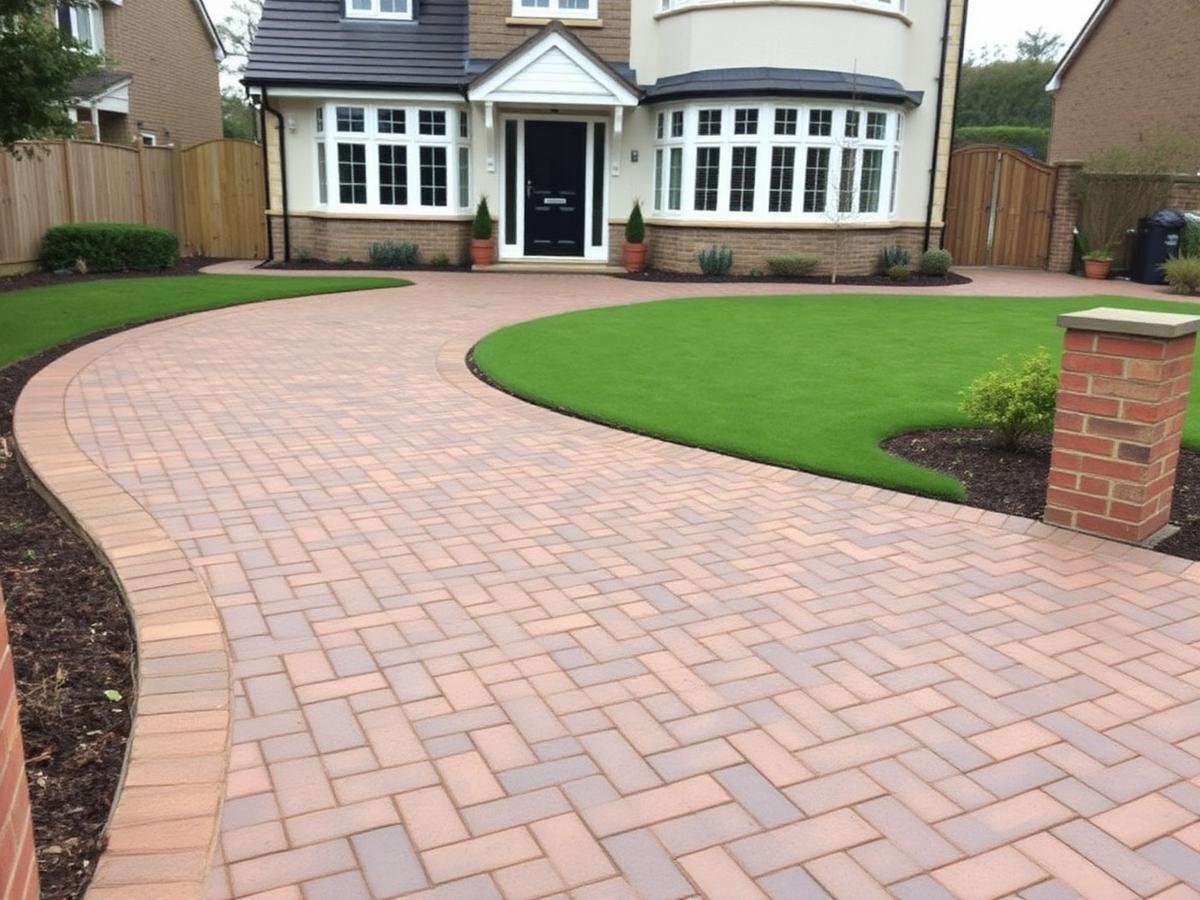
1930s semi driveway near Menston station with tram-line staining
The 1930s semis near Menston station typically have a straight concrete or slabbed driveway just wide enough for one car, used daily by commuters heading to the platform. That daily traffic creates a distinctive staining pattern — two darker tyre tracks either side of a lighter, less-trodden centre strip — which is difficult to even out with a hand-held lance.
Why station-area drives show uneven staining
The 1930s semis near Menston station typically have a straight concrete or slabbed driveway just wide enough for one car, used daily by commuters heading to the platform. That daily traffic creates a distinctive staining pattern — two darker tyre tracks either side of a lighter, less-trodden centre strip — which is difficult to even out with a hand-held lance.
A rotary surface cleaner solves that unevenness by covering the whole width in consistent overlapping passes rather than the streaky lines a single jet leaves behind. On a driveway this size, it's also considerably quicker, which matters to households working around train times.
Many of these driveways sit close to a low garden wall or hedge boundary shared with the neighbouring semi, so there's an element of care needed not to spray plants or a parked second car on the other side of that boundary.
Checking the slab before the head goes on
Tyre track versus base staining
We identify whether the dark tracks are surface tyre residue or ingrained oil, since oil needs a pre-treatment the rotary head alone won't fully shift.
Slab joint condition
Concrete slab joints are checked for cracking or lifting before the rotary head runs over them at consistent pressure.
Boundary proximity
We measure how close the cleaning head will pass to hedges, walls or a neighbour's parked car to set spray containment accordingly.
Getting kit in, getting water away
The driveway is generally the full width available, so the car needs to be moved onto the road or a nearby side street for the duration — we agree timing around commuter departures rather than clashing with the morning train. Shared boundary hedges mean the rotary head's spray guard gets positioned carefully near the wall line.
Water from these drives usually runs down the slight camber toward the road channel and into the street drainage system, so we keep detergent use light and let plain water do most of the rinsing work near the boundary to avoid any complaint from next door about overspray.
- Main route in
- A65
- Nearest city
- Leeds — 11 miles
- Typical surfaces
- Wharfedale stone flags and honey-toned setts
- Common property stock
- stone-built cottage, modern detached home, 1930s semi
- Nearest commercial hub
- Menston Main Street and Bingley Road parade
- Area type
- commuter village
What affects the finish here
Before we start
- Best scheduled outside the morning and evening commuter rush
- Moving the car to the road needs a nearby space to be free
- Oil staining under tyre tracks may need a return visit if deeply set
Once it's done
- Boundary hedges get protected with a spray guard during the pass
- A dry day gives the clearest read of the finished evenness
How the rotary pass is carried out
- Step 1
Detergent pre-spray on tracks
The two tyre-track lines get a targeted pre-spray before the rotary head starts, since these areas carry the heaviest residue.
- Step 2
Full-width rotary pass
The cleaner works in overlapping strips across the full driveway width so the tracks and centre strip end up looking uniform rather than patchy.
- Step 3
Boundary edge finishing
The last stage handles the narrow strip against the shared wall or hedge by hand, where the rotary head can't safely reach.
Scope agreed before anything is switched on
- We survey the surface first and say plainly if rotary surface cleaning is the wrong call for it.
- Scope is written down, so you can see exactly what is and isn't included.
- Where a stain or defect won't fully clear, we say so before you book.
Questions from commuter households
Why does my drive have stripes even after washing it myself?+
A hand-held lance naturally cleans in narrower bands, which leaves the classic light-and-dark stripe pattern — a rotary head avoids that by covering evenly.
Can you work around my train times?+
Yes, tell us your usual departure and return times and we'll plan the visit so your car isn't needed mid-clean.
Will the spray reach my neighbour's side of the hedge?+
We use a guard on the rotary head near boundaries specifically to stop that, and finish the last strip by hand for extra control.
How long before the tracks reappear?+
That depends on how much you drive and where you park, but a clean, well-drained slab collects new staining more slowly than one that was already ingrained.
See how we handle similar daily-use driveways elsewhere in Menston's commuter streets.
If your station-area driveway has settled into a tyre-track pattern, get in touch and we'll run a rotary clean that evens it out properly.
The short version
Rotary cleaning removes the uneven tyre-track staining typical of daily-use driveways near Menston station.