
Rotary Surface Cleaning for Block Paving in Ilkley
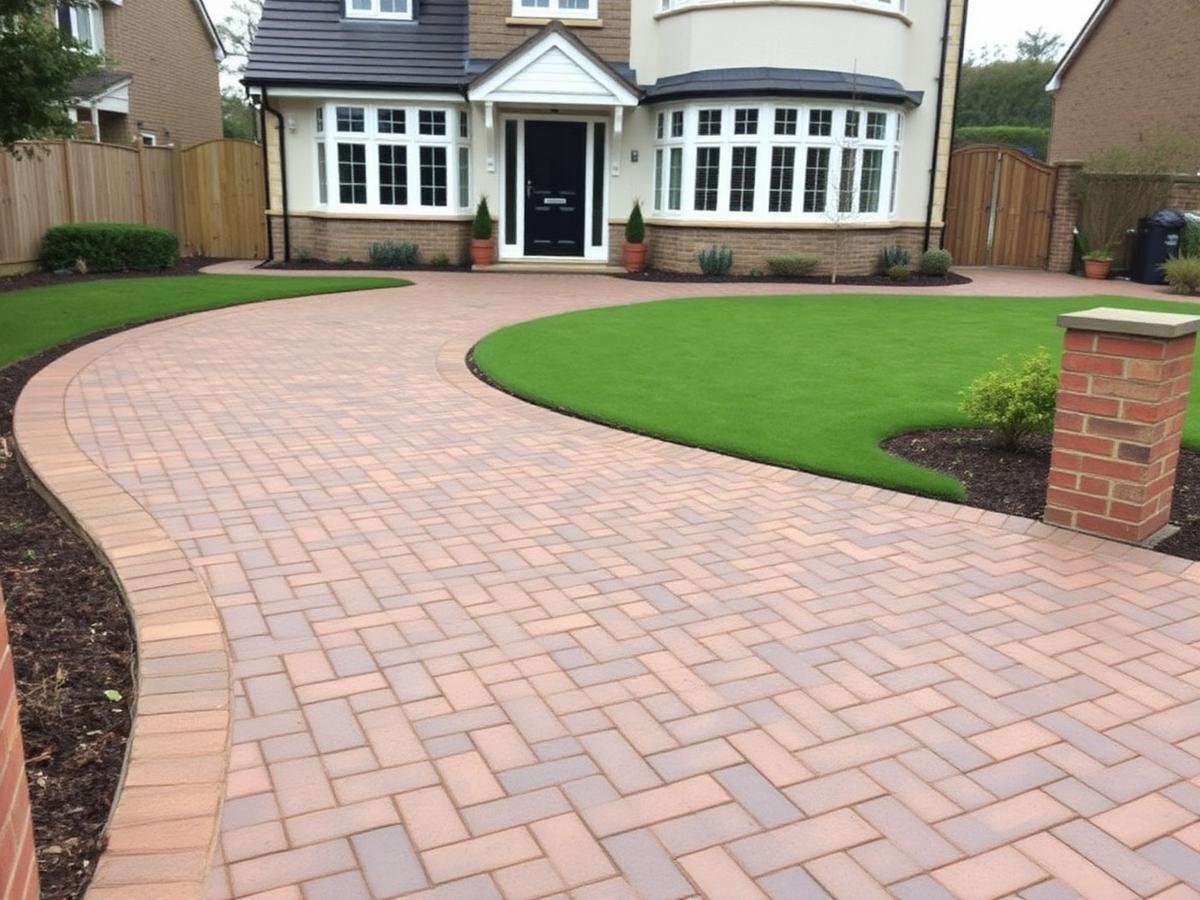
New estate-edge driveway with modern block paving and tram lines from a two-car household
Away from the older stone core of the town, some of the more recently developed plots around Ilkley's edges have modern block-paved driveways rather than traditional setts, and these show a very particular problem: tyre tram-lines running the length of the drive where two vehicles repeatedly follow the same track, darker than the block either side of them.
Why block-paved drives in Ilkley show tram-line streaking
Away from the older stone core of the town, some of the more recently developed plots around Ilkley's edges have modern block-paved driveways rather than traditional setts, and these show a very particular problem: tyre tram-lines running the length of the drive where two vehicles repeatedly follow the same track, darker than the block either side of them.
A hand lance run in straight lines almost always leaves faint overlap banding on this kind of paving, which is more visible on a uniform manufactured block than it ever is on irregular reclaimed stone, so the tool matters as much as the technique here.
These driveways are usually flat or very gently cambered rather than steeply sloped, which actually makes an even rotary finish easier to achieve consistently across the whole surface, provided the head speed and overlap are controlled properly.
What we check before running the rotary head
Mapping the tram-line pattern
We walk the drive to see exactly where the darkest tracking sits, since this tells us where the rotary head needs the most passes rather than treating the whole surface identically.
Checking block paving for algae in shaded joints
Even on a flat modern drive, joints under a hedge or fence line can hold algae that needs a different approach to the open, sun-exposed centre.
Assessing jointing sand level
We check how much kiln-dried sand remains in the joints before cleaning, since a rotary head run over depleted joints can pull more sand out than intended.
Getting kit in, getting water away
These estate-edge driveways are typically open-plan with no gate and space for two cars side by side, so the main access consideration is simply which vehicle needs to move first and where it can wait during the visit.
Modern block paving is usually laid with a slight fall toward a permeable jointing system or a soakaway at the property boundary rather than a road gully, so we're mindful not to force grit and detergent residue down into jointing designed to let water through rather than trap sediment.
- Main route in
- A65
- Nearest city
- Bradford — 12 miles
- Typical surfaces
- reclaimed York stone and honey-toned setts
- Common property stock
- Victorian villa, stone-built townhouse, moorland detached home
- Nearest commercial hub
- Ilkley Grove promenade and Leeds Road retail
- Area type
- market town
What affects the result
Before we start
- Tram-line tracking rarely lifts completely on the first pass if it's built up over several years.
- Jointing sand often needs topping up after a thorough rotary clean.
- Flat driveways dry faster and can usually be walked on within the hour.
Once it's done
- Shaded joint lines under fencing may need a separate biocide pass.
- Two-car households should plan which vehicle moves first before the visit.
How the rotary pass is managed on block paving
- Step 1
Overlapping passes at a consistent speed
The rotary head is moved at an even pace with deliberate overlap between passes, which is what avoids the faint banding a hand lance leaves on uniform block paving.
- Step 2
Extra dwell over tram-line tracking
Once the general pass is done, the head goes back over the darkest tracked lines specifically, rather than repeating the whole drive to fix one section.
- Step 3
Topping up jointing sand where needed
Where cleaning has visibly lowered the sand level in the joints, we top this up before finishing, since bare joints invite weed growth almost immediately.
Scope agreed before anything is switched on
- We survey the surface first and say plainly if rotary surface cleaning is the wrong call for it.
- Scope is written down, so you can see exactly what is and isn't included.
- Where a stain or defect won't fully clear, we say so before you book.
Questions about rotary cleaning in Ilkley
Why does my block paving still show streaks after a normal wash?+
Straight-line hand washing tends to leave faint overlap marks on uniform manufactured block, which is exactly what a rotary head's even, overlapping pass is designed to avoid.
Will rotary cleaning remove the tyre tracking from where we always park?+
It significantly reduces it with extra dwell time over those specific lines, though very long-established tracking may need a follow-up pass to fully even out.
Do you need to top up the sand in the joints afterwards?+
Often yes — a thorough clean can lower joint sand levels, and we top this back up before finishing so the joints aren't left bare and open to weeds.
How long before we can park both cars back on the drive?+
A flat block-paved drive like this typically dries within the hour, so it's usually fine to park back on the same day.
Once the surface is even, block paving sealing helps protect it from new tracking building up as fast.
If tyre tracking or faint streaking is showing up on your block-paved drive, get in touch and we'll talk through what a rotary pass can even out.
The short version
Rotary cleaning gives modern block paving an even finish without the banding a hand lance leaves, with extra attention to tram-line tracking.